
Scenario guide
Prepare for an Extended Emergency
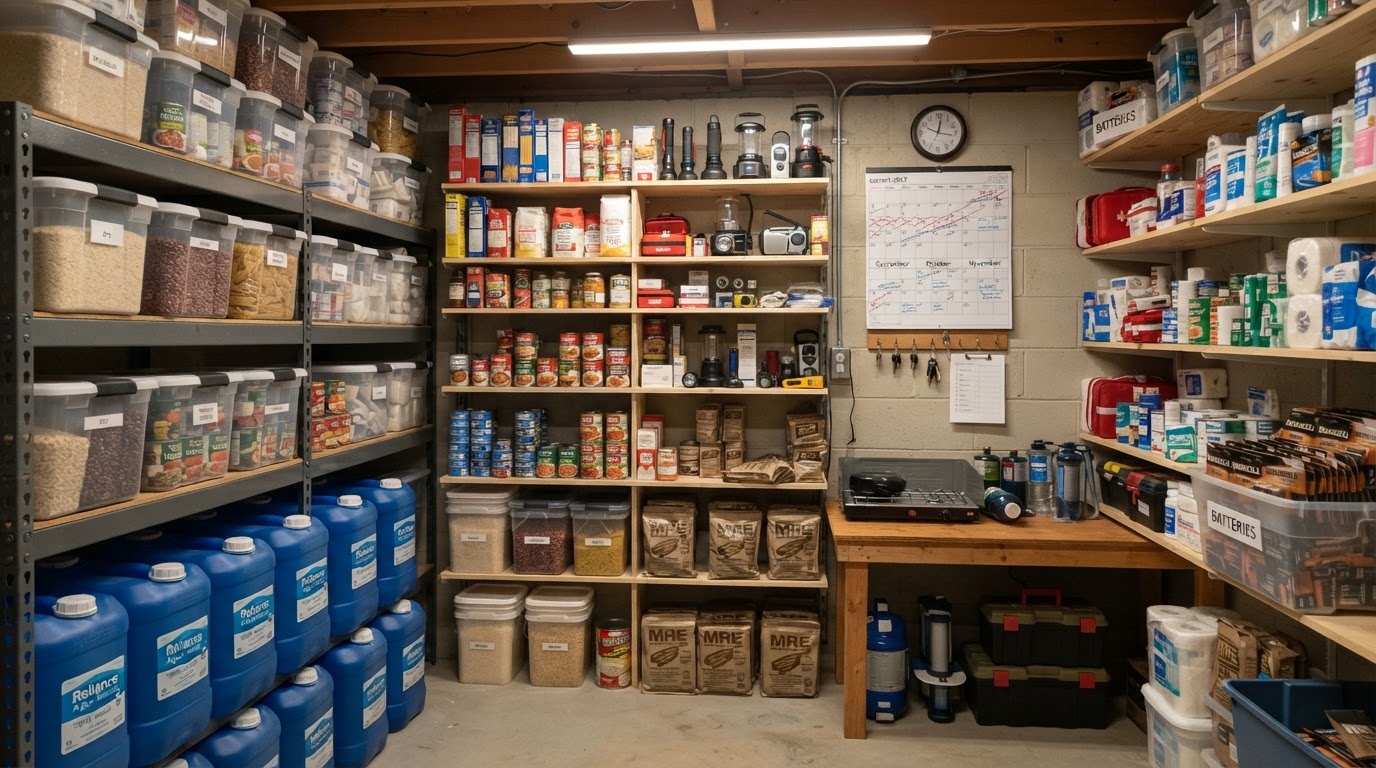
Most household plans cover 72 hours, because that is the minimum most agencies recommend. But some disruptions last weeks. The plan extends to 14 days with a deeper buffer and a little redundancy, so one failure does not cascade into many. The same habits that cover three days scale up.
What Matters First
Build a 14-day buffer of food, water, and medications
One gallon of water per person per day, two weeks of shelf-stable foods you eat, and a 30-day medication buffer if your clinician allows.
Add redundancy so one failure does not cascade
A second way to charge, a second way to light a room, a second way to get information. The second way is what works when the first fails.
Maintain and rotate the plan every six months
Rotate water and food with first-in, first-out. Test the generator and power bank, and replace batteries. A plan that is not maintained fails when it matters.
Your Extended Emergency Checklist
Prepare
- 14-day water supply, one gallon per person per day
- Two-week pantry of shelf-stable foods; 30-day medication buffer
- Second way to charge, light, and get information
- Cash in small bills; first-aid kit and over-the-counter basics
Useful for this scenario
Emergency Food Supply
Stock familiar shelf-stable foods your household will actually eat.
Respond
- Use the buffer; rotate stock as you use it
- Conserve power and water; use redundancy when the first way fails
- Check on neighbors, because a long disruption is a community event
Recover
- Restock the buffer gradually as the disruption eases
- Note what was missing or what failed for next time
- Review the plan as your household changes
Useful Gear for This Scenario
Emergency food
A two-week supply of shelf-stable foods your household eats. Build it from ordinary groceries so rotation is natural and nothing expires.
Water storage and treatment
Food-grade containers, dated and rotated every six months, plus a treatment method as a backup if the supply is interrupted.
Sanitation kit
A portable toilet, waste bags, and hygiene supplies keep the household comfortable if plumbing or running water stops.
Useful for this scenario
Emergency Water Storage
Build your starting supply with reusable, food-grade containers.
Make the Plan Fit Your Household
If you rely on a well, keep a backup water supply and a way to pump or carry water. If you rely on refrigeration for medication, keep a cooler with ice and a plan for a longer outage. Know your neighbors, because in a long disruption the people who help you are the people nearby. The honest framing is that an extended emergency is rare, but the plan is reusable across many scenarios.
Useful for this scenario
Emergency Sanitation Kit
A portable toilet, waste bags, and hygiene supplies for disrupted plumbing.