
Household preparedness
Plan for the records you cannot replace easily
Copies of insurance, identification, and medical information, stored safely, save hours of stress after a disaster.
Start with These Three Steps
Copy the essentials.
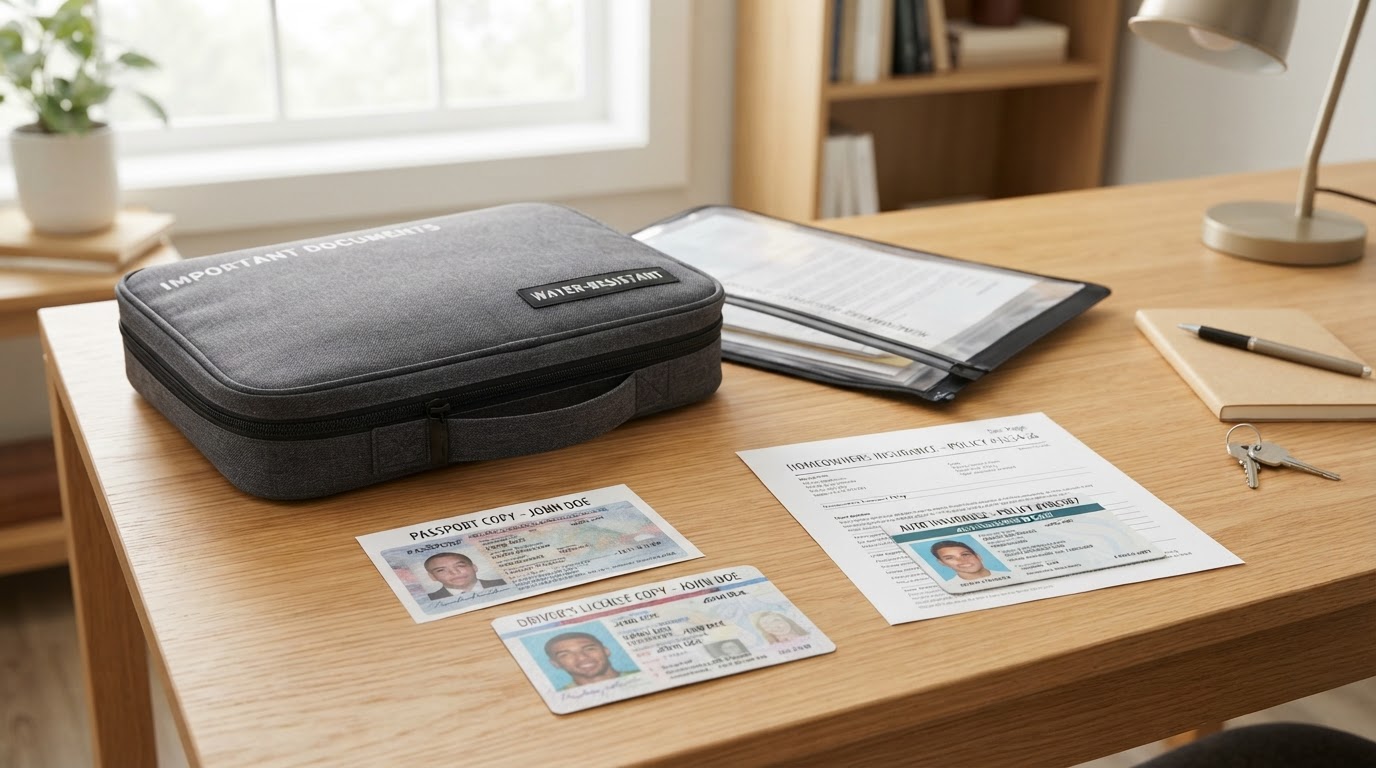
Photograph or photocopy IDs, insurance policies, deeds, and medical information, and store the copies separately from the originals.
Keep one set portable.
Put copies in a water-resistant organizer you can grab fast, and keep a secure digital backup as well.
Write the contact list.
List emergency contacts, doctors, insurers, and utilities on paper, because the phone book will not load.
Useful for this scenario
Waterproof Document Storage
Keep insurance, deeds, and identification protected and portable.
Your Documents Checklist
- Copies of IDs and insurance documents
- Deeds, titles, and policies copied
- A water-resistant document organizer
- A secure digital backup on an encrypted drive
- Emergency contacts and account numbers written down
- Medical information and medication lists included
What to Look For
Water protection.
A sealed, water-resistant organizer keeps paper legible after a flood or burst pipe.
Portability.
One grab-and-go set means the records leave when you do.
Secure backups.
An encrypted drive or secure cloud copy protects against a single point of failure.
Useful for this scenario
Offline Backup Drive
An encrypted USB holds copies so one failure does not lose everything.
Keep It Ready
Refresh copies once a year and after any major life change. Keep digital backups encrypted and test that you can actually read them, and make sure a trusted person knows where both the physical and digital copies live.
Build Your Household Plan
Add this category to your plan, then work through the essentials at a pace that fits your household.
Explore the 10 EssentialsOther Plan the Basics guides
Food
Build a pantry from foods you already eat, rotate it so nothing expires, and know how to cook when the power is out.
Water
One gallon per person per day is the starting line. Storage, rotation, and a treatment method are what make it usable.
First Aid
A household first-aid kit plus basic training handles the cuts, burns, and sprains that show up in every disruption.
Hygiene & Sanitation
Handwashing, a toilet alternative, and a waste plan are the unglamorous prep that prevents the real secondary disaster: illness.
Shelter & Warmth
Insulate one room, layer up, and never heat with something meant for the outdoors. Hypothermia and carbon monoxide are the real threats.
Backup Power
A phone charger is one job; a fridge or a medical device is another. Match the power source to the real need and know its limits.