
Household preparedness
Plan to stay warm when the heat is off
Insulate one room, layer up, and never heat with something meant for the outdoors. Hypothermia and carbon monoxide are the real threats.
Start with These Three Steps
Pick one shelter room.
Choose a small, interior room you can close off and seal against drafts; it is easier to keep warm than a whole house.
Layer your bedding and clothes.
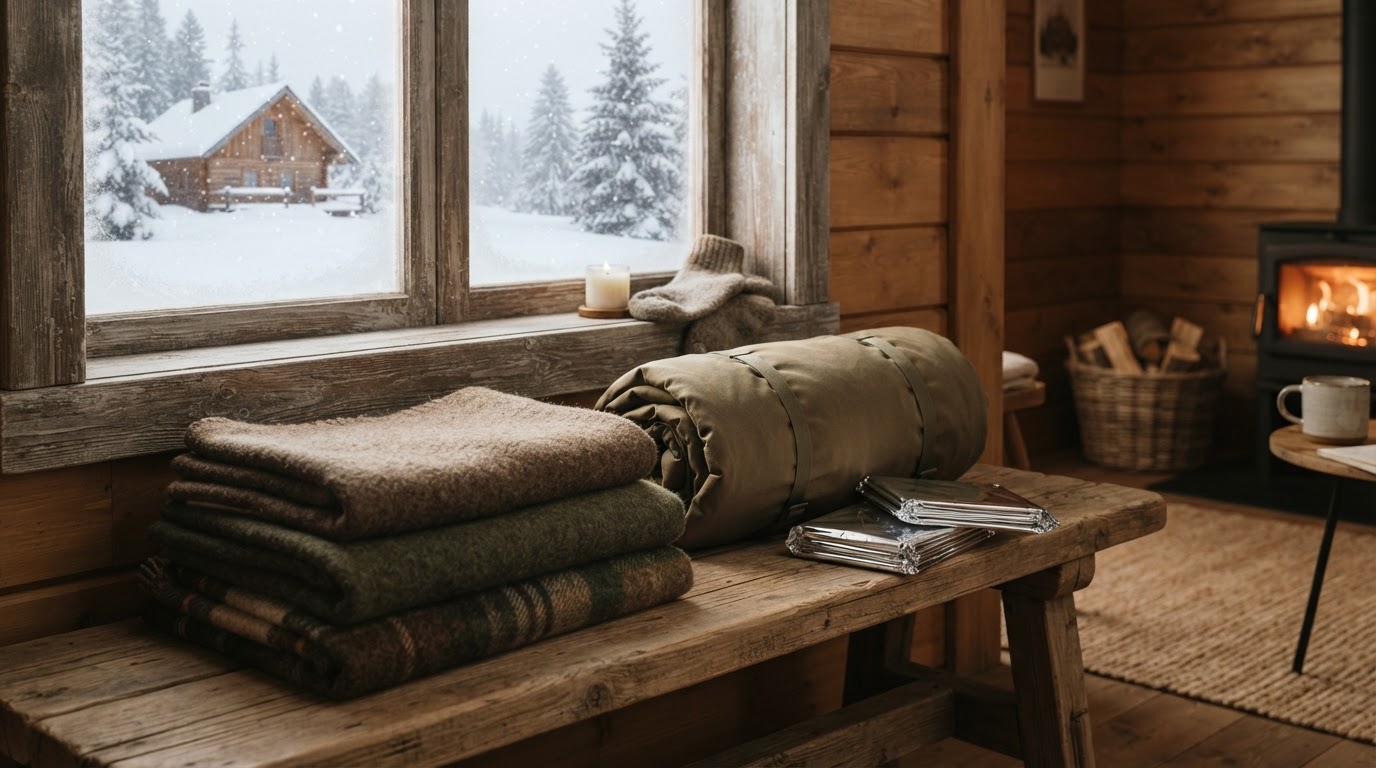
Stock warm blankets, sleeping bags, hats, and warm socks, and keep slippers by the bed for cold floors.
Know your safe heat source.
Confirm what you can heat with safely indoors, or plan to rely on layers and shared body heat instead.
Useful for this scenario
Warm Bedding & Sleeping Bags
Concentrate warmth in one room when the heat is out.
Your Shelter & Warmth Checklist
- One shelter room chosen and draft-sealed
- Warm blankets, sleeping bags, and layered clothes
- Carbon-monoxide detector tested
- A safe indoor heat source identified
- Water shutoff known for frozen-pipe risk
- Local warming shelters known
- Pipes insulated and cabinet doors planned for exterior walls
What to Look For
Draft sealing.
Weather stripping, rolled towels at doors, and plastic film over windows slow heat loss enough for body heat to keep up.
Warmth, not whole-house heating.
Quality bedding and layers in one room beat trying to heat an entire cold house.
Safe heat only.
Never use a camp stove, grill, or generator indoors; carbon monoxide kills people in cold outages every year.
Keep It Ready
Test your carbon-monoxide detector and replace its batteries on a schedule. If anyone is vulnerable to cold, plan to relocate to a warming shelter rather than toughing it out when the house gets dangerously cold. Know where your water shutoff is in case a pipe freezes.
Build Your Household Plan
Add this category to your plan, then work through the essentials at a pace that fits your household.
Explore the 10 EssentialsOther Plan the Basics guides
Food
Build a pantry from foods you already eat, rotate it so nothing expires, and know how to cook when the power is out.
Water
One gallon per person per day is the starting line. Storage, rotation, and a treatment method are what make it usable.
First Aid
A household first-aid kit plus basic training handles the cuts, burns, and sprains that show up in every disruption.
Hygiene & Sanitation
Handwashing, a toilet alternative, and a waste plan are the unglamorous prep that prevents the real secondary disaster: illness.
Backup Power
A phone charger is one job; a fridge or a medical device is another. Match the power source to the real need and know its limits.
Cooking
A stable outdoor stove and the right fuel let you make a hot meal and boil water during an extended outage.