
Household preparedness
Plan to prevent and respond to fire
Working alarms on every level and a practiced escape plan are the first line of defense in a household fire.
Start with These Three Steps
Test your alarms.
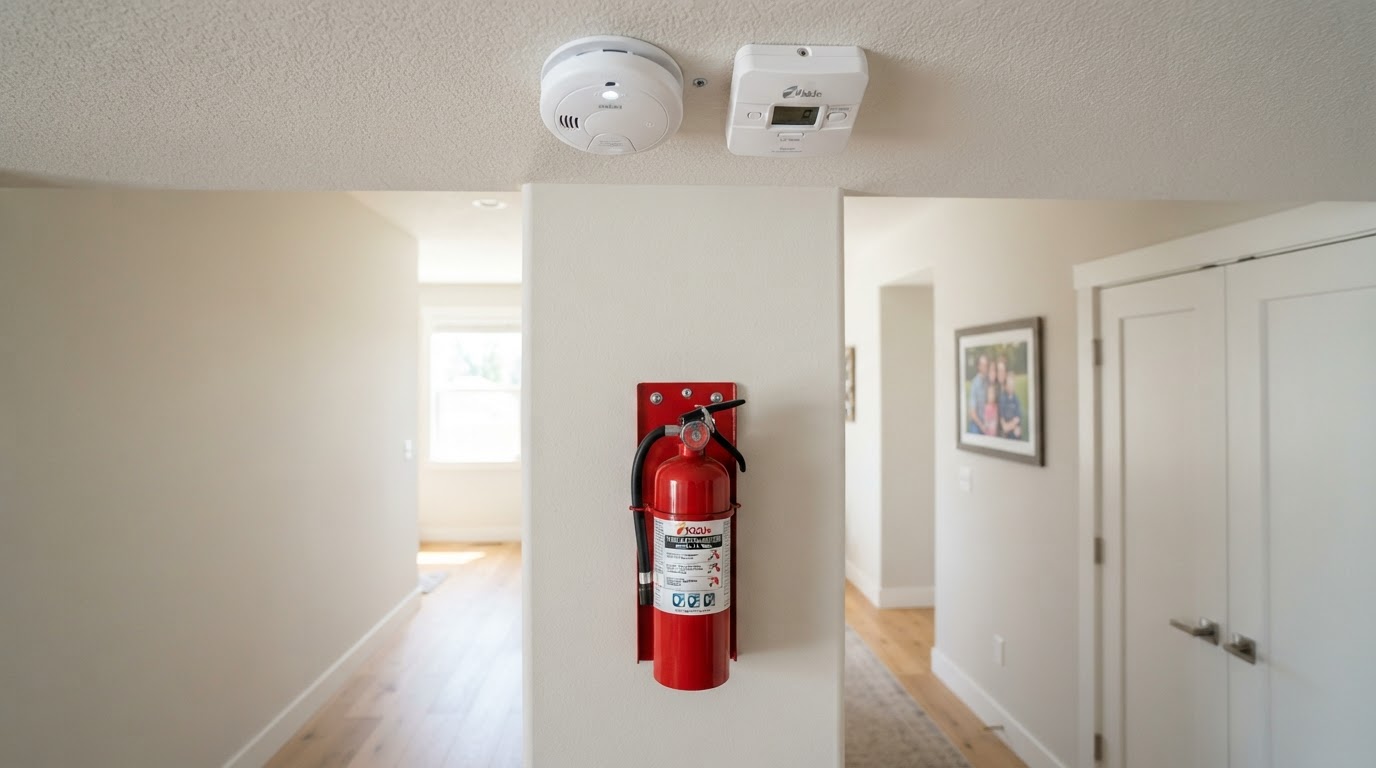
Install smoke and carbon-monoxide alarms on every level and near sleeping areas, and test them on a set schedule.
Know your extinguisher.
Keep a fire extinguisher you have learned to use, and remember the plan is to escape a large fire, not fight it.
Plan and practice the escape.
Map two ways out of every room, agree on a meeting place, and walk through it with the household.
Useful for this scenario
Smoke Alarms
Interconnected alarms on every level are the first line of defense.
Your Fire Safety Checklist
- Smoke alarms on every level and near bedrooms
- Carbon-monoxide alarms if you have any fuel-burning appliance
- Extinguisher located and the PASS method learned
- Two escape routes from each room identified
- A meeting place outside agreed on
- A practiced household escape drill
- Escape routes kept clear of clutter
What to Look For
Interconnected alarms.
When one alarm sounds, every alarm in the house should sound, especially at night.
Right extinguisher type.
Match the extinguisher to the likely fire, and learn the PASS method for small, contained fires only.
Accessible placement.
Alarms and extinguishers only help if you can reach them quickly in the dark.
Useful for this scenario
Fire Extinguisher
Know the PASS method; use it only on small, contained fires.
Keep It Ready
Test alarms monthly and replace batteries on a schedule. Replace alarms by the date the manufacturer recommends. In a fire, get out first and call 911 from outside; do not stop to gather belongings, and never re-enter a burning building.
Build Your Household Plan
Add this category to your plan, then work through the essentials at a pace that fits your household.
Explore the 10 EssentialsOther Plan the Basics guides
Food
Build a pantry from foods you already eat, rotate it so nothing expires, and know how to cook when the power is out.
Water
One gallon per person per day is the starting line. Storage, rotation, and a treatment method are what make it usable.
First Aid
A household first-aid kit plus basic training handles the cuts, burns, and sprains that show up in every disruption.
Hygiene & Sanitation
Handwashing, a toilet alternative, and a waste plan are the unglamorous prep that prevents the real secondary disaster: illness.
Backup Power
A phone charger is one job; a fridge or a medical device is another. Match the power source to the real need and know its limits.
Cooking
A stable outdoor stove and the right fuel let you make a hot meal and boil water during an extended outage.