
Scenario guide
Prepare for a House Fire
A house fire is the most common disaster a household will face, and the planning is straightforward but often skipped. Working smoke alarms cut the risk of dying in a home fire roughly in half. The plan is alarms, two ways out of every room, and a practiced drill.
What Matters First
Install and test smoke alarms on every level
Inside every bedroom, outside every sleeping area, and on every level. Test monthly, replace batteries yearly, and replace alarms every 10 years.
Plan two ways out of every room and a meeting place
Walk through the home and identify the exits. Choose a meeting place outside, a safe distance from the home, and make sure everyone knows it.
Get out and stay out, never go back inside
If the alarm sounds, leave immediately. Feel doors with the back of your hand; if a door is hot, use your second way out. Call 911 once you are out.
Your House Fire Checklist
Before It Happens
- Smoke alarm in every bedroom and on every level, tested monthly
- Two ways out of every room identified; outside meeting place chosen
- Fire drill practiced twice a year, day and night
- Fire extinguisher in the kitchen; carbon-monoxide alarms installed
Useful for this scenario
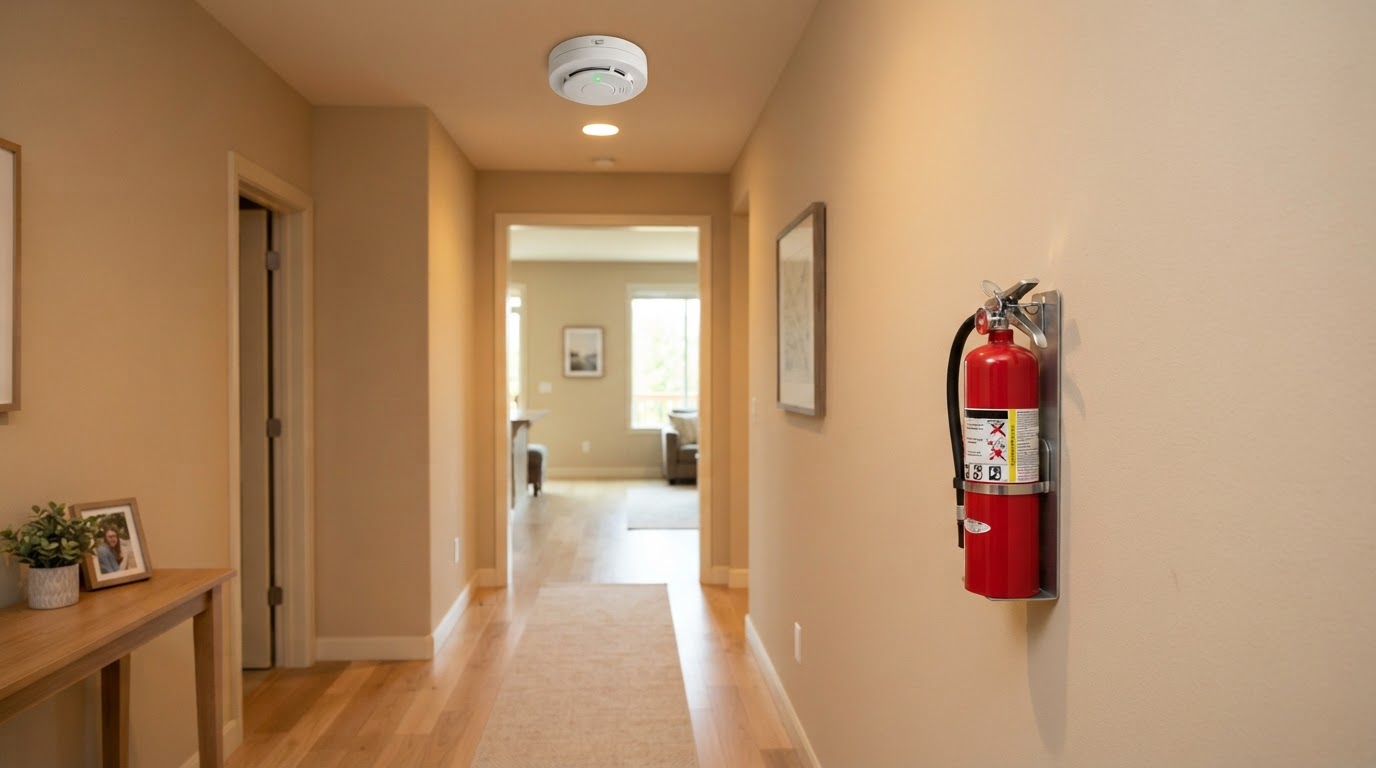
Smoke Alarms
Interconnected alarms on every level are the first line of defense.
During the Disruption
- Get out and stay out; do not stop for belongings
- Get low and crawl under smoke; keep bedroom doors closed at night
- If trapped, close the door, stuff cracks with cloth, and signal from a window
Afterward
- Do not re-enter until officials say it is safe
- Photograph damage for insurance before cleanup
- Replace smoke alarm batteries and review what started the fire
Useful Gear for This Scenario
Smoke alarms
Interconnected alarms, so one sounds all, are the first line of defense. Install alarms with strobe lights or bed shakers for anyone deaf or hard of hearing.
Fire extinguisher for advance preparedness
Keep one in the kitchen and know the PASS method: Pull, Aim, Squeeze, Sweep. Use it only on small, contained fires, never on a spreading fire.
Fire-resistant document storage
A fireproof safe for originals and a waterproof folder for the go-bag protect the records you need to recover.
Useful for this scenario
Fire Extinguisher
Know the PASS method; use it only on small, contained fires.
Make the Plan Fit Your Household
If anyone has mobility needs, plan who helps them and how. Teach children that the alarm means leave, not investigate, and that they should not hide from firefighters. Keep matches and lighters out of reach, and keep space heaters at least three feet from anything flammable. Most house fires are preventable, and the prevention is the best plan.
Useful for this scenario
Waterproof Document Storage
Keep insurance, deeds, and identification protected and portable.