
Household preparedness
Plan your water before the tap runs dry
One gallon per person per day is the starting line. Storage, rotation, and a treatment method are what make it usable.
Start with These Three Steps
Calculate how much you need.
Start at one gallon per person per day for drinking and basic sanitation, and add extra for pets, heat, and illness.
Store it safely.
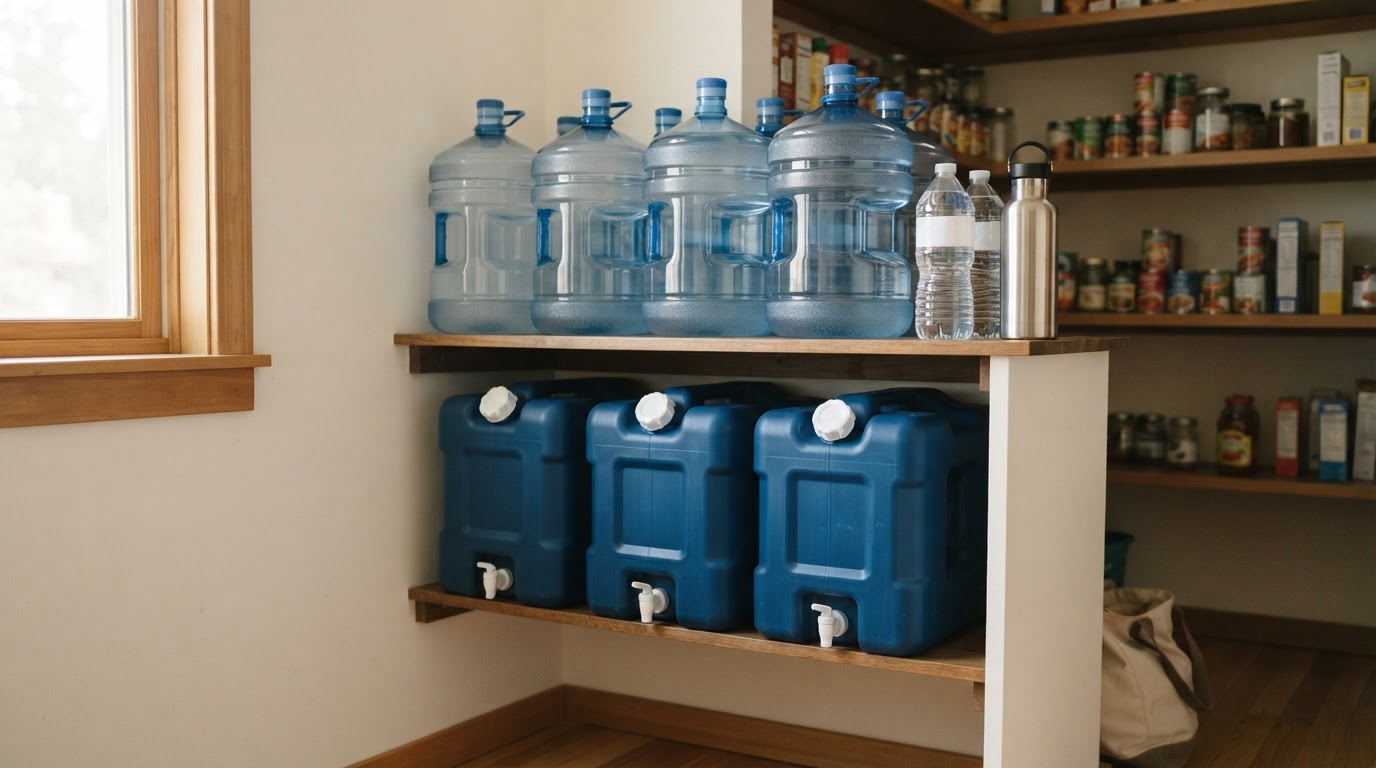
Use food-grade containers in a cool, dark spot away from chemicals, and date each one so rotation is obvious.
Plan a treatment backup.
Stored water runs out eventually. Know how to boil or chemically treat water and understand what your filter can and cannot remove.
Useful for this scenario
Emergency Water Storage
Build your starting supply with reusable, food-grade containers.
Your Water Checklist
- Gallons-per-day calculated for your household
- Food-grade containers, dated and sealed
- Six-month rotation scheduled
- Drinking and sanitation needs planned separately
- A treatment method on hand and practiced
- A few gallons stored in the vehicle for commuting
What to Look For
Food-grade materials.
Never use containers that held anything but food or water, and avoid milk-style jugs that do not seal well.
Manageable size.
Five to seven gallon jugs are efficient but heavy; combine them with small grab-and-go bottles.
Treatment limits.
No household filter handles every contaminant. Read the specs, and never assume a filter makes chemically contaminated water safe.
Useful for this scenario
Emergency Water Filter
Know what it removes; no household filter handles every contaminant.
Keep It Ready
Rotate stored water every six months: empty, rinse, refill, and re-date each container. Practice your treatment method once before you rely on it, so the first time you boil water or run a filter is not during an outage.
Build Your Household Plan
Add this category to your plan, then work through the essentials at a pace that fits your household.
Explore the 10 EssentialsOther Plan the Basics guides
First Aid
A household first-aid kit plus basic training handles the cuts, burns, and sprains that show up in every disruption.
Shelter & Warmth
Insulate one room, layer up, and never heat with something meant for the outdoors. Hypothermia and carbon monoxide are the real threats.
Backup Power
A phone charger is one job; a fridge or a medical device is another. Match the power source to the real need and know its limits.
Cooking
A stable outdoor stove and the right fuel let you make a hot meal and boil water during an extended outage.
Fire Safety
Working alarms on every level and a practiced escape plan are the first line of defense in a household fire.
Clothing & Footwear
Sturdy footwear and weather-appropriate layers matter more than specialized gear when you need to leave fast or stay warm.