Scenario guide
Prepare for a Water Emergency
A water emergency is more common than most people think. A boil-water advisory, a broken main, a well that floods, any of these can make the tap unsafe. The plan is to store water before you need it, know how to make suspect water safe, and keep the household hydrated when the tap is not an option.
What Matters First
Store one gallon per person per day for at least three days
Use food-grade containers that never held anything toxic. Date each container and rotate the water every six months.
Know how to treat suspect water
Boiling is the most reliable method for most situations. Boiling does not remove chemical contamination; if the advisory is chemical, do not use the water.
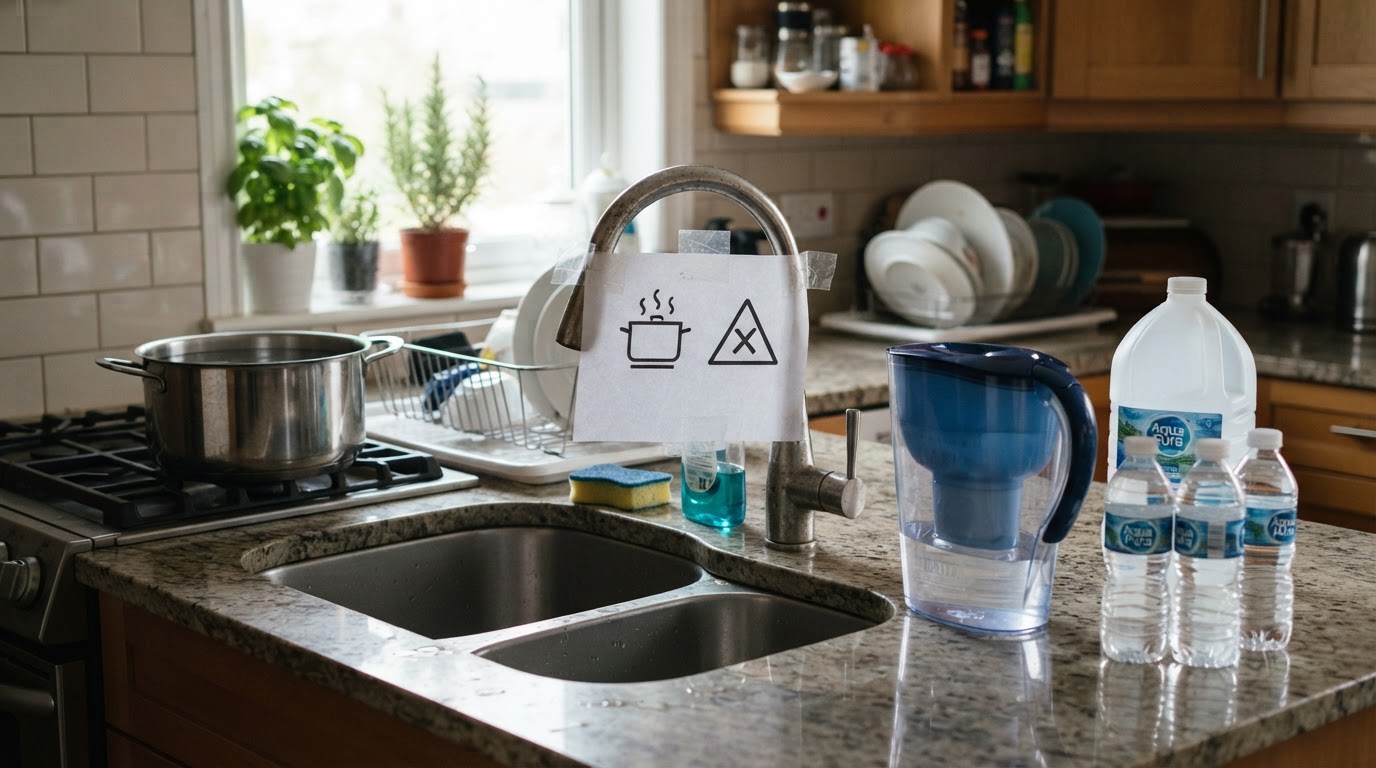
Use bottled or boiled water during an advisory
Use it for drinking, ice, brushing teeth, and preparing formula. Do not ration drinking water; hydration comes first.
Your Water Emergency Checklist
Before It Happens
- One gallon per person per day for three days, in food-grade containers
- Unscented liquid bleach for chlorination, not expired
- Water filter rated for the contaminants you face, with known limits
- Hand sanitizer for safe hand washing
Useful for this scenario
Emergency Water Storage
Build your starting supply with reusable, food-grade containers.
During the Disruption
- Use bottled or boiled water for drinking, cooking, and brushing teeth
- Do not use ice from the automatic maker during an advisory
- It is usually safe to shower if you do not swallow it; use caution for infants
Afterward
- Flush the pipes when the utility lifts the advisory
- Replace any filter cartridges in use during the advisory
- Throw out ice made during the advisory and clean the ice maker
Useful Gear for This Scenario
Stored drinking water
Food-grade containers, dated and rotated every six months, are the foundation. Store more if you rely on a well pump that needs power.
Emergency filter or purifier
A filter extends stored water but does not replace it. Know exactly what it removes; no household filter handles every contaminant.
Food-grade containers
Dedicated water containers are a practical, reusable purchase. Never use milk jugs or containers that held anything non-food.
Useful for this scenario
Emergency Water Filter
Know what it removes; no household filter handles every contaminant.
Make the Plan Fit Your Household
If you have a baby or someone immunocompromised, use bottled water rather than boiled tap if you can, because the margin is smaller. If you rely on a well, store more water, because a power outage can stop the pump. Keep a written treatment dosing reference with your supplies.
Useful for this scenario
Food-Grade Water Containers
Dedicated containers are a practical, reusable purchase.