
Household preparedness
Plan to cook when the power is out
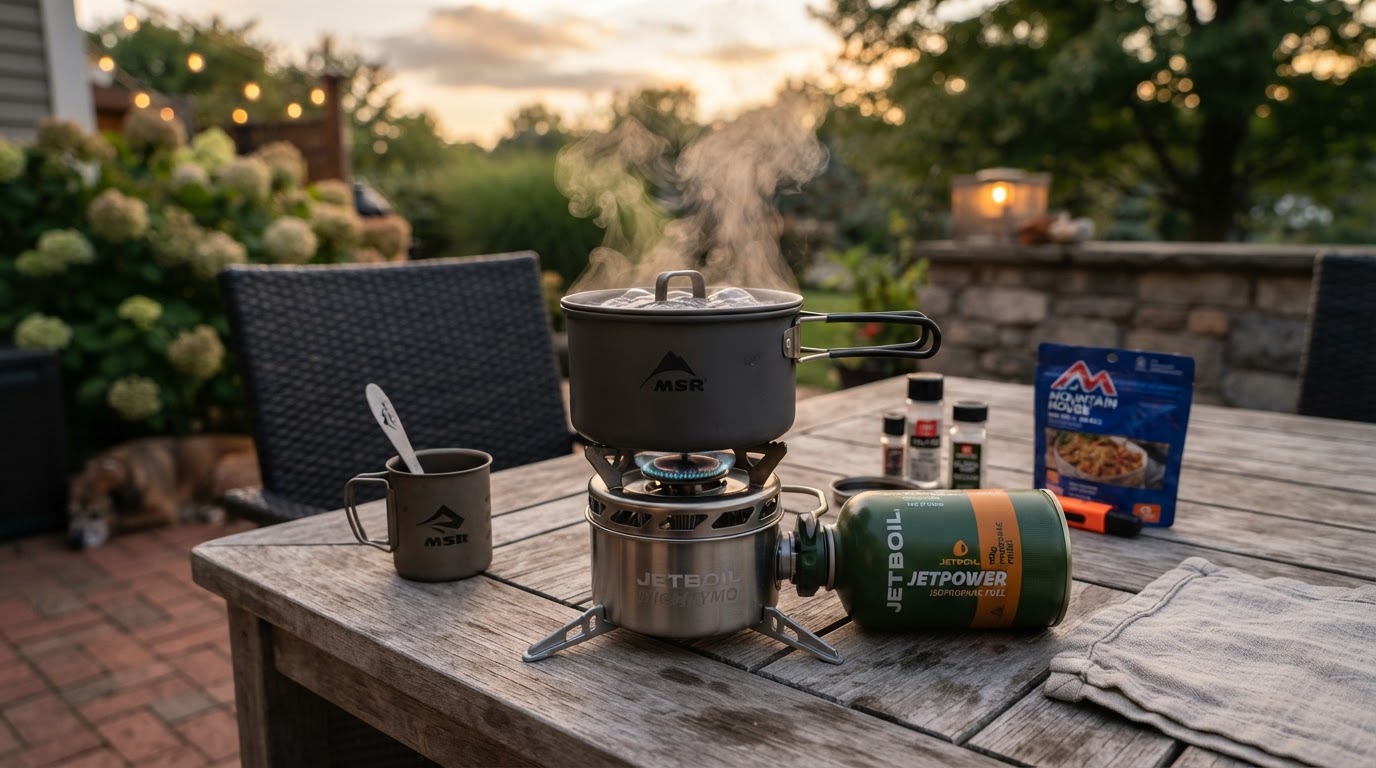
A stable outdoor stove and the right fuel let you make a hot meal and boil water during an extended outage.
Start with These Three Steps
Match the stove to your space.
Pick a stove you can use safely outdoors, and confirm your balcony, patio, or yard permits it before you rely on it.
Store compatible fuel.
Keep the fuel your stove actually uses, stored safely away from heat, and rotate it so it stays fresh.
Keep basic cookware with it.
Store a pot, a lighter or matches, and a few utensils with the stove so the kit is ready as one piece.
Useful for this scenario
Portable Camping Stove
A stable outdoor stove for cooking and boiling water during an outage.
Your Cooking Checklist
- A stable outdoor stove you have practiced with
- Compatible fuel, stored safely and rotated
- A pot, lighter or matches, and basic utensils
- A safe outdoor cooking spot confirmed
- A way to boil water for treatment if needed
- Manufacturer instructions kept with the stove
What to Look For
Stability.
A stove that wobbles with a hot pot on it is a hazard; choose a stable base.
Fuel you can store.
Match the stove to fuel you can keep safely and find when you need it.
Outdoor-only use.
Camp stoves belong outside. Never use one indoors, in a garage, or near a window where carbon monoxide can build up.
Keep It Ready
Run the stove once or twice a year so you know it works and remember how to light it. Keep fuel rotated and the manual with the kit, and always follow the manufacturer's instructions and any local rules about outdoor cooking.
Build Your Household Plan
Add this category to your plan, then work through the essentials at a pace that fits your household.
Explore the 10 EssentialsOther Plan the Basics guides
Water
One gallon per person per day is the starting line. Storage, rotation, and a treatment method are what make it usable.
First Aid
A household first-aid kit plus basic training handles the cuts, burns, and sprains that show up in every disruption.
Hygiene & Sanitation
Handwashing, a toilet alternative, and a waste plan are the unglamorous prep that prevents the real secondary disaster: illness.
Shelter & Warmth
Insulate one room, layer up, and never heat with something meant for the outdoors. Hypothermia and carbon monoxide are the real threats.
Backup Power
A phone charger is one job; a fridge or a medical device is another. Match the power source to the real need and know its limits.
Clothing & Footwear
Sturdy footwear and weather-appropriate layers matter more than specialized gear when you need to leave fast or stay warm.