
Household preparedness
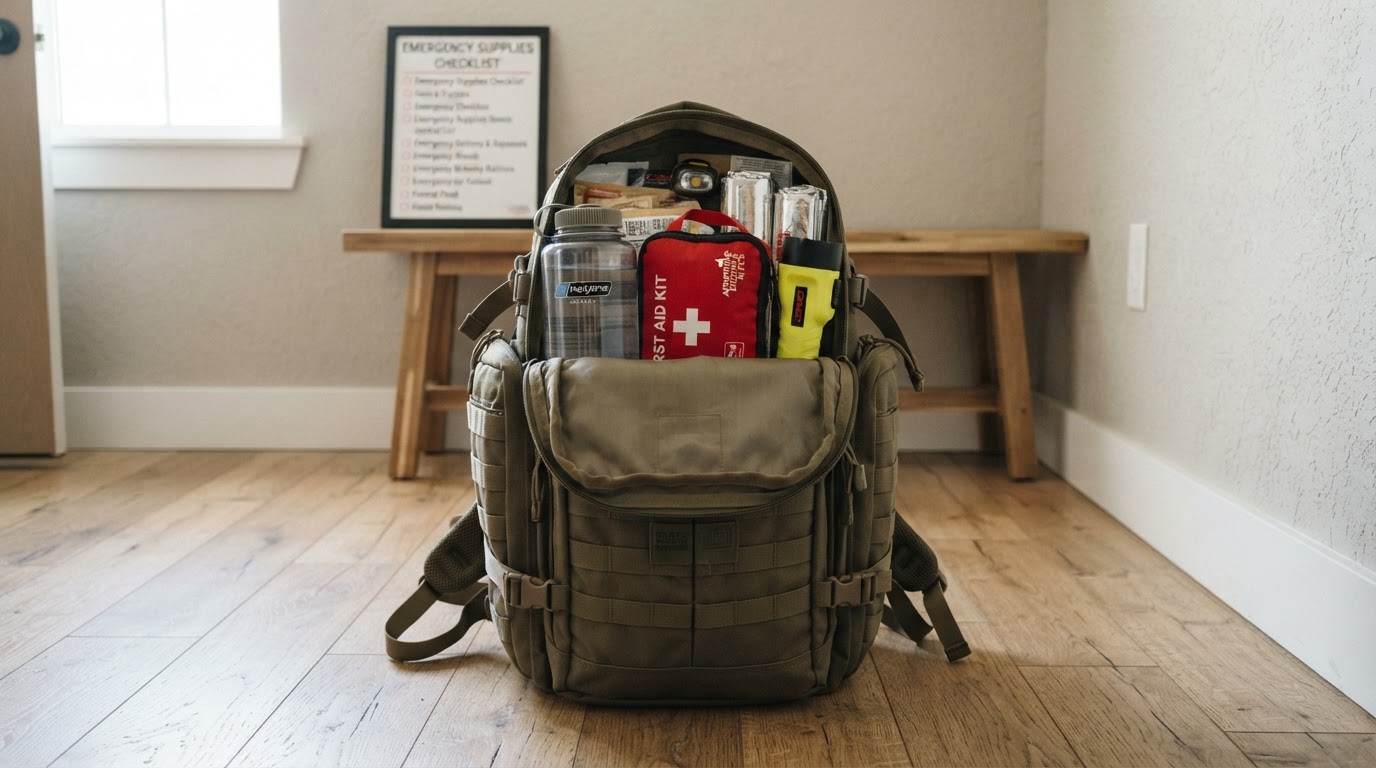
Plan a grab-and-go kit you can actually carry
A comfortable pack, the right contents, and a practice run mean leaving is a calm decision, not a scramble under stress.
Start with These Three Steps
Choose a pack you can carry.
Pick a comfortable backpack sized to the person who will carry it, not the biggest bag you can find.
Customize, do not just buy.
Assess any prebuilt kit for your household and add or remove items to fit your real needs.
Keep it grab-able.
Store the kit where you can reach it fast and walk through grabbing it once a year.
Useful for this scenario
Evacuation Bag
A packed go-bag with documents, medication, and essentials.
Your Go Bags & Emergency Kits Checklist
- A comfortable backpack per person
- Water and a first-aid kit
- Copies of documents and cash
- A change of clothes and sturdy shoes
- A flashlight and spare batteries
- Medications and a contact list
- The kit practiced once a year
What to Look For
Comfortable carry.
Fit and weight matter; a pack you cannot carry stays home.
Real contents.
Customize a prebuilt kit rather than trusting a one-size list.
Household-specific.
Pack for your people, medications, and pets.
Useful for this scenario
Emergency Water Storage
Build your starting supply with reusable, food-grade containers.
Keep It Ready
Review the kit once a year against your current needs and the season. Swap outgrown clothes and expired items, and walk through grabbing it so the plan stays familiar.
Build Your Household Plan
Add this category to your plan, then work through the essentials at a pace that fits your household.
Explore the 10 EssentialsOther Plan the Basics guides
Food
Build a pantry from foods you already eat, rotate it so nothing expires, and know how to cook when the power is out.
Water
One gallon per person per day is the starting line. Storage, rotation, and a treatment method are what make it usable.
Hygiene & Sanitation
Handwashing, a toilet alternative, and a waste plan are the unglamorous prep that prevents the real secondary disaster: illness.
Shelter & Warmth
Insulate one room, layer up, and never heat with something meant for the outdoors. Hypothermia and carbon monoxide are the real threats.
Backup Power
A phone charger is one job; a fridge or a medical device is another. Match the power source to the real need and know its limits.
Cooking
A stable outdoor stove and the right fuel let you make a hot meal and boil water during an extended outage.