
Scenario guide
Prepare for a Tornado
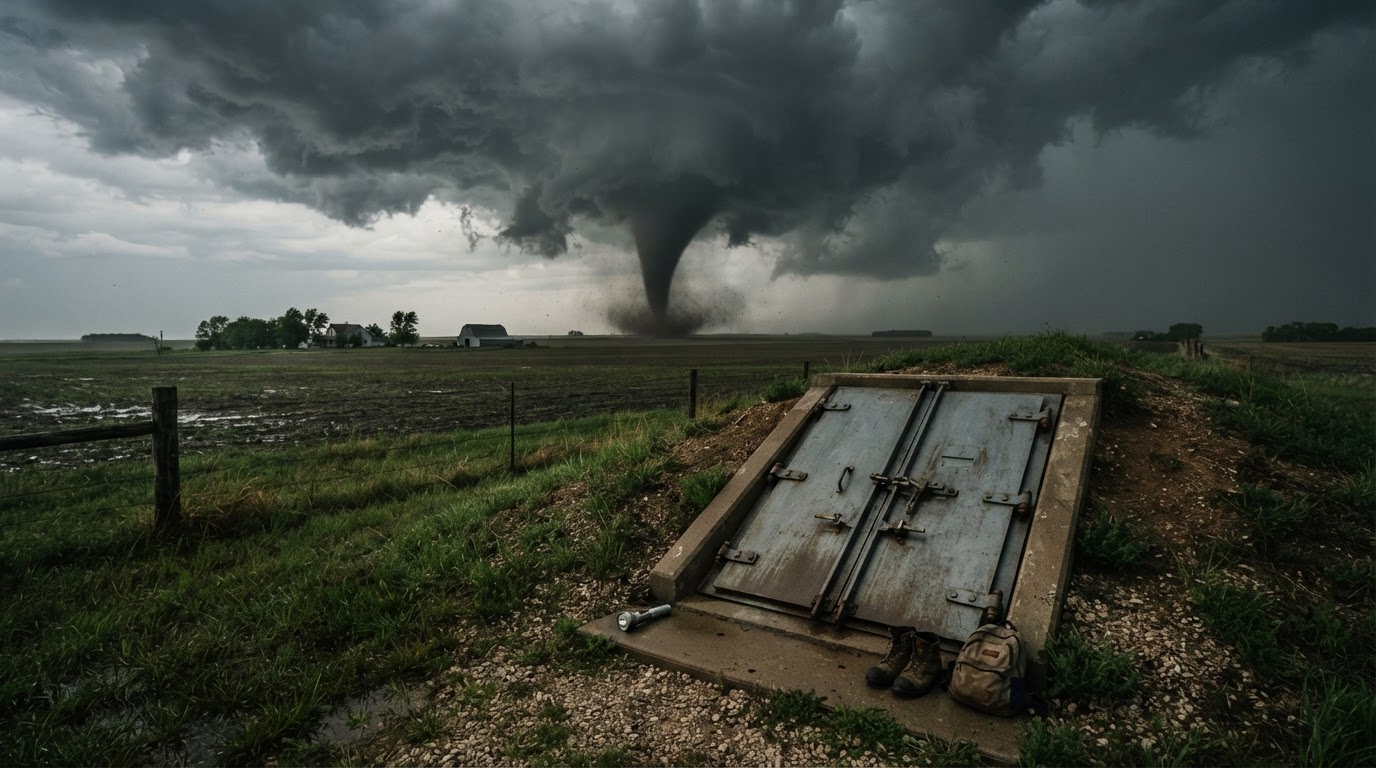
A tornado gives almost no warning. A watch may come hours before, but a warning may come only minutes before a funnel is on the ground. That is why the plan has to be finished before the sky turns: where you will shelter, how you will get the warning, and what you will grab.
What Matters First
Identify your safest shelter before the season
A basement is best; otherwise a small, windowless interior room on the lowest floor. Mobile homes are not safe; plan to go elsewhere.
Keep a NOAA weather radio with SAME alerts
It can wake you and alert only for your county. Enable Wireless Emergency Alerts on every phone and keep them charged at night.
Move to shelter the moment a warning is issued
Do not stop for valuables. Get low, cover your head and neck, and stay until the warning expires. A helmet protects against head injuries.
Your Tornado Checklist
Before It Happens
- Safe room or community shelter identified
- NOAA weather radio with batteries; Wireless Emergency Alerts enabled
- Household drill practiced once a year
- Helmet and a small go-kit in the shelter room
Useful for this scenario
NOAA Weather Radio
Receive local weather alerts when internet or cell service is unreliable.
During the Disruption
- Move to shelter immediately; do not try to outrun a tornado in a car
- Get low, cover your head and neck, and stay until the all-clear
- Never take shelter under a highway overpass; wind accelerates there
Afterward
- Stay in shelter until the warning expires; a second funnel can follow
- Watch for downed power lines, broken gas lines, and unstable structures
- Use flashlights, not candles; keep generators outdoors
Useful Gear for This Scenario
NOAA alert radio
A battery or hand-crank radio with SAME technology wakes you and alerts only for your county. Keep spare batteries with it.
Protective helmet
Head injuries are a leading cause of tornado death. Keep a bicycle or sports helmet in the shelter room.
First aid kit
Keep a small kit in the shelter room with a whistle to signal if you are trapped under debris.
Useful for this scenario
Protective Helmet
Head injuries are a leading cause of tornado death.
Make the Plan Fit Your Household
If you live in a mobile home, identify a nearby sturdy building and plan to go there the moment a watch is issued, not a warning. If anyone has mobility needs, plan who helps them to the shelter. Teach children what the alert sounds like and what to do, because the drill is what makes the plan a reflex.
Useful for this scenario
First Aid Kit
Choose a practical kit you can organize, maintain, and use.