
💵 Plan the basics
Plan for when the cards don't swipe
Small bills in a safe place, a budget for what prep costs, and a plan for the payments that go down with the power.
When the power is out, the card reader is out too — and so is the ATM, and the point-of-sale at the store that's still open on a generator. Cash is the backup that still works. The plan is a small reserve in small bills, stored safely, plus an honest budget for what preparedness actually costs so you're not panic-buying on a credit card during a headline. This page covers the cash reserve, the budget, and the digital-payment backup plan that keep a disruption from becoming a financial one.
Keep some cash in small bills
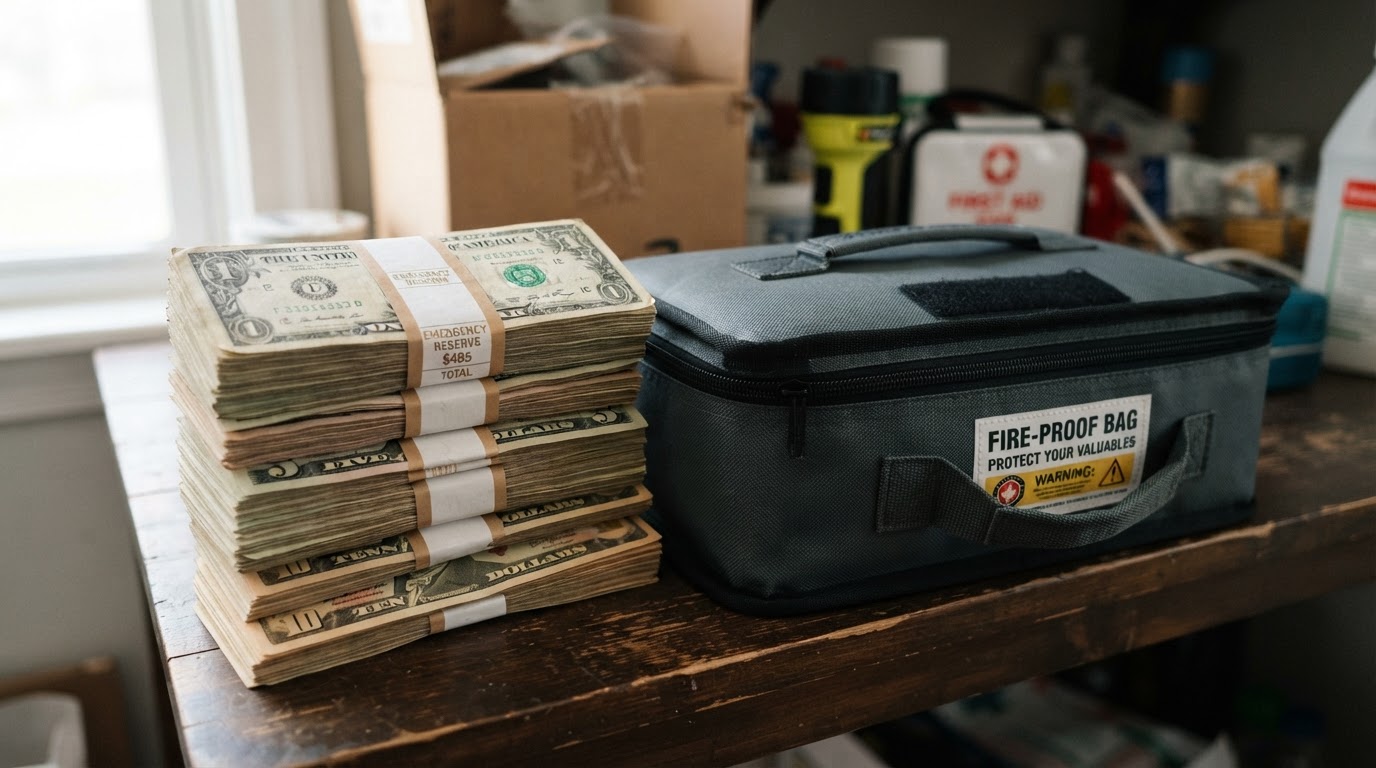
Keep a reserve of cash in small bills — ones, fives, tens, and twenties — because in a disruption no one can make change for a hundred, and the thing you need might cost $4. How much depends on your household and how long you're planning for; enough for a tank of gas, a few days of groceries if a store's open, and a motel night is a reasonable baseline. The budget planner tool helps you set a number; the point is to have it.
Store it securely — with your emergency documents, in a fire-rated container, not in a drawer. Cash is the thing you grab in an evacuation alongside the documents folder. Keep it separate from your everyday wallet so it's not spent on pizza. Replenish it if you use it. A reserve that's been dipped into and not refilled is a reserve that's not there.
Don't advertise it. A big cash reserve is a security consideration. A modest reserve in a secure, known spot is the plan; a large amount of cash in an obvious place is a risk, not a prep. The documents page covers the fire-rated container that's the right home for both. Cash and documents live together because they're both grab-and-go.
Consider what you'd use it for and size to that. A tank of gas, a night at a motel, a few days of groceries from a store on a generator, a co-pay at an urgent care — these are the realistic uses. You're not planning to buy a generator in cash; you're planning to cover the small, immediate needs that cards can't when the power's out. Match the reserve to the realistic use.
Rotate it in the sense that you check it's still there and still usable. Cash doesn't expire, but a reserve you checked two years ago may have been borrowed by a household member who forgot to tell you. Check it on the maintenance schedule — same time as the smoke alarms and the documents. The check is what keeps the reserve real.
Budget for preparedness honestly
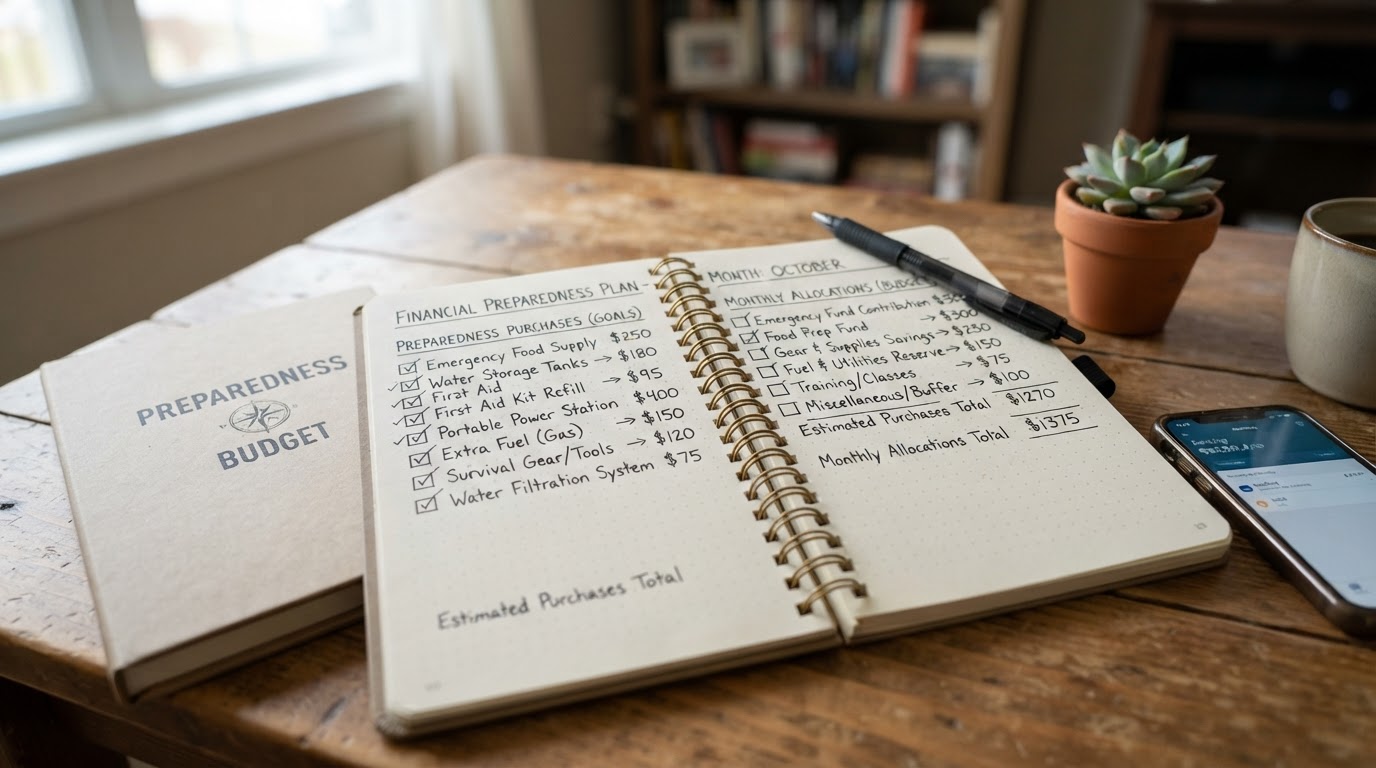
Preparedness doesn't have to be expensive, but it isn't free. A small monthly budget — $10 to $25 — spent on the next gap in your plan covers the basics over a year without a budget shock. The budget planner tool tracks it: set the monthly amount, list what you've bought, and see what's left. The point is steady progress, not a panic purchase. A $15/month habit builds a real kit in a year.
Resist the panic buy. After a headline, retailers mark up the exact things you should have bought calmly last month — water, generators, batteries, first-aid supplies. A plan and a small budget are the antidote. When the next disruption hits, you already have the water and the flashlight; you're not in the line at 9 p.m. paying double. The budget is what makes calm prep possible.
Prioritize by likelihood and consequence. Water and a flashlight before a generator. A first-aid kit before a freeze-dried food bucket. The budget planner helps rank; the rule is: cover the things most likely to matter first. A $500 gadget you'll never use is not a prep; a $10 flashlight you use every outage is. The ranking is the plan; the budget is the tool.
Track what you've spent so you know what's left. The budget planner isn't just for setting a number; it's for seeing where the money went and where the gaps still are. A household that's spent $400 on prep and has a flashlight, water, a first-aid kit, and a power bank is further along than one that spent $1,000 on a generator and nothing else. Track the spend, see the coverage.
Don't go into debt for prep. A credit-card balance for preparedness gear is a financial risk that compounds; a cash budget for prep is a financial plan that doesn't. If you can't afford the big item this month, buy the small item this month and the big one next month. The slow build is the sustainable build. The panic purchase on credit is the one that hurts later.
Plan for the payments that go down with the power
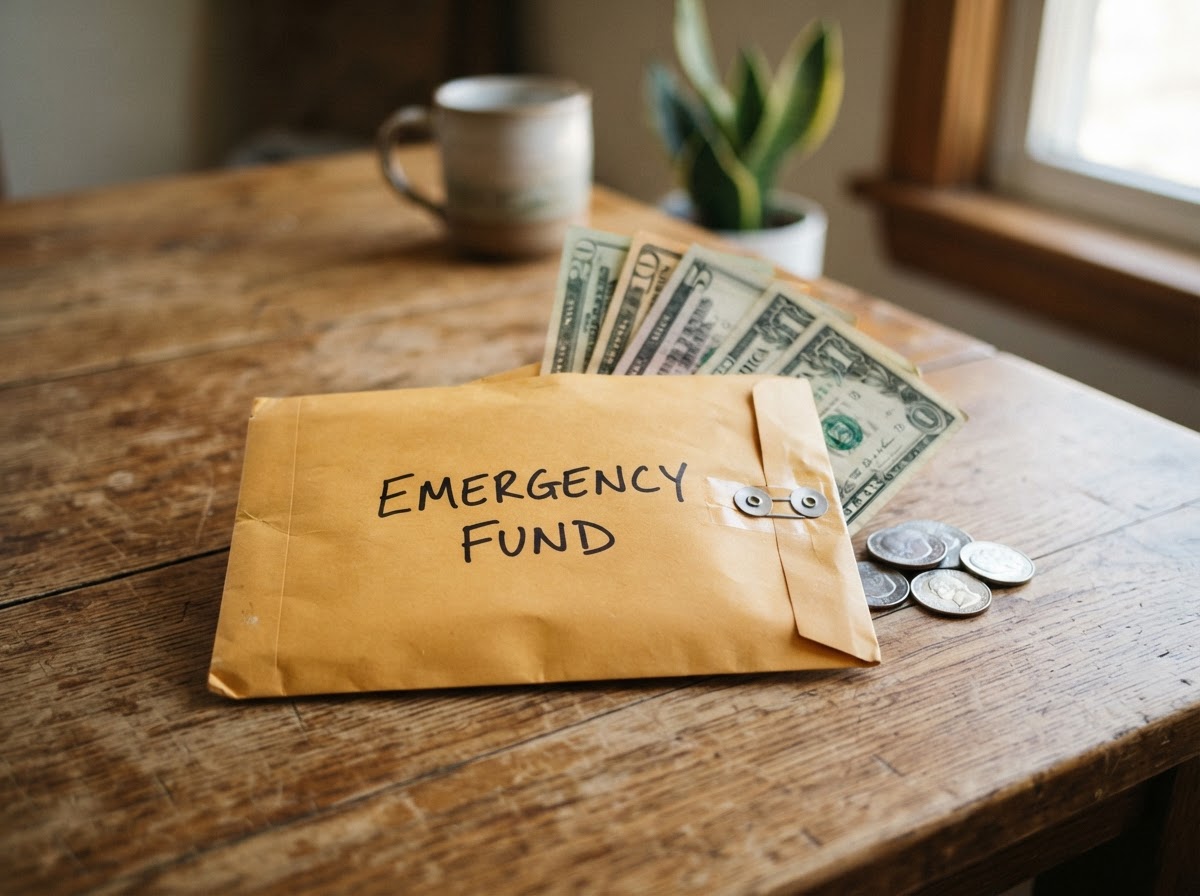
In an extended outage, digital payments can be unreliable — card networks, mobile payments, online banking. Cash is the immediate backup. For a longer disruption, keep a list of bills due and a plan for paying them: some lenders offer hardship forbearance, and you can often call ahead if you know you'll be affected. Don't let a disaster create a secondary financial disaster. Ready.gov's financial preparedness page covers this.
Keep records of your spending after a disaster for insurance or FEMA assistance — receipts, photos, a simple log. The documents prep supports this; the cash plan adds the actual liquidity to get through it. After a disaster, the receipts are what make an assistance claim possible. Keep them in a zip bag in the go-bag so they survive.
Know your bank's emergency procedures. Some banks have disaster-relief programs — deferred payments, fee waivers, expedited services. Knowing they exist before you need them is the plan. Call your bank and ask: 'If a disaster hit my area, what would you offer me?' The answer is part of your plan, not a surprise.
This is practical cash and budget planning, not investment advice. The point is to have money that works when the digital systems don't, and to spend on prep in a way that's sustainable. A modest reserve, a small monthly budget, and a no-panic rule is the whole plan. Don't conflate 'have cash for an outage' with 'get rich' — the cash plan is about liquidity, not wealth.
The honest summary: the cash plan is a small reserve in small bills, a modest monthly prep budget, and a record-keeping habit for after a disaster. It's not glamorous, it's not expensive, and it's the difference between a disruption that's an inconvenience and one that's a financial crisis. The cash in the fire-rated bag is the prep; the budget planner is the tool. Don't skip it because it's boring.
Practical priorities
- Small bills in a secure, known place
- A modest reserve for a few days of needs
- A small monthly prep budget
- A spending log for insurance/assistance records
- Know your bank's disaster-relief procedures
Common mistakes
- Only large bills no one can change
- Cash in the everyday wallet, spent on dinner
- A big panic purchase instead of a small monthly budget
- No record of disaster spending for later claims
- No knowledge of the bank's hardship options
Your emergency-cash checklist
- Small-bill reserve in a secure spot
- Amount covers a few days of likely needs
- Monthly prep budget set and tracked
- Cash stored with the documents grab-bag
- Disaster-spending log started if needed
- Bill-due list and hardship-plan contacts noted
Sources & further reading
This is planning guidance, not emergency advice. In an emergency, call 911. See a mistake? Report it.