
Financial Emergency Preparedness
A financial emergency is a records, cash, and access plan.
A financial emergency is not always a market crash. It can be a job loss, a medical bill, a freeze on accounts, a cyberattack on a bank, or a widespread payment outage. Ready.gov treats financial preparedness as a set of records and access: keep cash, protect your identity, keep copies of your important documents, and know how to access your accounts when the usual channels are down. This guide is about the records and the access, not about investment advice — that is for a qualified financial advisor. This is the plan that keeps the household able to pay for what it needs when the system is stressed.
Keep cash for when the cards do not work
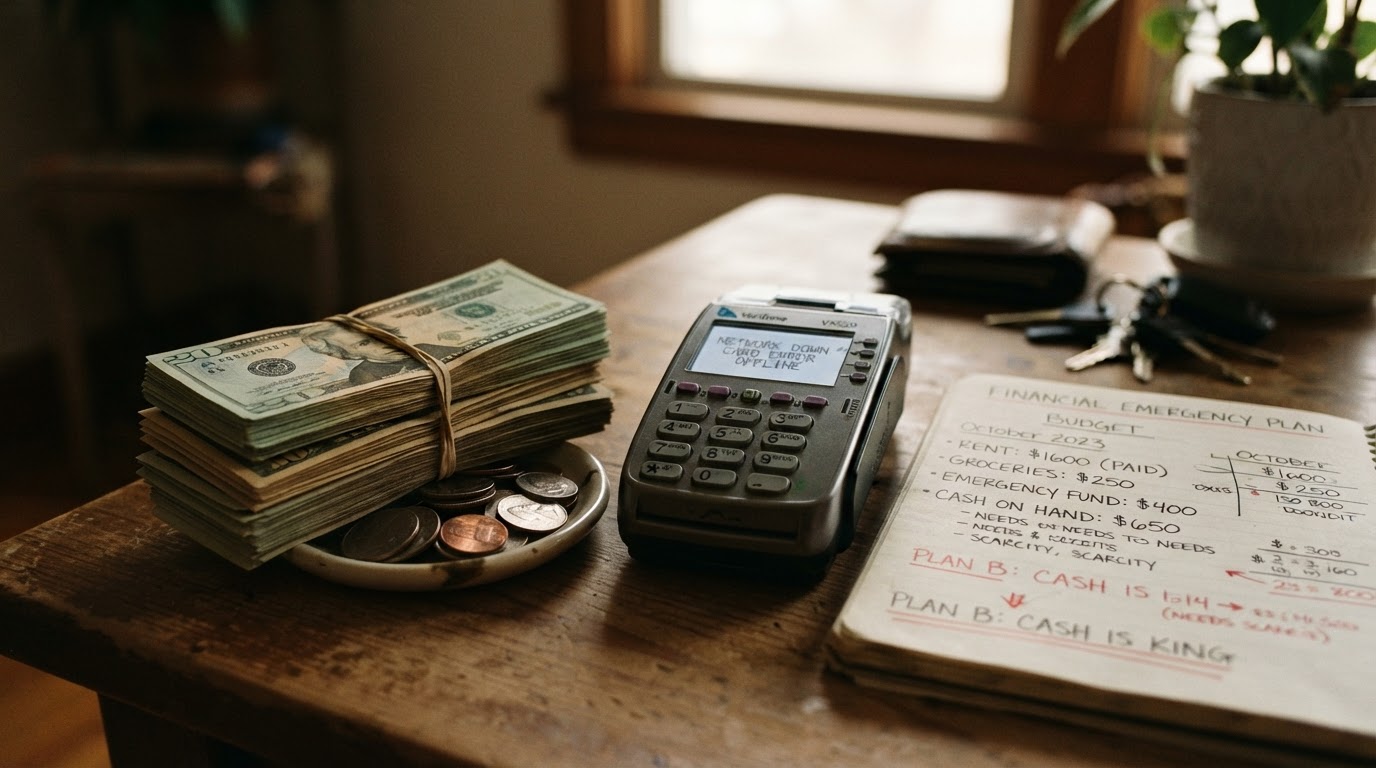
The Federal Trade Commission recommends keeping enough cash on hand to cover essentials if card readers and ATMs are down. Keep it in small bills — $20s and smaller — because a store that cannot make change may not accept a $50 or $100. Keep some at home and some in the go-bag, and do not keep it all in one place. The amount depends on your household; enough to cover a few days of food, fuel, and any co-pays is a practical floor. The plan is to be able to transact when the system is not, and cash is the most reliable way.
Keep fuel in the vehicle above half during high-risk seasons, because a fuel shortage can take the card reader with it. Keep a list of the essentials you would buy if the network were down — the specific items, the nearest store — so you are not improvising. The plan is the same as for any supply disruption: have the buffer before the disruption.
Protect your important documents
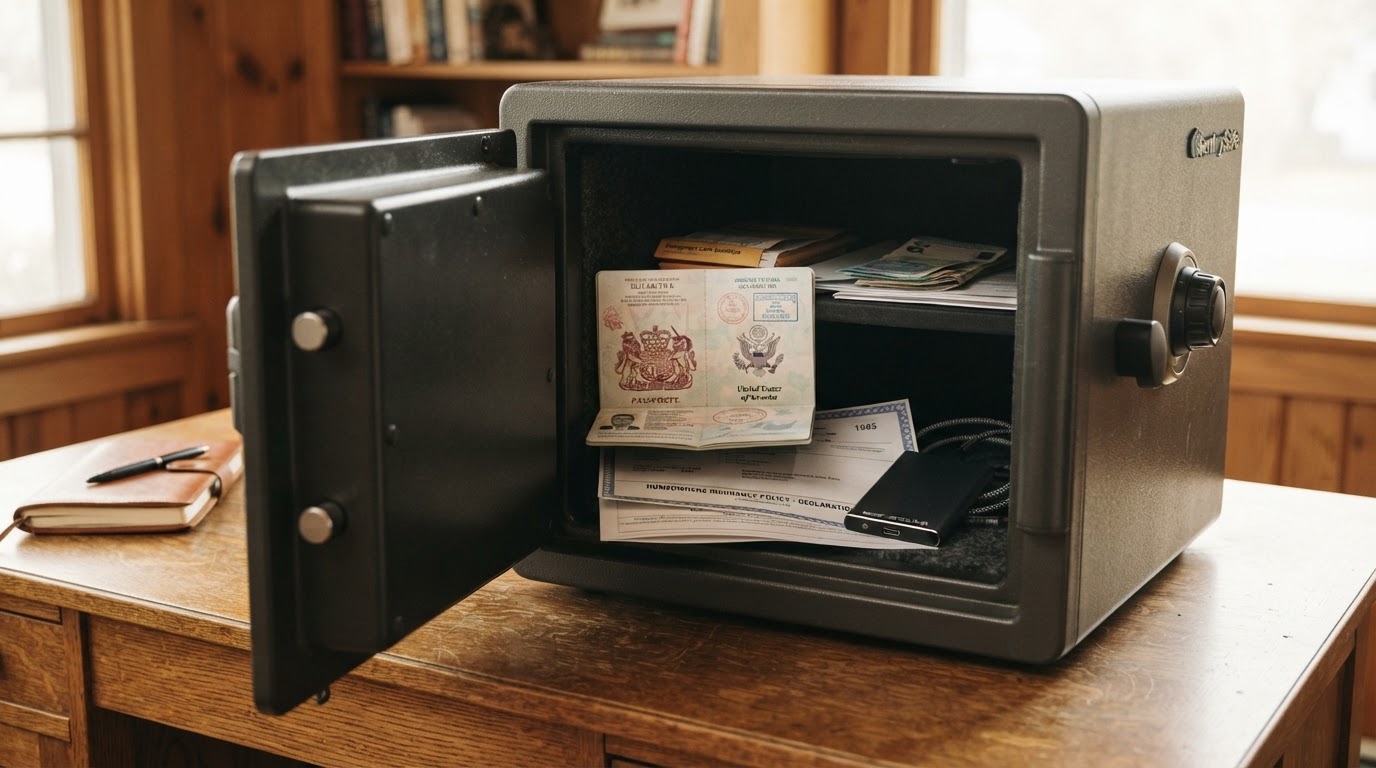
Ready.gov recommends keeping copies of important documents in a safe place — identification, insurance policies, deeds, wills, passports, and financial records. Keep the originals in a fireproof and waterproof safe or a safe deposit box, and keep digital copies in secure cloud storage and on an encrypted USB drive. Keep a written list of your accounts, policy numbers, and the phone numbers to report a loss. If your home is damaged or you are displaced, the documents are how you prove who you are and what you own.
Keep an inventory of your belongings with photos and serial numbers for insurance. Update it each year. Keep a list of your financial institutions — bank, credit cards, insurance, mortgage — with their fraud and customer-service numbers, because if a card is lost or an account is compromised, you will need to reach them quickly. The plan is the records, the copies, and the numbers.
Protect your identity
A financial emergency can be a security event too. The FTC recommends freezing your credit, which prevents anyone from opening new accounts in your name; you can freeze and unfreeze it for free at the three credit bureaus. Use strong, unique passwords for each financial account, and enable two-factor authentication, but keep the backup codes offline — write them on paper and store them securely, because if your phone is down you may not receive a text code. Keep a list of your accounts and how to reach their fraud lines.
Be alert to scams during a disruption, because fraudsters use the chaos. Do not click links in unexpected emails or texts, do not give personal information to unsolicited callers, and verify any request by contacting the organization directly through a known number. The FTC's identity theft recovery steps are the fallback if something is compromised: place a fraud alert, freeze your credit, and report it. The plan is to secure your identity before a crisis and to know how to recover it if one happens.
Plan for access when the channels are down

If your bank's app is down, you may still be able to call, visit a branch, or use an ATM at a different bank's network. Keep a written list of your accounts, your bank's customer-service number, and the nearest branch. Keep a copy of a recent statement for each account, because it has the information you may need to verify your identity. If you bank online only, consider keeping a local branch account as a backup, because a cyber outage at one bank may not affect another.
If you share accounts with a partner, make sure both of you can access them — know the passwords, the security questions, and the phone numbers. A financial emergency is hardest when one person holds all the access and that person is unavailable. The plan is the access, the records, and the shared knowledge.
This is not investment advice
This guide is about records, access, and identity — not about how to invest. A financial emergency can include a market event, but how to respond to that is for a qualified financial advisor who knows your situation. The household plan is the buffer of cash, the copies of documents, the identity protection, and the access to accounts. The plan that keeps the household able to pay for what it needs during a disruption is the plan this guide is about, and the investment decisions are a separate conversation with a professional.
Review the plan each year. Update the document copies, refresh the inventory, confirm the fraud-line numbers, and check the credit freeze. The financial emergency that gives some warning is the one you can plan for, and the records that are in place before the disruption are the records that work during it.
Practical priorities
- Keep cash in small bills for when cards fail
- Keep copies of important documents in multiple places
- Freeze your credit and use two-factor authentication
- Keep a list of accounts and fraud-line numbers
- Ensure both partners can access shared accounts
Common mistakes
- Keeping all cash in one location
- Storing passwords in a single unsecured file
- Not having offline two-factor backup codes
- Trusting unsolicited calls during a disruption
- Confusing household cash planning with investment advice
Financial emergency readiness checklist
- Cash in small bills at home + go-bag
- Fireproof/waterproof document safe
- Digital copies in secure cloud + encrypted USB
- Belongings inventory with photos
- Credit frozen at all three bureaus
- Two-factor with offline backup codes
- List of accounts + fraud-line numbers
- Recent statement for each account
- Insurance policies and deeds copied
- Household access shared with a partner
Sources & further reading
This is planning guidance, not emergency advice. In an emergency, call 911. See a mistake? Report it.