Browse by topic
Food: a pantry you will actually eat
Ordinary pantry planning, dietary needs, rotation, shelf-stable foods, and cooking contingencies — food preparedness without the panic.
The best emergency food is the food your household already eats, stocked in quantities you will use and rotated so nothing expires.
2 weeks
Planning target
FIFO
Rotation method
Manual can opener
Key tool
Foods nobody eats
Mistake to avoid
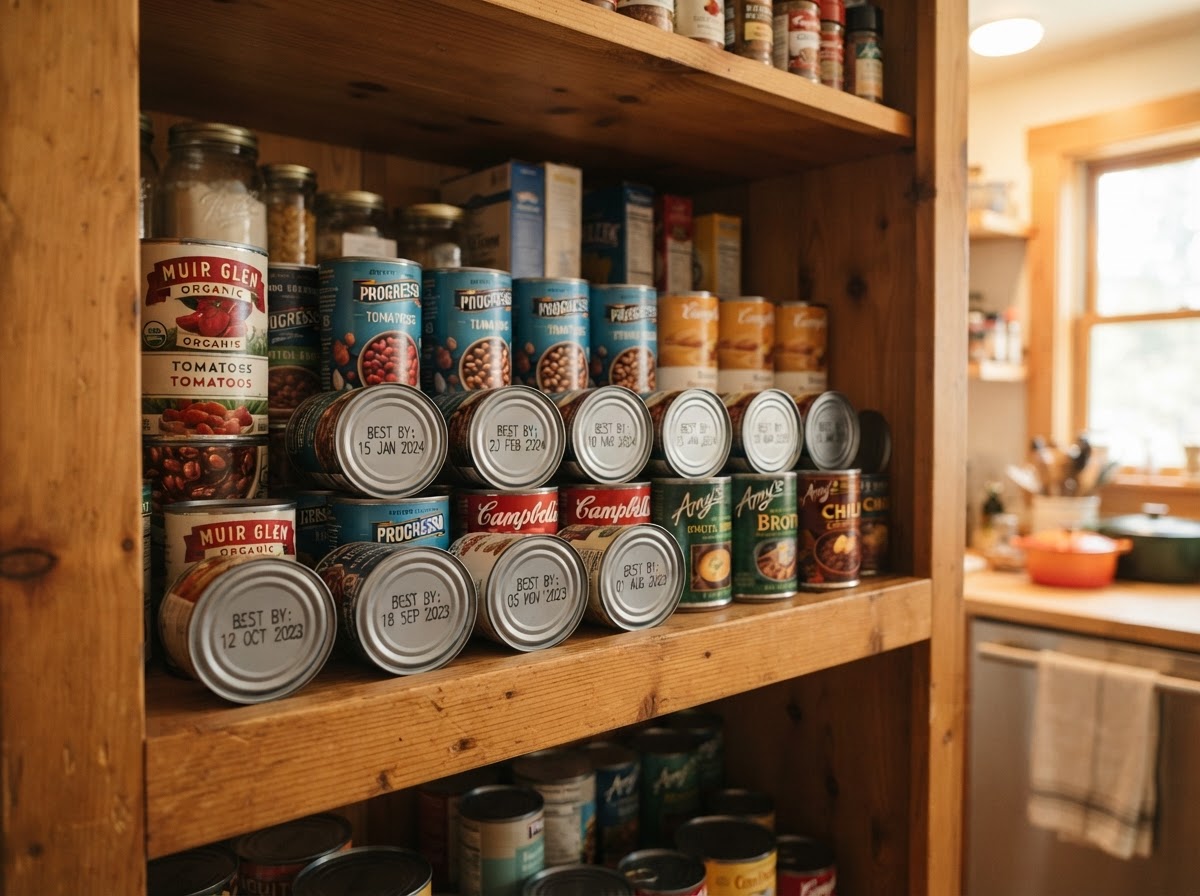
Build a pantry from what you eat
The best emergency food is the food your household already eats. Look at your last few weeks of meals and list the shelf-stable ingredients: rice, pasta, oats, canned beans, canned vegetables, nut butter, cooking oil, dried fruit, nuts, coffee, tea. Those become the backbone of your pantry. Buying foods nobody likes is how you throw away expired cans after every preparation cycle — and it is the most common reason people give up on food preparedness. The Smart Prepper's pantry guide walks through this in detail.
Aim for two weeks of meals first, then extend to a month if your space and budget allow. Two weeks covers the vast majority of real-world disruptions — extended outages, storms, supply hiccups — without the cost and waste of a year-long stockpile. Build it one extra item per grocery trip rather than all at once, and your pantry fills itself without a budget shock. A ten-dollar-per-trip habit builds a month of food in a year. Think in meals, not in ingredients: a pantry with rice, beans, canned tomatoes, and spices is the start of several meals; a pantry with random cans that do not combine is a storage problem.
Do not forget the non-obvious staples: salt, spices, a manual can opener, flour or a ready-mix, and whatever your household reaches for when someone is sick. Comfort foods matter during a disruption as much as calories — a familiar meal in a dark kitchen is worth more than a gourmet freeze-dried dinner nobody knows how to prepare. Track what you actually use, and adjust your stocking toward what moves and away from what sits. A pantry that matches your real diet stays fresh and gets used; one built from a generic checklist expires in the dark.
Account for dietary needs and allergies
A household with a gluten intolerance, a nut allergy, a diabetic member, or an infant on formula has different food needs than the generic checklist assumes. Write those needs down and build your pantry around them. A shelf full of wheat pasta is useless if half the household cannot eat it, and a surprise allergen during a power outage is a problem you cannot solve when the stores are closed. For infants, stock formula per your pediatrician's guidance and rotate it. For people with diabetes, plan for stable-carbohydrate options and keep a supply of fast-acting sugar for lows.
For anyone on a medically restricted diet, the emergency food shelf at a store is rarely safe — you have to build your own. If you cook with electricity, plan a no-power cooking method that works in your home: a camp stove used outdoors, a butane burner on a balcony, or at minimum a thermos for hot water. Your food plan includes how you will prepare the food, not just what food you have. Stock for the conditions: in cold weather, you want hot meals and extra calories; in heat, you want hydration and lighter foods. A plan that says eat cold cans in January is a morale problem and a nutrition one.
Keep a written list of dietary needs with your pantry — allergies, restrictions, what each person will and will not eat. In a crisis, the person shopping or cooking may not be the one who usually does it. The list prevents the mistake of buying the wrong thing or serving something that makes someone sick. The food page is where you turn a generic pantry into one that serves your specific household.
Rotate so nothing expires
Stored food you never rotate is waste, not preparedness. Use a first-in, first-out (FIFO) system: when you buy a new can, put it behind the older one, and pull from the front for normal meals. A simple label with the purchase or best-by date on each item makes rotation obvious. You eat your oldest stock as part of your regular week, and the pantry stays fresh without a separate emergency shelf that goes stale. The Smart Prepper's pantry tracker can track dates and flag items approaching their best-by.
Understand what dates mean. A best-by date is about quality, not safety — many shelf-stable foods are safe well past it if stored cool and dry. A use-by or expiration date on refrigerated or baby formula items is stricter. The USDA and the manufacturer's guidance are your sources; never rely on a guess. When in doubt, throw it out, but know the difference between past best-by and past safe. Store food cool, dry, and pest-proof — heat shortens shelf life dramatically, and a mouse in your rice ruins the whole container, not just the part it touched.
Set a rotation habit you will actually keep. A monthly pantry check — ten minutes, look at the front of each shelf, pull anything expiring in the next month into your regular meals — is enough. Do not overcomplicate it. The system that works is the one you do. A spreadsheet you update once a year is less useful than a quick visual check every month. After a disruption, use your perishable food first, then your pantry, then your long-term storage. The USDA says a refrigerator keeps food cold for about four hours if unopened; a full freezer holds for about 48 hours. Eat the perishables first, not last.
Plan for cooking without power
If your stove is electric, a power outage means you cannot cook — unless you have planned for it. A camp stove used outdoors, a butane burner on a balcony, or a charcoal grill are options, but never use any of them indoors. The Consumer Product Safety Commission warns that carbon monoxide from indoor cooking or heating kills people every year. Plan the method before the outage: know what you have, where it is, and how to use it safely. A thermos for hot water and a supply of no-cook meals are the fallback when even outdoor cooking is not possible.
Match the method to your setting. An apartment with a balcony has different options than a house with a yard. A household with children needs simpler meals than one of adults. The food plan includes the cooking plan, and the cooking plan includes the safety plan. Keep fuel for your alternative cooking method stored safely and rotated. Know how many meals you can cook with the fuel you have. The fundamentals of food preparedness are the pantry, the rotation, and the cooking plan — and all three have to work together.
Freeze-dried vs. supermarket pantry
Freeze-dried meals have a place in a food plan — they are lightweight, last 25-plus years, and need only hot water — but they are not a replacement for a pantry of foods you eat. A household that has never tasted a freeze-dried meal will not enjoy it during a stressful outage, and the cost per meal is high. Use freeze-dried meals for the go-bag, where weight matters, and for the deep storage you hope never to need. Use a supermarket pantry for the two-week supply you might actually use, because rotation only works if you eat the food you store.
A practical food plan combines both: a rotating supermarket pantry for the likely disruption, a few freeze-dried meals for the go-bag, and a small deep-storage supply for the unlikely long event. The balance depends on your budget, your space, and your risk. The Smart Prepper's food guide compares the two in detail, with cost, shelf life, and suitability for each. The point is to make a deliberate choice, not to default to one because a website said so. The fundamentals of food are the pantry, the rotation, the cooking plan, and the right mix of storage types — built around your household, not a generic list.
Food readiness checklist
- 2-week meal list from foods you eat
- Grains, proteins, fats, and seasonings stocked
- Allergies and dietary needs documented
- Manual can opener located
- No-power cooking method identified
- FIFO labels and rotation habit started
Sources & further reading
This is planning guidance, not emergency advice. In an emergency, call 911. See a mistake? Report it.
Explore other topics
Fundamentals
Household needs, risk prioritization, budgets, and gradual preparation — the foundation everything else builds on.
Water
Storage, containers, rotation, treatment concepts, and filter limitations — how to plan water before the tap stops.
Medical Readiness
First-aid kits, training, sanitation, prescription continuity with clinicians, and medication storage — health preparedness done right.
Power & Light
Batteries, portable stations, solar, generators, charging, refrigeration, lighting, and carbon-monoxide prevention — power preparedness safely.
Communication
Weather alerts, radios, satellite messaging, family plans, maps, offline information, and reunification — a communication plan that does not depend on one app.