Browse by topic
Self-reliance: the skills that reduce dependence
Gardening, seeds, preservation, hand tools, repairs, and off-grid fundamentals — the skills that let a household do more for itself when the systems are stressed.
Self-reliance is not about going off the grid; it is about the skills that reduce your dependence on systems that can fail. Build them gradually.
Growing some food
Core skill
Hand tools
Key tool
Learn safe methods
Preservation
Gradual, not all at once
Approach
Start a backyard or container garden
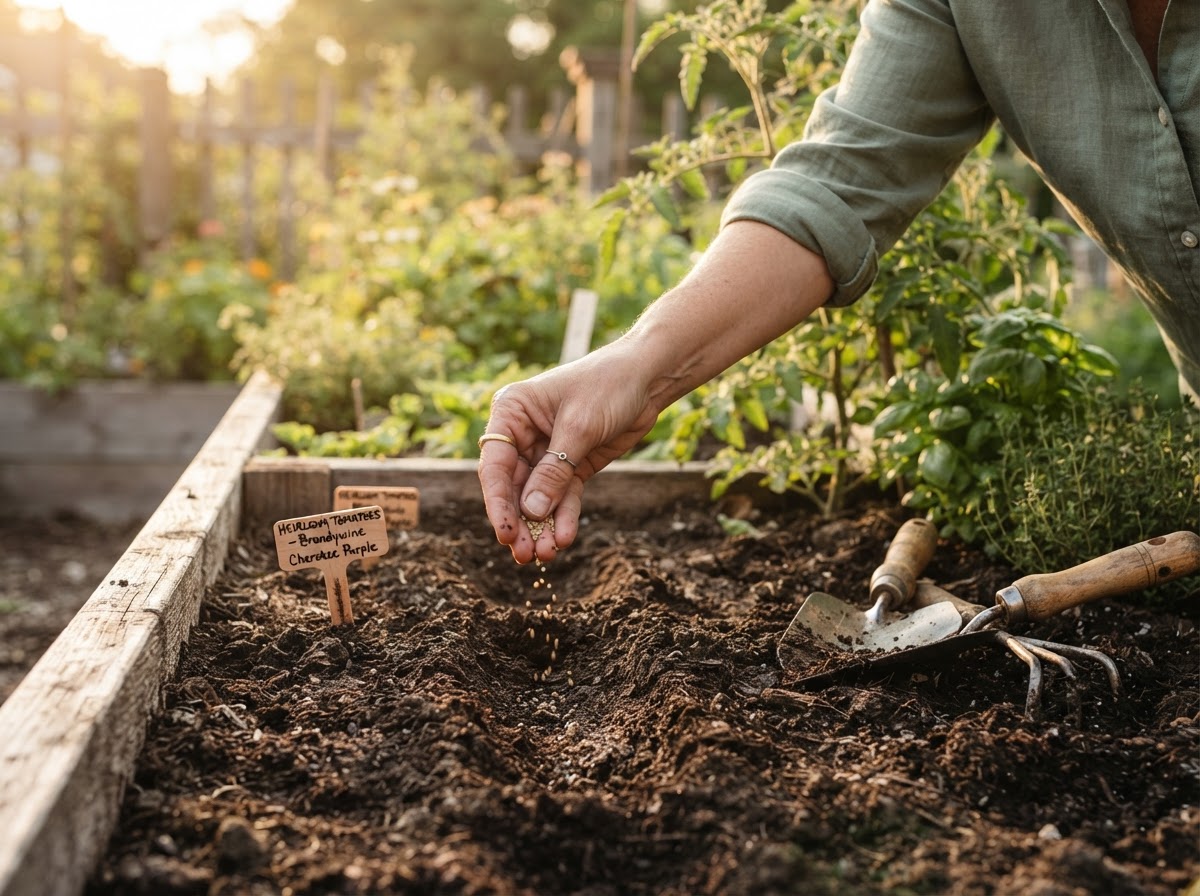
Growing even a small amount of food is the self-reliance skill that most directly reduces dependence on the supply chain. Start with what you eat and what grows in your climate: tomatoes, leafy greens, herbs, beans. A backyard garden or a set of containers on a balcony can produce a meaningful supplement to your groceries, and the skills — soil, watering, pest management, harvest — are the skills that scale. The USDA and local extension offices offer free guidance on what grows in your area and when. The Smart Prepper's gardening guide helps beginners start.
Start small and expand. A single raised bed or a few containers in the first year teaches you the basics without overwhelming you. Add a bed each year as you learn. Keep a garden journal — what you planted, when, how it did — because the knowledge is the real crop. Save seeds from your best plants, because seed-saving is the skill that makes the garden self-sustaining. The fundamentals of self-reliance start with the garden, because it is the skill that turns a household from a consumer into a producer, even in a small way. The garden is not about food independence; it is about food resilience.
Seeds, soil, and irrigation
Choose seeds that suit your climate and your goals. Heirloom seeds are open-pollinated, meaning you can save seeds from the harvest and they will grow true — a key for self-reliance. Hybrids may produce more, but their seeds do not grow true, so you have to buy seeds each year. Keep a supply of seeds for the crops you grow, stored cool, dry, and dark. The USDA seeds program and local seed libraries are resources for seeds adapted to your area. The Smart Prepper's seeds guide covers selection and storage.
Build your soil. Compost your kitchen scraps and yard waste — the USDA and EPA offer guidance on home composting — because healthy soil is the foundation of a productive garden. Add compost each season, and avoid over-tilling, which breaks down soil structure. For irrigation, a simple drip system or a soaker hose reduces water use and keeps the garden productive in dry spells. A rain barrel (where legal) captures water for the garden, reducing dependence on the tap. The self-reliance skill is not just growing; it is building the system — the soil, the seeds, the water — that makes growing sustainable.
Food preservation done safely
Food preservation is the self-reliance skill that turns a seasonal harvest into year-round food, but it must be done safely. The USDA and the National Center for Home Food Preservation (NCHFP) provide tested recipes and methods for canning, freezing, drying, and fermenting. Follow their guidance exactly — the recipes are tested for safety, and improvising can lead to botulism, a potentially fatal foodborne illness. Water-bath canning is safe for high-acid foods (fruits, pickles, jams); pressure canning is required for low-acid foods (vegetables, meats). Never water-batch can a low-acid food, because botulinum spores survive boiling.
Freezing is the simplest preservation method — blanch vegetables, freeze in airtight containers, and use within the recommended time. Drying (dehydrating) preserves fruits, herbs, and some vegetables with minimal equipment. Fermentation (sauerkraut, kimchi, yogurt) preserves food and adds probiotics. The skill is not just the method; it is the safety discipline — tested recipes, clean equipment, proper storage. The NCHFP and USDA are the sources; do not rely on a random blog recipe for canning, because the risk is real. The Smart Prepper's preservation guide links to the tested recipes. The fundamentals of self-reliance are the garden, the preservation, and the safety — and all three are learned by doing, with guidance from the sources that test the methods.
Hand tools and repairs
The ability to repair what you own is the self-reliance skill that reduces waste and dependence. Keep a basic set of hand tools — a hammer, screwdrivers, a wrench set, pliers, a saw, a tape measure — and learn to use them. The skill is not about being a tradesperson; it is about the small repairs that keep a household running: a loose hinge, a leaky faucet, a torn screen. A household that can make small repairs is a household that does not need to call and wait for every minor problem. The Smart Prepper's tools guide covers the basics.
Keep a supply of the consumables your household uses: screws, nails, tape, glue, filters, batteries. The self-reliance skill is not just the tools; it is the knowledge of how to use them and the supplies to do the job. Learn from a course, a book, or a friend who knows. The repair skill scales: a household that can fix a leak can also patch a tarp, repair a backpack, or maintain a bicycle. The fundamentals are the garden, the preservation, and the tools — and all three build the confidence and the capability that define self-reliance.
Off-grid fundamentals and land stewardship
For households interested in deeper self-reliance, the off-grid fundamentals are power (solar with battery backup), water (catchment, filtration, storage), and waste (composting toilets, greywater). These are significant investments and skills, and they are not for everyone — but the fundamentals apply at any scale. A portable solar panel that charges a power station is off-grid power at the smallest scale. A rain barrel is off-grid water. A compost bin is off-grid waste. The skill is to start small and scale as you learn, not to build a full off-grid system in a weekend.
Responsible land selection and stewardship matter if you are considering rural self-reliance. Know the water rights, the zoning, the soil quality, and the access before you buy. The self-reliance skill is not just the tools and the systems; it is the judgment to choose the right land, the right system, and the right scale for your household. The Smart Prepper's self-reliance guide covers the fundamentals without the fantasy — practical skills that reduce dependence, built gradually, on the land you have. The fundamentals are the garden, the preservation, the tools, the off-grid basics, and the stewardship — and all of them are about doing more for yourself, not about going it alone.
Self-reliance checklist
- Garden started (backyard or containers)
- Seeds saved and stored
- Compost system set up
- Preservation method learned (tested recipe)
- Basic hand tools acquired
- Off-grid basic tried (solar or rain barrel)
Sources & further reading
This is planning guidance, not emergency advice. In an emergency, call 911. See a mistake? Report it.
Explore other topics
Fundamentals
Household needs, risk prioritization, budgets, and gradual preparation — the foundation everything else builds on.
Water
Storage, containers, rotation, treatment concepts, and filter limitations — how to plan water before the tap stops.
Food
Ordinary pantry planning, dietary needs, rotation, shelf-stable foods, and cooking contingencies — food preparedness without the panic.
Medical Readiness
First-aid kits, training, sanitation, prescription continuity with clinicians, and medication storage — health preparedness done right.
Power & Light
Batteries, portable stations, solar, generators, charging, refrigeration, lighting, and carbon-monoxide prevention — power preparedness safely.