🧠 Plan the basics
Plan to know how before you need to
First aid, a fire extinguisher, your shutoffs, a tire change — the skills you can't improvise under stress, practiced now.
Gear without skill is just weight. The prep that holds up under stress is the skill you've practiced: basic first aid, using a fire extinguisher, shutting off your water and gas, changing a tire, using your water filter. These aren't things you want to learn for the first time during an emergency. The plan is to identify the skills your household needs and practice them while it's calm. This page covers the first-aid skills, the home skills, and the rehearsal that turns owned gear into usable knowledge.
First aid and CPR
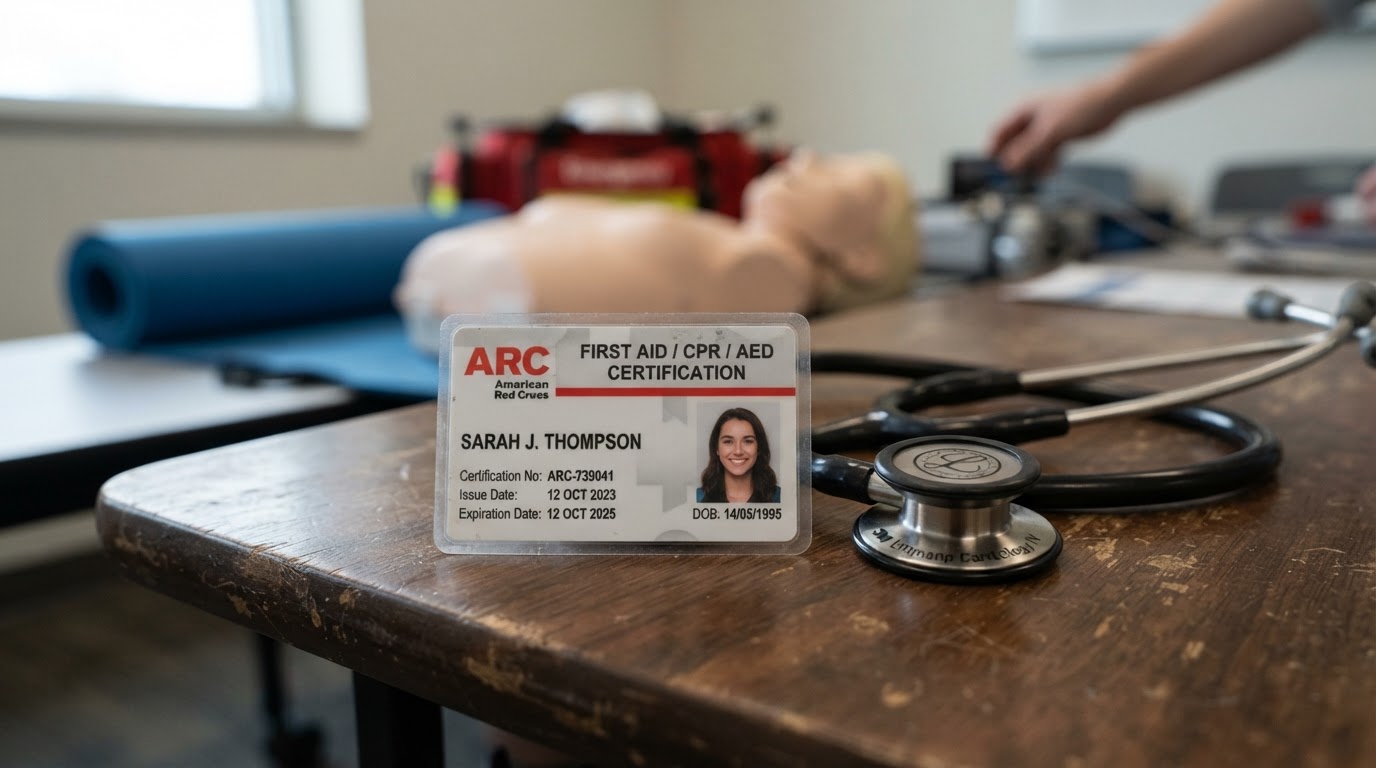
Take a certified first-aid and CPR course — the Red Cross, the American Heart Association, and local fire departments offer them, often for a modest fee or free. The certification matters less than the practice; the muscle memory of chest compressions and the confidence to use an AED are what you're buying. Refresh it every couple of years; the guidelines change and the skill fades. The Red Cross training page is the starting point.
Know the basics that matter in the first minutes: how to stop serious bleeding (a tourniquet, applied correctly, saves lives), how to recognize a stroke (the FAST test), how to do the Heimlich. These are the things where seconds matter and a 911 call is minutes away. The first-aid basics page covers what to keep on hand.
Keep a first-aid kit you know how to use. A kit you've never opened is a weaker prep than a smaller kit you've practiced with. Know where the tourniquet is, where the gauze is, and how to use them. The skill and the kit together are the prep; the kit alone is not.
Learn the signs that matter: stroke (FAST), heart attack (chest pain, shortness of breath), shock, severe bleeding. These are the things where acting in the first minute is the difference. A five-minute read on each, before you need it, is the prep. The knowledge is free; the certification is the proof.
Practice with the people in the household. If you're the only one who knows CPR and you're the one who needs it, the skill doesn't help. Get a second person trained. The household skill plan is a household plan, not a solo one. The more people who know, the more the plan holds.
The home skills: shutoffs, extinguishers, a tire
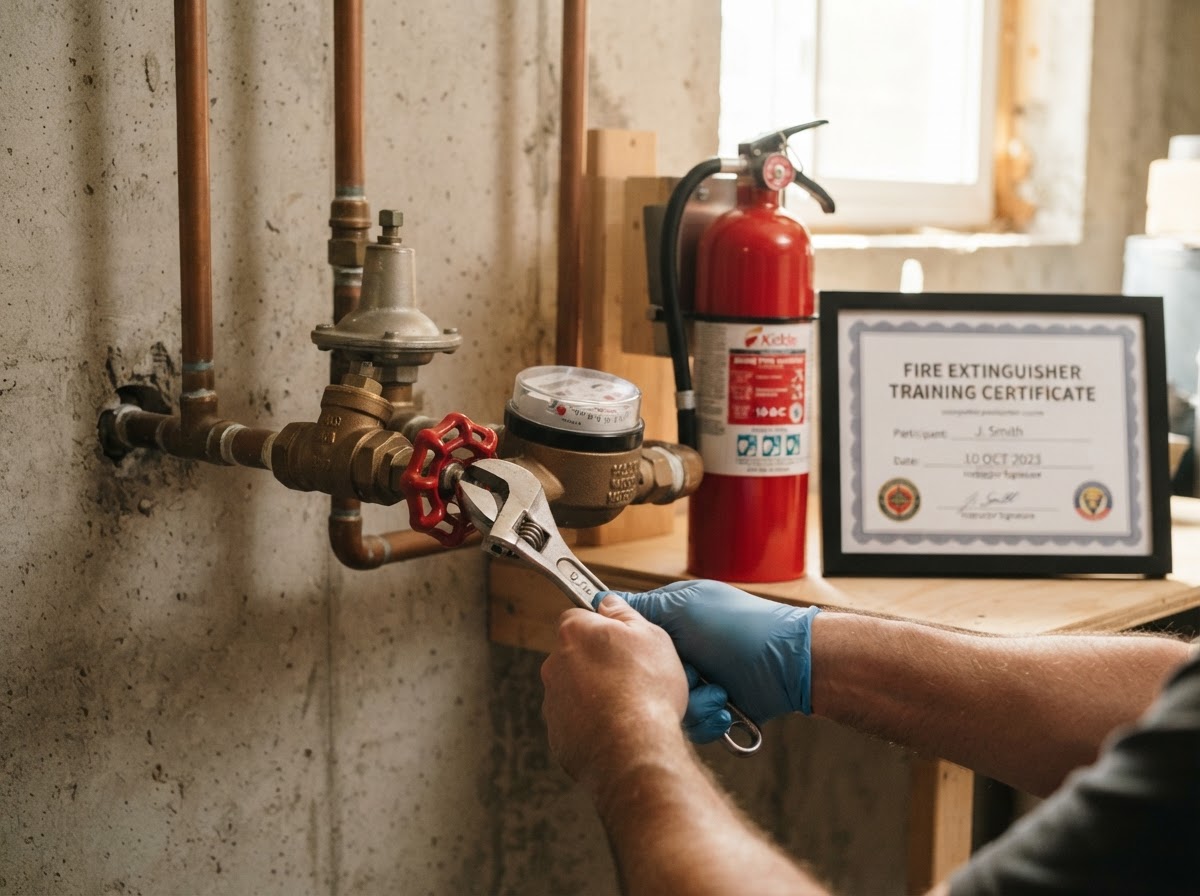
Know where your water, gas, and electric shutoffs are and how to turn them off — and label them. In a gas smell or a leak, seconds matter, and fumbling for a valve costs them. This is the single highest-value free prep. Show everyone old enough in the household where they are. The tools page covers this in depth, but the skill is here: practice finding and turning them, once, before you need to.
Know how to use a fire extinguisher — the PASS method (Pull, Aim, Squeeze, Sweep) — and have one rated for the kitchen and one for the garage. A fire extinguisher you've never practiced with is a weaker prep; some fire departments offer practice sessions. Know when not to fight a fire (when it's spreading, when you don't have a clear exit) and to evacuate instead. The fire-safety page covers this in detail.
Know how to change a tire and use your jump-starter. Practice in the driveway, not on the highway. These are the everyday skills that also matter in an evacuation — a flat during an evacuation is the same skill, just under more pressure. The practice is what makes it work then. A practiced skill in a packed kit is the ready vehicle.
Know how to use your water filter. If you have a camping filter or a treatment method, run water through it once a year so you know it works and you remember how. A filter you've never used is a filter you can't trust. The water basics page covers the treatment; the skill is here: practice it before the outage.
Know how to use your generator or power station. Run the generator under load once a year. Charge something from the power station. The gear that's never been used is gear you can't trust, and the first time you use it shouldn't be during an outage when you need it to work without a learning curve. The power basics page covers the setup; the skill is the practice.
Practice the plan, not just the skills
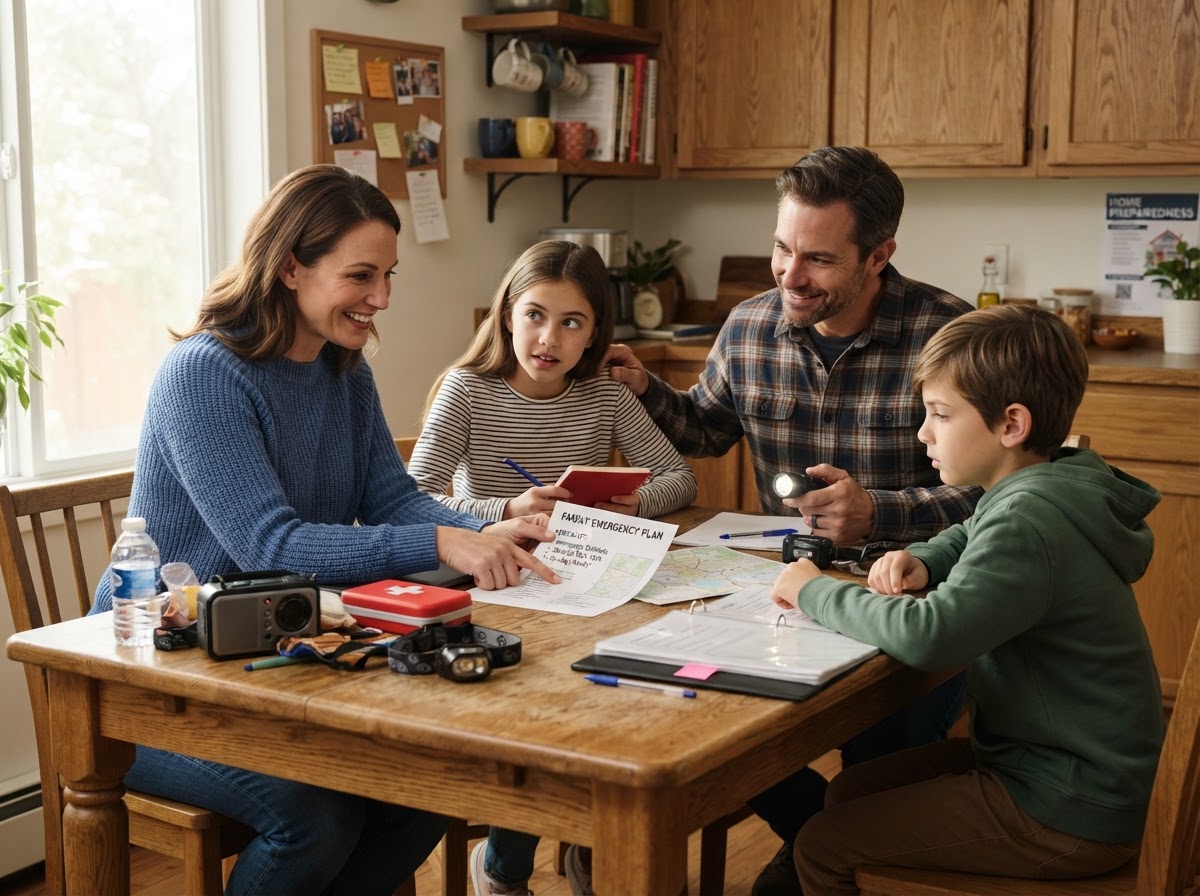
Once a year, rehearse the household plan: the meeting point, the grab list, the out-of-area call, the evacuation route. Time the grab — can you be out the door in ten minutes with the documents, the meds, the go-bag? The rehearsal reveals what's missing: the flashlight with dead batteries, the document that's not where you thought, the kid who doesn't know the plan. The timed rehearsal is what turns a written plan into a working one.
Practice the specific skills your plan depends on. If you have a water filter, run water through it once a year so you know it works and you remember how. If you have a generator, run it under load. If you have a portable power station, charge something from it. Gear that's never been used is gear you can't trust. The annual test is the prep that keeps the gear ready.
The point is the confidence that comes from having done the thing, not just owned the thing. A household that's rehearsed the plan and practiced the skills is a household that moves instead of freezes. That's the real prep. The gear is the starting point; the skill is the plan; the rehearsal is what makes it hold.
Keep a log of what you practiced and when. A simple note — 'CPR refresher, March 2026; generator test, October 2026; tire change, June 2026' — tells you what's due. The log is the maintenance schedule for the skills, same as for the smoke alarms and the kits. The log is what keeps the practice from lapsing.
The honest summary: the skills plan is the first-aid course, the shutoff practice, the extinguisher drill, and the annual rehearsal. It's free or cheap, it's the difference between gear that works and gear that fails, and it's the prep that most people skip because it takes a Saturday. Don't let the skills be the gap — owned gear without skill is weight, not prep.
Practical priorities
- Certified first-aid and CPR, refreshed every 2 years
- Know your shutoffs and label them
- Know PASS and have working extinguishers
- Annual rehearsal of the household plan
- A practice log for skills and gear tests
Common mistakes
- A first-aid kit you've never opened
- Shutoffs you can't find in the dark
- A fire extinguisher you've never practiced
- A plan you've never timed
- Gear you own but have never tested under load
Your skills & practice checklist
- First-aid/CPR certification current
- Shutoffs located, labeled, and shown to household
- Fire extinguishers placed and PASS known
- Tire change and jump-start practiced
- Annual household-plan rehearsal
- Gear tested under load once a year
- A practice log maintained
Sources & further reading
This is planning guidance, not emergency advice. In an emergency, call 911. See a mistake? Report it.