
Household preparedness
Plan the tools that fix real problems
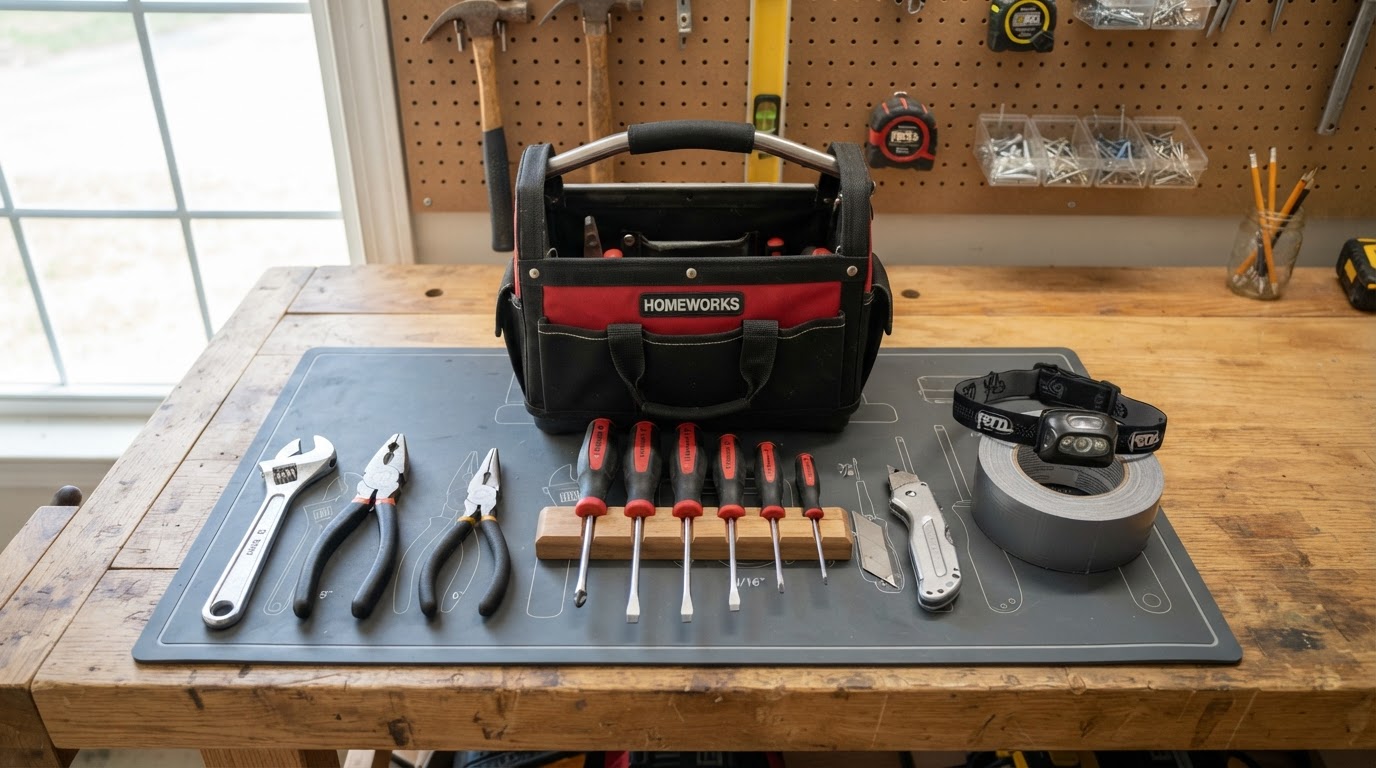
A practical household tool kit and a headlamp handle the small repairs and shutoffs that show up during and after a disruption.
Start with These Three Steps
Gather the basics.
Keep a wrench, pliers, screwdrivers, a utility knife, and a roll of tape in one spot you can find in the dark.
Know your shutoffs.
Learn where the water and gas shutoffs are and which tool they take, so a leak does not become a flood.
Add light and fasteners.
A headlamp plus zip ties and a few common fasteners cover the repairs you are actually likely to make.
Your Tools & Repairs Checklist
- Adjustable wrench and pliers located
- Screwdrivers and a utility knife
- Duct tape and zip ties
- A headlamp with spare batteries
- Shutoff tools and locations identified
- A multitool for the go-bag
What to Look For
Real utility.
Pick tools you already know how to use rather than a novelty multitool that never leaves the drawer.
Shutoff fit.
Confirm the wrench actually fits your gas and water shutoff valves before you need it.
Hands-free light.
A headlamp leaves both hands free for repairs when the power is out.
Keep It Ready
Keep tools together in one labeled spot and check that the headlamp works each season. Learning where your utility shutoffs are now saves time and damage during a real disruption; call a professional for gas work you are not trained to do.
Build Your Household Plan
Add this category to your plan, then work through the essentials at a pace that fits your household.
Explore the 10 EssentialsOther Plan the Basics guides
Food
Build a pantry from foods you already eat, rotate it so nothing expires, and know how to cook when the power is out.
Water
One gallon per person per day is the starting line. Storage, rotation, and a treatment method are what make it usable.
First Aid
A household first-aid kit plus basic training handles the cuts, burns, and sprains that show up in every disruption.
Hygiene & Sanitation
Handwashing, a toilet alternative, and a waste plan are the unglamorous prep that prevents the real secondary disaster: illness.
Shelter & Warmth
Insulate one room, layer up, and never heat with something meant for the outdoors. Hypothermia and carbon monoxide are the real threats.
Cooking
A stable outdoor stove and the right fuel let you make a hot meal and boil water during an extended outage.