
Research-based buying guide
Shelf-Stable Food: Building a Pantry You'll Actually Eat
Stock what you eat, rotate what you store, and compare calories, not serving counts.
An emergency pantry works best built from foods your household already eats. This guide compares shelf-stable staples and storage approaches. It is research-based, not hands-on testing, and not food-safety certification. A single protein product is not a complete household food supply, and a pantry of unfamiliar survival foods no one will eat is wasted money.
Plan by total calories for your household over your planned duration, not by serving counts on a label. Serving sizes are often small, and a kit claiming 60 servings may hold far fewer calories than a household needs for a day. Start with three days and expand from there, and include foods that need no cooking or water in case an outage cuts both power and water.
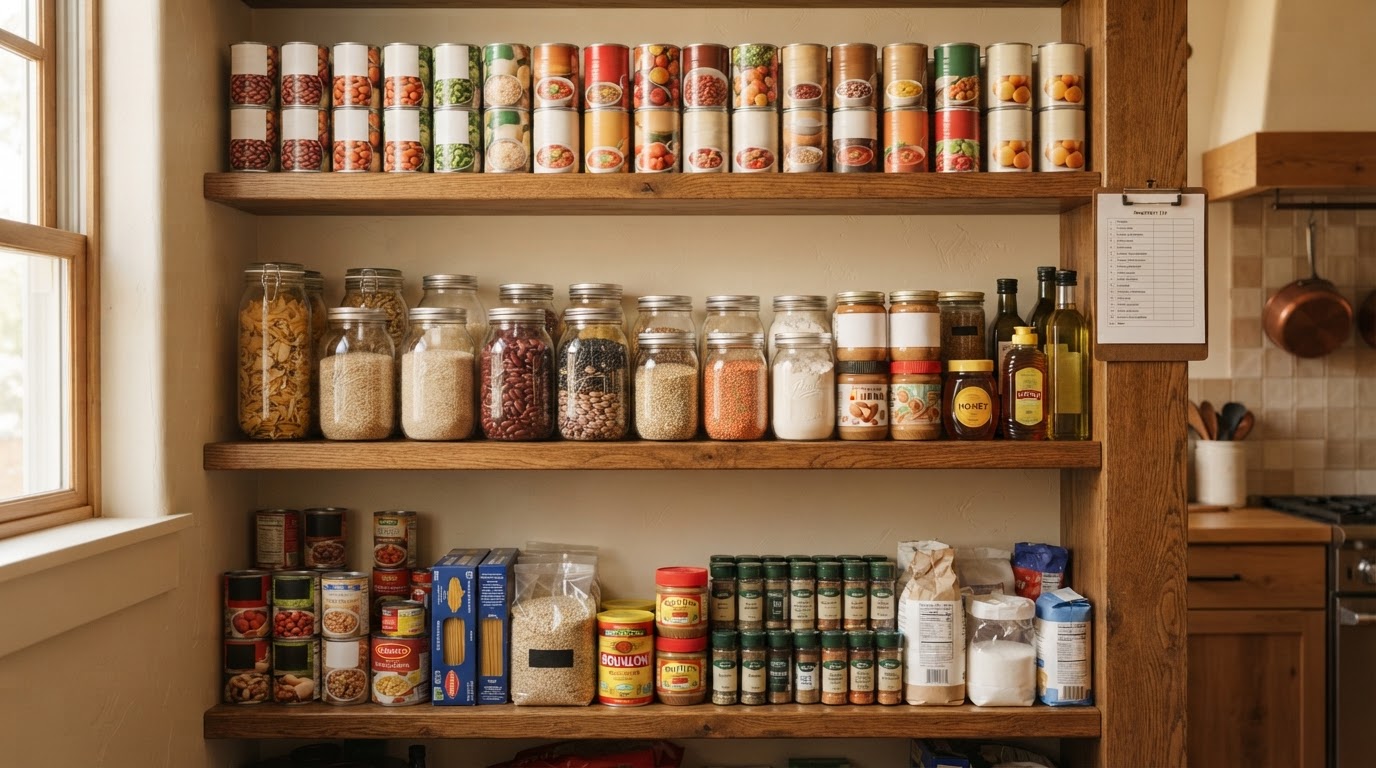
Rotation is what keeps a pantry useful. Use first-in, first-out so older items move into regular meals and nothing expires unnoticed in the back of a shelf. Foods your household will not eat are wasted space, so stock what you actually enjoy and rotate it through your normal cooking. A working pantry beats a showpiece pantry every time.
Start with Your Situation
Most households
Familiar canned proteins, grains, and dried goods from the supermarket.
No-cook needs
Ready-to-eat foods that need no heat or water.
Extended outages
Freeze-dried or dehydrated meals, compared against a supermarket pantry.
Go-bags
Light, long-lasting foods with simple preparation.
Useful for this guide
Shelf-Stable Pantry Staples
Familiar canned proteins, grains, and dried goods. Watch sodium, keep a manual can opener, and rotate stock into regular meals.
Best for: Most households
Compare Your Options
These are product categories, not specific tested models. We do not invent prices, ratings, or stock.
| Type | Best for | Evidence | Key notes |
|---|---|---|---|
| Canned proteins and vegetables | Most households as a familiar, affordable base. | Research-based | Watch sodium. Need a manual can opener. Heavier to carry |
| Grains, pasta, and dried legumes | Affordable bulk calories for a household pantry. | Research-based | Require water and heat. Store in airtight containers. Longer cooking time |
| Freeze-dried meals | Extended outages and go-bags where weight matters. | Research-based | Pricey. Water-dependent. Compare to a supermarket pantry before buying |
Scroll the table horizontally on narrow screens to read every column.
What to Look For
Calories versus serving counts
Serving counts are misleading. Compare total calories and nutrition for your household over your planned duration, not the number of servings on the label. A 60-serving kit may hold fewer calories than you think.
Dietary restrictions and allergens
Check ingredients for allergens and dietary needs. A pantry your household cannot eat is not useful. Include alternatives for anyone with a specific restriction rather than assuming one stock suits everyone.
Preparation water and fuel needs
Some foods need water and heat to cook. In an outage, water and fuel may be limited. Include no-cook options so you can eat even when you cannot cook or boil water.
Storage conditions
Shelf life depends on storage. Cool, dry, dark storage extends life; heat and humidity shorten it. Keep your pantry out of hot garages and direct sun, and rotate stock to keep it fresh.
After-opening instructions
Some foods need refrigeration once opened. In an outage, plan to use opened items quickly or choose smaller sizes you can finish in a meal or two.
Rotation and taste preferences
Rotate stock into regular meals so nothing expires unnoticed. Foods your household will not eat are wasted money. Stock what you enjoy and keep it moving through your kitchen.
Useful for this guide
Shelf-Stable Pantry Staples
Familiar canned proteins, grains, and dried goods. Watch sodium, keep a manual can opener, and rotate stock into regular meals.
Best for: Most households
Products Worth Comparing
Canned proteins and vegetables
Most households as a familiar, affordable base.
Advantages
- Long shelf life
- Familiar
- No cooking required
Limitations
- Watch sodium
- Need a manual can opener
- Heavier to carry
Accessories: A manual can opener and a rotation system for dates.
Grains, pasta, and dried legumes
Affordable bulk calories for a household pantry.
Advantages
- Cheap and shelf-stable
- High calories per dollar
- Flexible meals
Limitations
- Require water and heat
- Store in airtight containers
- Longer cooking time
Accessories: Airtight containers and a manual cooking option.
Freeze-dried meals
Extended outages and go-bags where weight matters.
Advantages
- Light and long-lasting
- Minimal storage space
- Simple preparation
Limitations
- Pricey
- Water-dependent
- Compare to a supermarket pantry before buying
Accessories: Stored water for rehydration and a way to heat it.
Common Buying Mistakes
- !Comparing serving counts instead of total calories for your household.
- !Buying foods your household will not eat and never rotating them.
- !Forgetting that some foods need water and heat to prepare.
- !Treating a single protein product as a complete food supply.
Care and Readiness
- Rotate stock into regular meals using first-in, first-out so nothing expires unnoticed.
- Store in cool, dry, dark conditions to extend shelf life.
- Track best-by dates and distinguish quality from safety; a date tool cannot certify food is safe.
- Keep a manual can opener with canned goods.
Common Questions
How much food do I need?
Plan by total calories for your household over your planned duration, not serving counts. Start with three days and expand from there, and include no-cook options for when power and water are out.
Are freeze-dried meals worth it?
They are light and long-lasting but pricey and water-dependent. Compare to a supermarket pantry before committing, and only add them if they fill a gap your regular staples do not.
Do I need special survival food?
Usually not. Ordinary shelf-stable groceries your household already eats are cheaper and more reliable when rotated into regular meals. A working pantry beats a showpiece pantry.
Build Your Household Plan
Add this category to your plan, then work through the essentials at a pace that fits your household.
Explore the 10 EssentialsMore gear guides
Water Filters and Purifiers: What to Buy for Your Situation
Research-based comparison of filter and purifier types, what each removes, and where it falls short.
Portable Power Stations: A Buyer's Guide to Capacity and Output
Match watt-hours to what you actually need to run, and understand the gap between rated and usable energy.
Choosing an Emergency Weather Radio
NOAA reception, SAME county alerting, and power sources compared so you know what you are actually buying.
Emergency Lighting: Lanterns, Headlamps, and Flashlights Compared
Match the light to the job, and prioritize usable runtime over peak brightness.
Sources and Method
This guide compares manufacturer specifications, published documentation, and relevant official guidance. Products are not described as hands-on tested unless testing is documented. This is research-based comparison, not a substitute for manufacturer instructions or professional advice.
Some links on this page are affiliate links. We may earn a commission if you buy through them, at no extra cost to you.