- How much water should I store in an apartment?
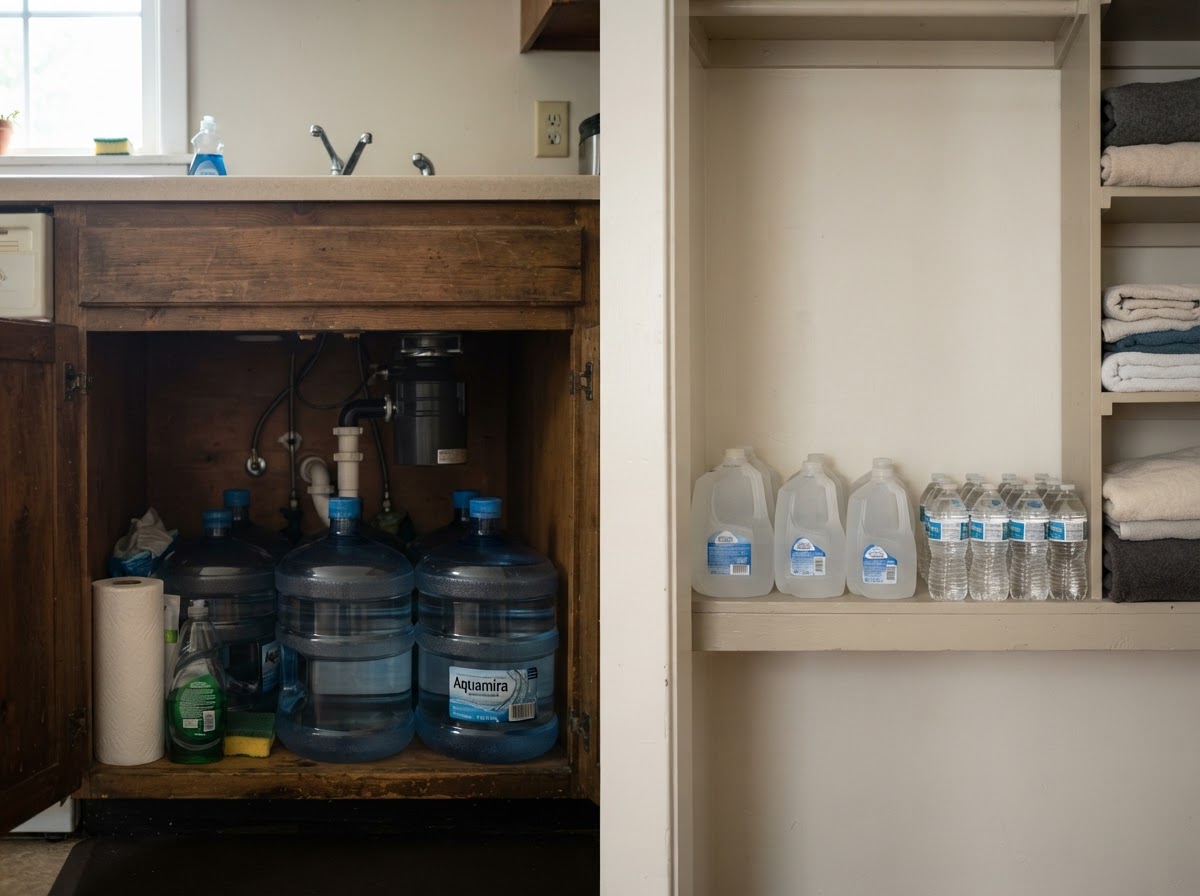
- The standard planning figure is one gallon per person per day, covering drinking and basic sanitation. Three days is a practical minimum. Store it in food-grade containers and rotate every six months. For a small space, flat, collapsible containers fit under a bed or on a closet shelf.
- Can I use a camp stove indoors during an outage?
- Only if the manufacturer explicitly approves indoor use and you ventilate. Most camp stoves, grills, and fuel-burning devices are unsafe indoors because of carbon monoxide. Plan for no-cook meals first, and never use a grill on a balcony or in a garage.
- What if I cannot afford to buy everything at once?
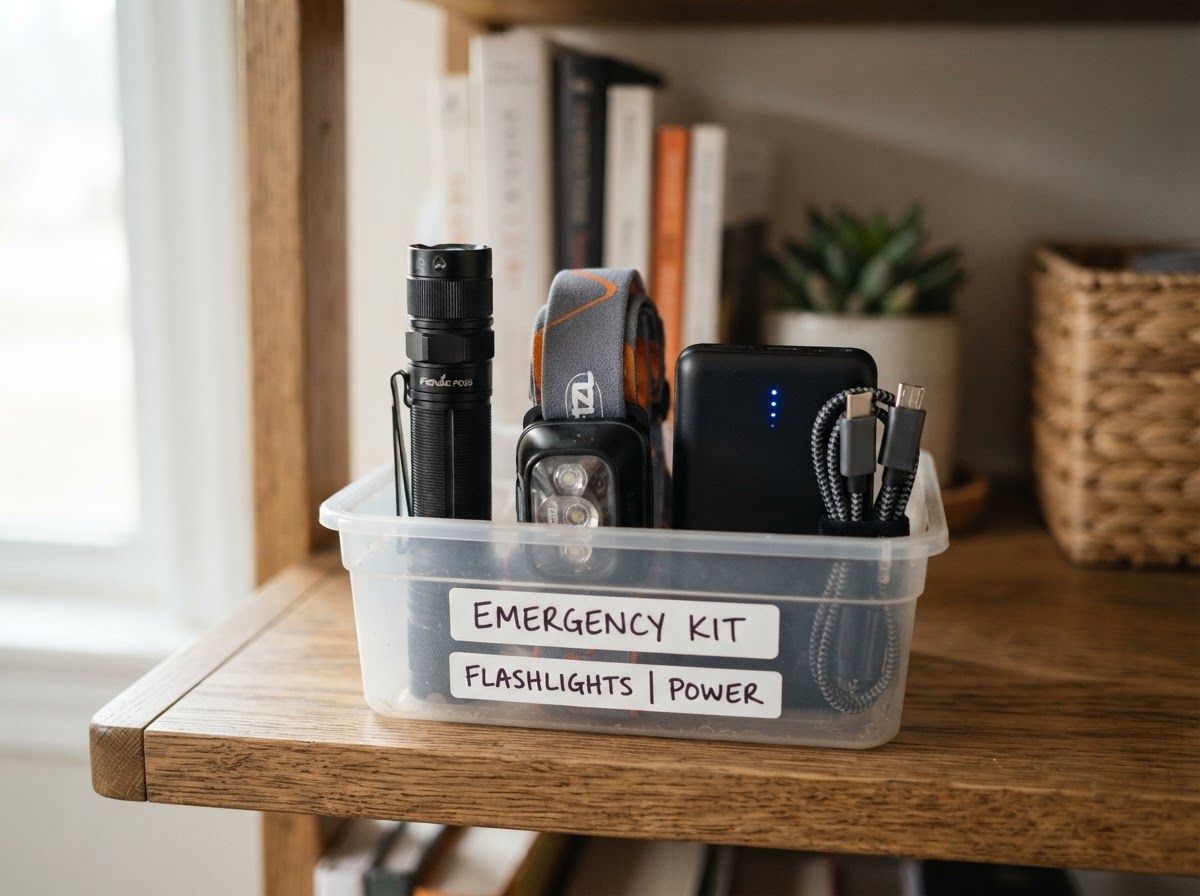
- Start with what you own and add one item per week. Gather a flashlight, manual can opener, and first-aid supplies you already have. Then add water, food, a power bank, and a contact card over several weeks. A useful kit in a week beats a perfect kit you never build.
- Where should I keep my apartment kit?
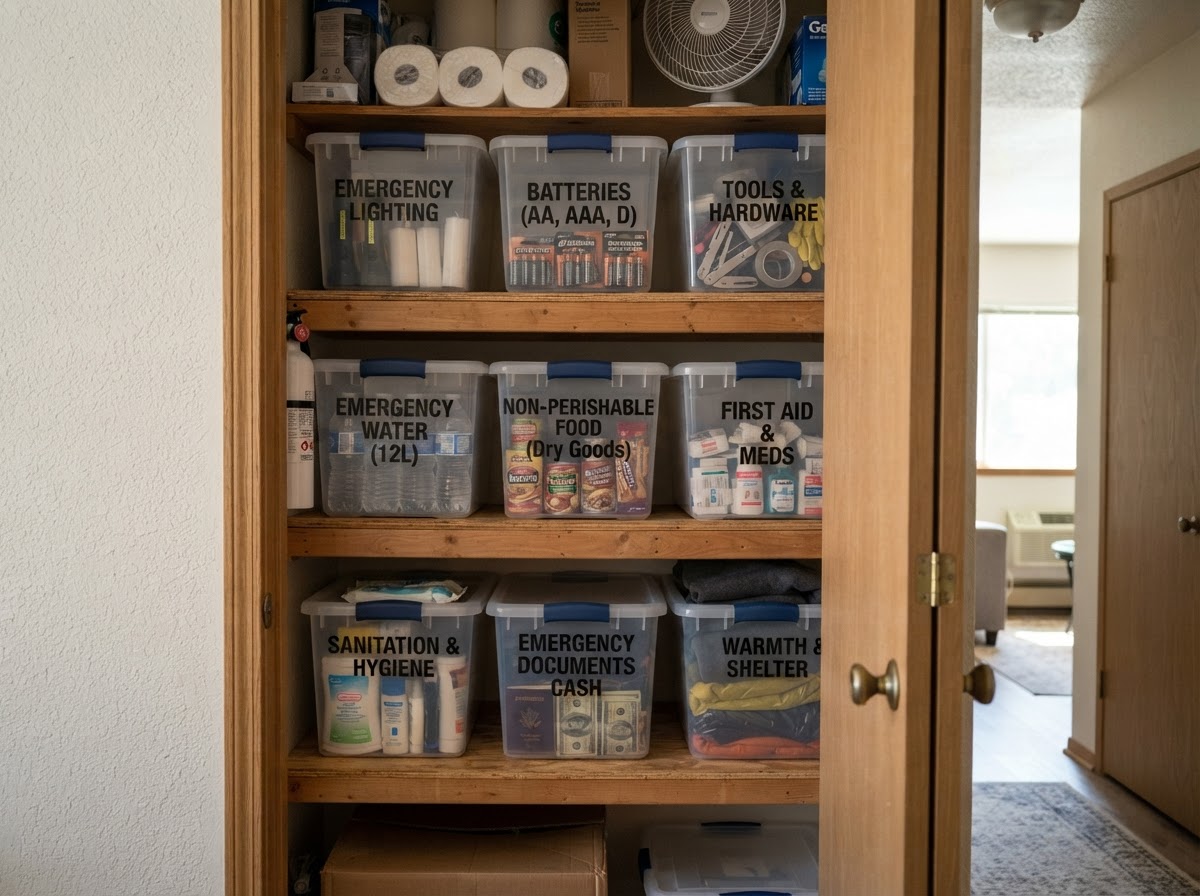
- In one accessible location you can reach in the dark: a coat-closet shelf, a labeled bin under the bed, or a cabinet near the entry. Avoid basements and storage lockers that may be inaccessible during an evacuation or power loss.
- Do I need a weather radio if I have a phone?
- A battery or hand-crank weather radio receives official alerts even when cell networks are down or your phone is dead. It is a reliable backup, not a replacement for your phone. Look for a model with SAME alerts for your county.
- How do I plan for an elevator outage if I live on a high floor?
- Keep sturdy shoes and a headlamp beside the bed. Know your stair routes and practice them. Store a few days of water on hand rather than planning to fetch it during an outage, since you may have to carry it up many flights.
- Should I store my important documents in the kit?
- Keep originals in a fireproof safe, but store copies in a waterproof bag in your go-bag. Include ID, insurance, medical, and financial account information. An encrypted USB drive is a useful backup.
- What about my pet in an apartment emergency?
- Include your pet in your plan: three days of their food, water, a leash or carrier, and copies of vaccination records. Many shelters do not accept pets without proof of vaccination and a carrier, so keep those records accessible.
- How long will food in my fridge stay safe during an outage?
- A closed refrigerator keeps food safe for about four hours; a full freezer holds its temperature for roughly 48 hours. Keep the doors closed. If the outage lasts longer, follow USDA guidance on when to discard perishable food.
- Is a pre-made emergency kit a good shortcut?
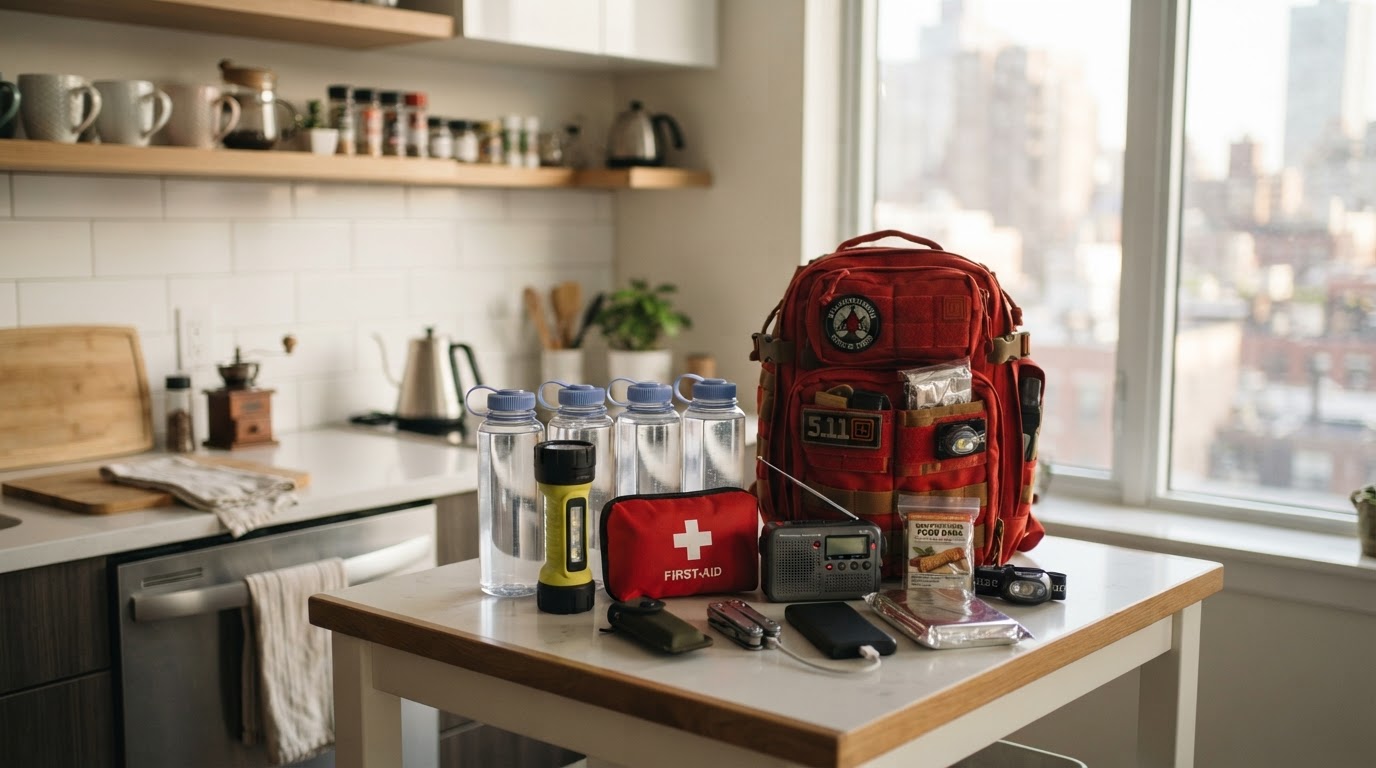
- It can be a starting point, but most are generic and include items you may not need while missing things specific to your household. Walk through your apartment first, gather what you own, then fill the gaps. You will save money and end up with a kit that fits your life.