- How do I plan water for a family with children?
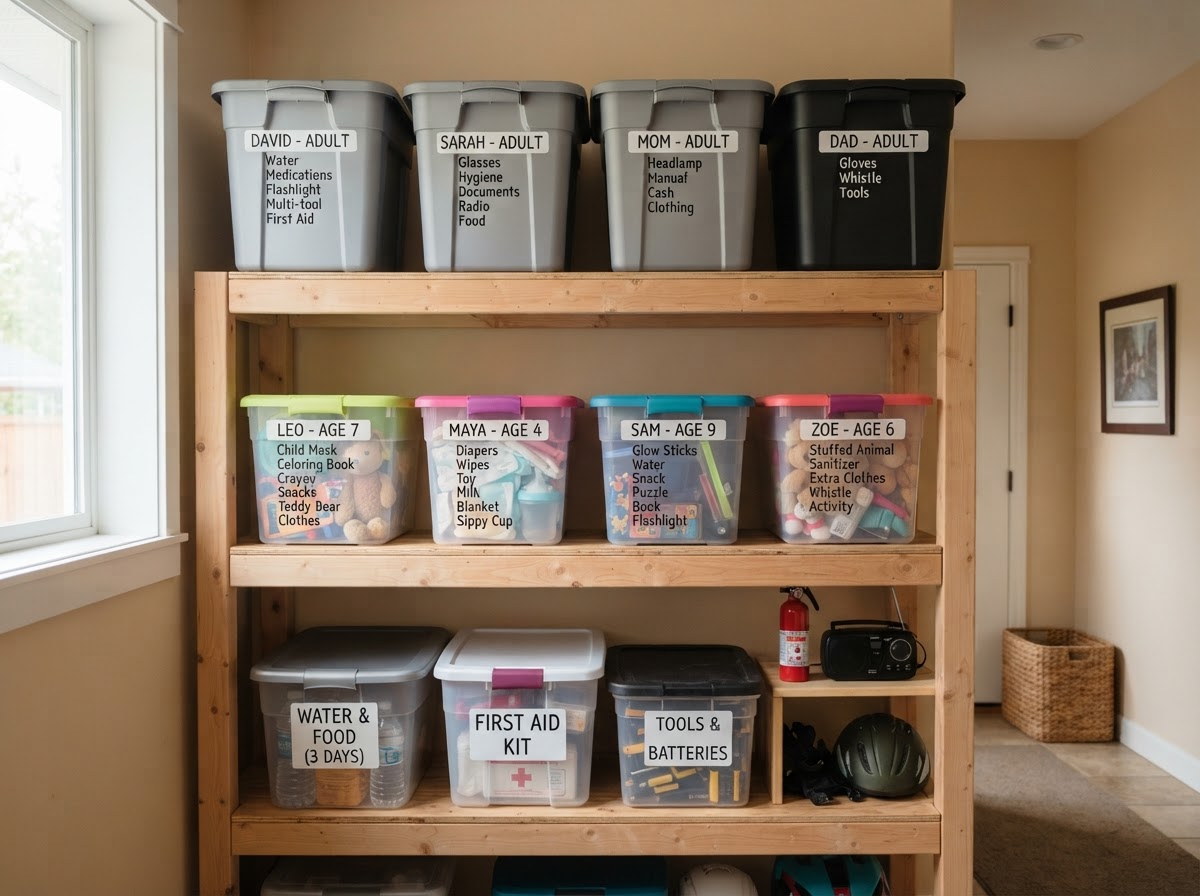
- Use one gallon per person per day as the baseline, covering drinking and sanitation. For a family of four over three days, that is 12 gallons. Infants drinking formula may need additional water for mixing if you do not use ready-to-feed formula. Store in food-grade containers and rotate every six months.
- What should I pack for an infant?
- Ready-to-feed formula (if formula-feeding), diapers and wipes for at least three days, a change of clothes, a familiar blanket, and any medications with a printed dosing reference. Follow current manufacturer and pediatric guidance on preparation and storage. Keep your pediatrician's after-hours number on the contact card.
- How do I plan for a child's medication during an emergency?
- Talk to your child's clinician about a seven-day backup supply. Keep medications in their normal, temperature-stable location and add a reminder to grab them during an evacuation. Know the correct dose for your child's current weight and keep a printed reference — do not rely on a phone app during an outage.
- What if a family member uses powered medical equipment?
- That requires a separate plan. Talk to the equipment provider about battery runtime and backup options. Register with your utility's medical-priority list if one exists. A general kit does not cover this; the plan must be specific to the device and the person.
- How do I teach my kids the communication plan without scaring them?
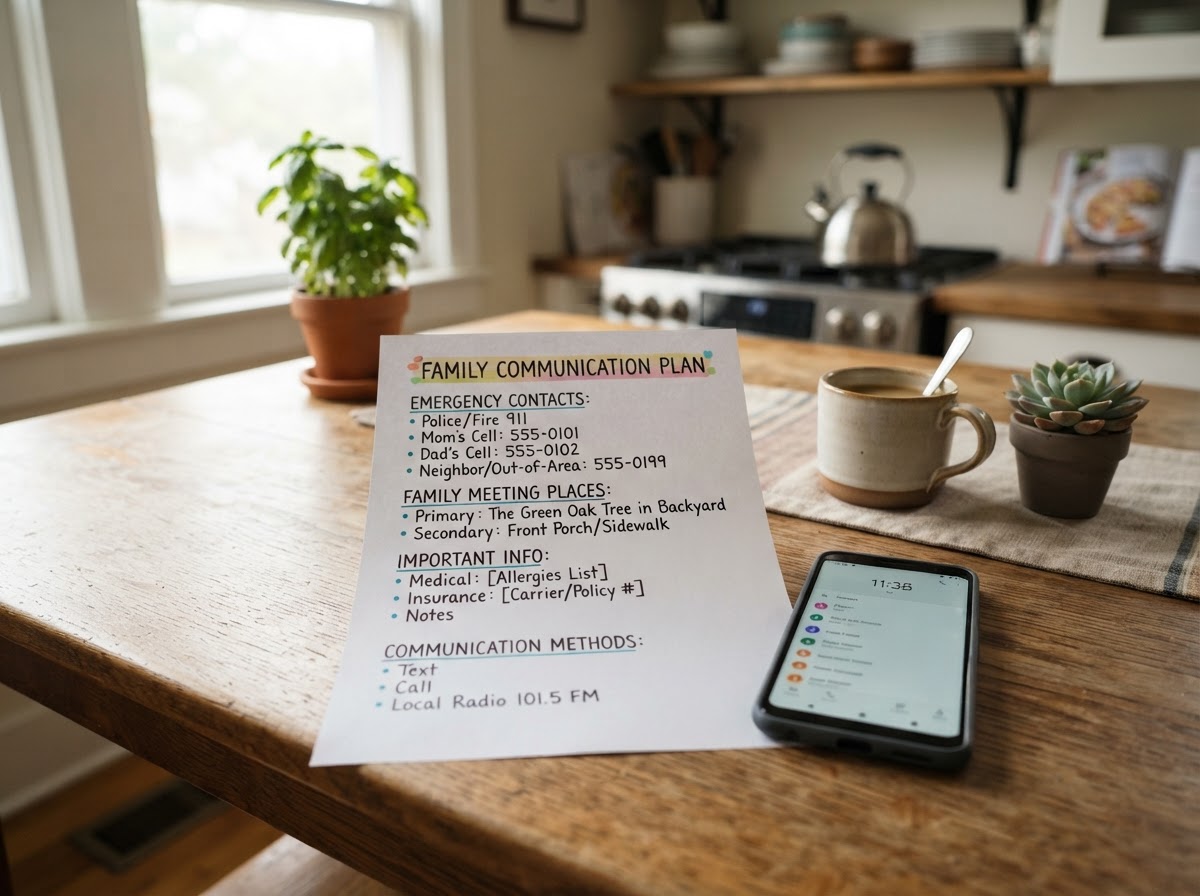
- Frame it as a game and keep it positive. Practice texting the out-of-area contact. Let them lead age-appropriate parts like finding the meeting point. Do not use fear to motivate — calm, rehearsed families respond better than scared ones.
- Should children have their own go-bags?
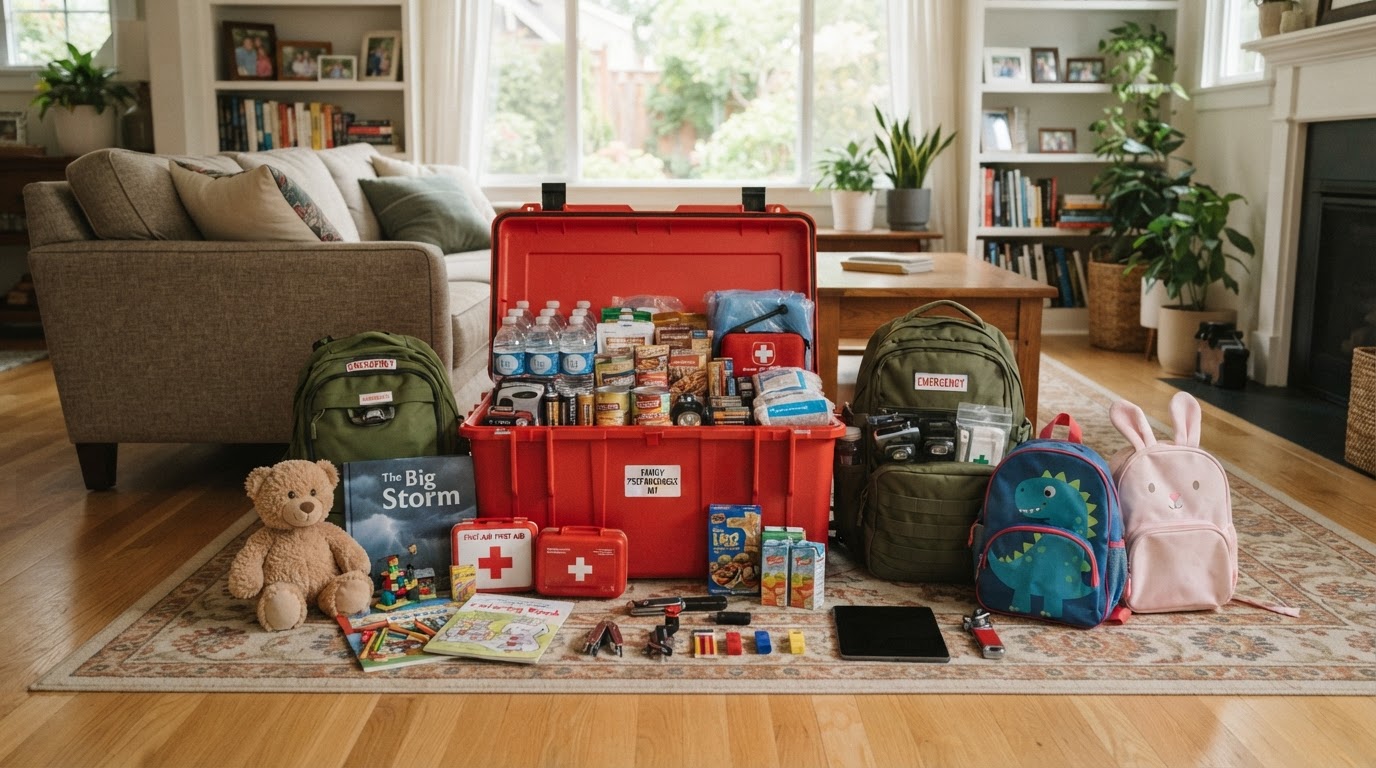
- School-age children can carry a small bag with their comfort item, a snack, and a copy of the contact card. Keep it light. Young children should not carry heavy or critical supplies; those stay with adults.
- How do I plan for school pickup during an emergency?
- Know your school's reunification procedures and who is authorized to collect your child. Keep that information current at the start of each school year. An emergency may separate you during the school day, so the school needs current contacts and alternate pickup authorization.
- What comfort items actually help during an outage?
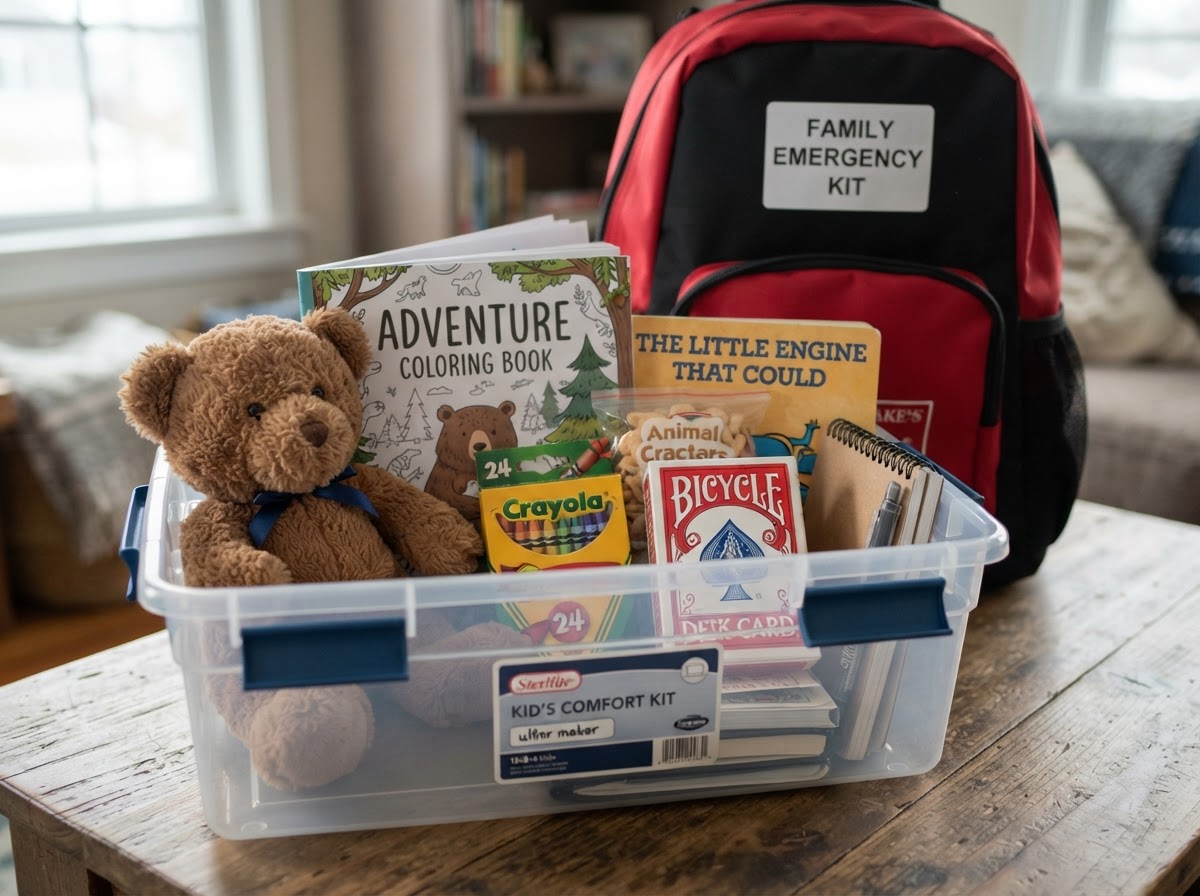
- A favorite small toy, a stuffed animal, a family photo, a deck of cards, or a notebook and crayons. These are not luxuries — they help kids feel safe and give parents a moment to think. Keep bedtime items accessible.
- How often should I update the family kit?
- Review it twice a year — when you change your clocks is an easy trigger. Update clothing sizes, medication doses, and contacts. Rotate food, water, and batteries. Review it again after any household change: a new baby, new medication, or a move.
- Can I include my pet in the family plan?
- Yes. Add three days of pet food and water, a leash or carrier, and copies of vaccination records. Many shelters do not accept pets without proof of vaccination and a carrier, so keep those accessible. See the dedicated pet kit page for detailed guidance.
- What if we are separated when an emergency hits?
- Use your out-of-area contact to relay messages, since local lines are often jammed. Have two meeting points: one near home and one outside the neighborhood. Make sure everyone, including older children, knows the out-of-area contact's number.