Browse by topic
Outdoor skills: from the trail to the emergency
Weather awareness, shelter selection, orientation, signaling, clothing layers, safe camping, and environmental hazards — skills that serve on the trail and in a crisis.
Outdoor skills are preparedness skills — the ability to navigate, shelter, and signal when the usual systems are not there. Build them before you need them.
Navigation without GPS
Core skill
Map + compass
Key tool
Layers, not bulk
Clothing
Stop, stay, signal
If lost
Weather awareness before you go
The first outdoor skill is knowing what the weather will do before you are in it. The National Weather Service issues forecasts and alerts, and a NOAA weather radio or a weather app with alerts keeps you informed. Check the forecast before a hike, a drive, or a trip, and know the difference between a watch (conditions are possible) and a warning (it is happening or imminent). The plan is to not be surprised — a storm you saw coming is a storm you can prepare for; a storm you did not is a crisis. The Smart Prepper's outdoor skills guide covers weather awareness in detail.
Understand the local hazards. In the mountains, lightning is a risk above treeline in the afternoon; in the desert, heat is a risk in the middle of the day; on the coast, tides and storms change the shoreline. Know the environment you are entering and the risks it carries. A plan that says check the weather is a plan that says know what you are walking into. The outdoor skill is not just the physical ability; it is the judgment to turn around when the weather changes. The Red Cross recommends carrying a weather radio or a charged phone with alerts, but the radio is the backup that works when the phone does not.
Shelter selection and exposure
Shelter is the skill that keeps exposure from becoming hypothermia or heat illness. In cold weather, the goal is to stay dry and out of the wind — a small shelter, even a debris hut or a space blanket, breaks the wind and traps heat. In hot weather, the goal is shade and air flow. The CDC notes that hypothermia can happen at temperatures above freezing if you are wet and windy, and heat illness can happen at moderate temperatures if you are exerting. The shelter skill is about knowing when to stop, where to shelter, and how to build a simple windbreak or shade. A small emergency shelter — a space blanket, a tarp, a bivy — is the tool that turns a bad night into a survivable one.
Know the signs of exposure. Hypothermia: shivering, confusion, exhaustion; the CDC says call 911 if someone seems disoriented and cold to the touch. Heat exhaustion: heavy sweating, weakness, nausea, dizziness; move to shade, give water, cool the body. Heat stroke: high body temperature, no sweating, confusion, unconsciousness; call 911 and cool the person immediately. The outdoor skill is not just building the shelter; it is recognizing when you need one. The fundamentals are the awareness, the shelter, and the recognition — and all of them are learned by doing, not just by reading.
Orientation: navigate without GPS
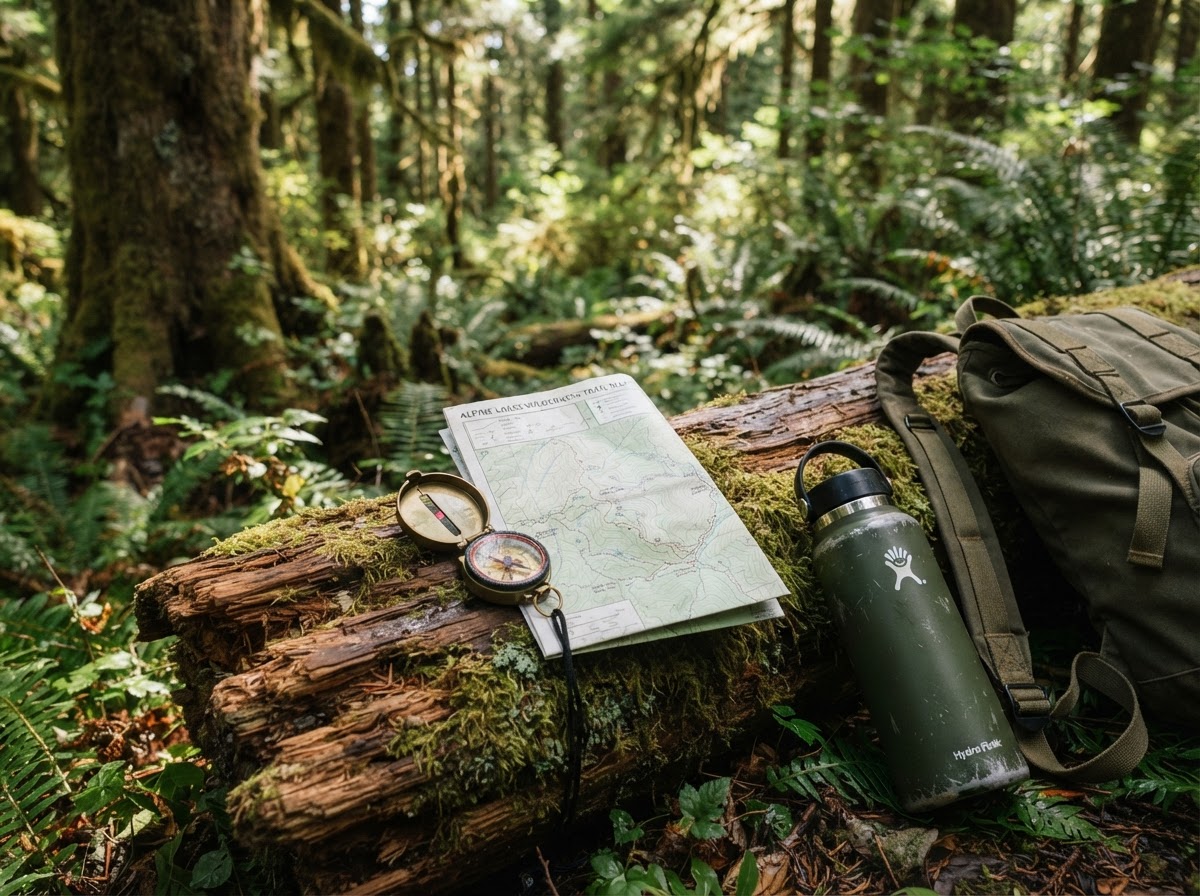
If your phone dies or loses signal, the ability to navigate with a map and compass is the skill that gets you home. Learn the basics: how to read a topographic map, how to take a bearing, how to orient the map to the terrain. A compass is a simple, reliable tool that never needs a battery. Keep one in your daypack and in your car, and keep a printed map of the area you are in. The skill is not complicated, but it requires practice — take a short course or practice on a familiar trail before you need it on an unfamiliar one. The Smart Prepper's offline navigation guide covers the skills in detail.
If you are lost, the standard guidance is to stop, stay put, and signal. Do not wander — a moving target is harder to find, and a lost person who keeps moving gets more lost. If you told someone your plan (you should), rescuers know where to look. Signal with a whistle (three blasts is the universal distress signal), a mirror, or a bright cloth. Stay where you are if it is safe, and wait for rescue. The outdoor skill is not just navigation; it is the judgment to stop when you do not know where you are. The fundamentals are the map, the compass, the plan you left with someone, and the judgment to use them.
Clothing layers and safe camping
The clothing system for the outdoors is layers, not bulk. A base layer wicks moisture, a mid layer insulates, and an outer layer blocks wind and rain. Add or remove layers as your activity and the weather change. Cotton is a poor choice in the cold — it holds moisture and loses insulation when wet; wool and synthetics are better. Keep a rain shell even in summer, because wet and cold can happen at any temperature. The clothing skill is about managing your body's temperature, not just bundling up. The Red Cross recommends dressing for the conditions you will face, not the conditions you hope for.
For safe camping, the skills are site selection (away from hazards, on level ground), fire safety (keep it small, keep water nearby, fully extinguish), and food storage (away from animals, sealed against pests). Know the regulations for your area — fire bans, bear canister requirements, camping permits. The outdoor skills are the skills that let you spend a night out comfortably and safely, whether planned or unplanned. The fundamentals are the awareness, the shelter, the navigation, the clothing, and the camping skills — and all of them are learned by practice on the trail, not just by reading a guide.
Environmental hazards and training
Know the environmental hazards of the areas you frequent: venomous snakes, bears, poisonous plants, lightning, flash floods. The skill is not to fear them but to know how to avoid them and how to respond. A wilderness first-aid course — offered by the Red Cross, NOLS, or SOLO — is the training that prepares you for the medical emergencies that happen away from immediate help. It covers bleeding control, splinting, hypothermia and heat illness, and evacuation decisions. The training is the difference between a household that can handle a trail emergency and one that cannot.
The outdoor skills are the skills that serve on the trail and in a crisis. The household that can navigate, shelter, signal, and manage exposure is a household that can handle a disruption — an evacuation, a stranded vehicle, a power outage that strands them — better than one that cannot. The fundamentals are the awareness, the shelter, the navigation, the clothing, the camping, and the training — and the Smart Prepper's outdoor skills guide and training directory help you build them. The outdoor page is where you turn the trail skills into the preparedness skills that work when the usual systems are not there.
Outdoor skills checklist
- Map + compass in your pack
- Weather forecast checked before you go
- Layered clothing system packed
- Emergency shelter (space blanket or tarp)
- Whistle + signaling mirror
- Wilderness first-aid training current
Sources & further reading
This is planning guidance, not emergency advice. In an emergency, call 911. See a mistake? Report it.
Explore other topics
Fundamentals
Household needs, risk prioritization, budgets, and gradual preparation — the foundation everything else builds on.
Water
Storage, containers, rotation, treatment concepts, and filter limitations — how to plan water before the tap stops.
Food
Ordinary pantry planning, dietary needs, rotation, shelf-stable foods, and cooking contingencies — food preparedness without the panic.
Medical Readiness
First-aid kits, training, sanitation, prescription continuity with clinicians, and medication storage — health preparedness done right.
Power & Light
Batteries, portable stations, solar, generators, charging, refrigeration, lighting, and carbon-monoxide prevention — power preparedness safely.