
Research-based buying guide
Emergency Bags & Backpacks: Choose a Pack You Can Carry
The best bug-out bag is one you can actually carry and organize. Match the bag to your strength and plan.
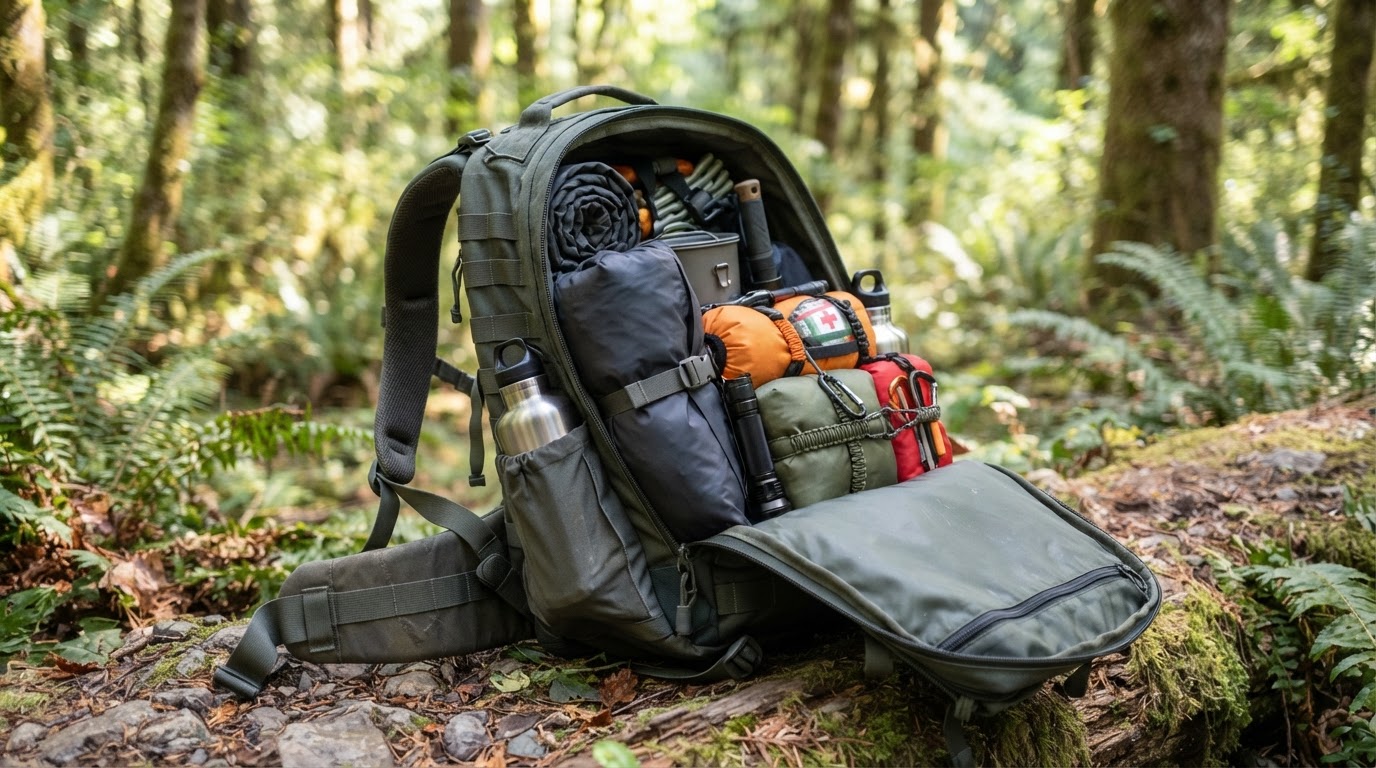
A bag is the foundation of any go-kit. This guide compares pack types by capacity, comfort, and organization. It is research-based, not hands-on testing. Match the bag to your strength, your contents, and your plan, and do not assume every household needs a tactical backpack. A pack you already own and can carry comfortably is a better start than a specialized bag you have never worn.
The most important test is a loaded walk. Empty weight matters, but loaded weight is what you carry in an evacuation. Load the bag with your planned contents and walk a mile before you commit to it. A bag that looks right on the shelf can become a misery on your shoulders after twenty minutes. There is no universal safe carry weight; it depends on your strength and fitness.
If you are assessing a prebuilt emergency kit, do not judge it by the bag alone. Check whether the contents fit your household, whether the bag carries comfortably when loaded, and whether you can reach the items you need first. Some prebuilt kits are good starting points; others are bulky and poorly organized. The value is in whether you can use it, not what it costs.
Start with Your Situation
Get-home bags
A daypack around 20–30 L for essentials.
One to two people
An internal-frame pack around 40–55 L with a hip belt.
Vehicle kits
A duffel with backpack straps for grab-and-go storage.
Already own a pack
Use it. Load it and walk a mile before buying a new one.
Useful for this guide
Internal-Frame Backpack
Better load transfer with a hip belt. Verify it fits your torso length and loaded weight you can carry.
Best for: Bug-out bags for one to two people
Compare Your Options
These are product categories, not specific tested models. We do not invent prices, ratings, or stock.
| Type | Best for | Evidence | Key notes |
|---|---|---|---|
| Daypack ~20–30 L | Get-home bags and short trips with essentials only. | Research-based | Not enough for a full evacuation kit. Limited organization. No hip belt usually |
| Internal-frame pack ~40–55 L | Bug-out bags for one to two people. | Research-based | Heavier when empty. Verify torso length fit. More than a short trip needs |
| Duffel with backpack straps | Vehicle kits and grab-and-go storage. | Research-based | Less comfortable for long carries. Limited organization. Weight sits low |
Scroll the table horizontally on narrow screens to read every column.
What to Look For
Capacity matched to your kit
Liters should match your planned contents and duration, not a generic number. Too large and you overpack; too small and you leave essentials behind. Start with what you plan to carry and choose capacity from there.
Padded straps and hip belt
A hip belt transfers weight to your legs and saves your shoulders. Padded straps prevent chafing on longer carries. A bag without a hip belt is fine for short trips but painful for a loaded evacuation.
Durability and weather protection
Check fabric weight and water resistance. A rain cover or liner protects contents even if the bag itself is not waterproof. Look for reinforced stitching at stress points like strap attachments.
Organization
Compartments and accessibility help you find items under stress. Too many pockets add weight; too few means digging through everything. Aim for a few clear compartments rather than a wall of tiny pockets.
Weight when loaded
Empty weight matters, but loaded weight is what you carry. There is no universal safe carry weight; it depends on your strength and fitness. Load the bag and walk a mile to find your real limit.
Useful for this guide
Internal-Frame Backpack
Better load transfer with a hip belt. Verify it fits your torso length and loaded weight you can carry.
Best for: Bug-out bags for one to two people
Products Worth Comparing
Daypack ~20–30 L
Get-home bags and short trips with essentials only.
Advantages
- Lightweight
- Inexpensive
- Easy to carry
Limitations
- Not enough for a full evacuation kit
- Limited organization
- No hip belt usually
Accessories: Packing cubes or zip bags to organize contents.
Internal-frame pack ~40–55 L
Bug-out bags for one to two people.
Advantages
- Better load transfer
- Hip belt
- More capacity
Limitations
- Heavier when empty
- Verify torso length fit
- More than a short trip needs
Accessories: A rain cover and packing cubes for organization.
Duffel with backpack straps
Vehicle kits and grab-and-go storage.
Advantages
- Easy to load
- Holds awkward items
- Good for vehicle storage
Limitations
- Less comfortable for long carries
- Limited organization
- Weight sits low
Accessories: A rain liner and labeled internal bags.
Common Buying Mistakes
- !Prescribing one universal carry weight. It depends on your strength and fitness.
- !Assuming every household needs a tactical backpack.
- !Buying a bag and never loading it to test fit and comfort.
- !Choosing capacity by a generic number instead of your planned contents.
Care and Readiness
- Load the bag and walk a mile before committing to it.
- Use packing cubes or zip bags to keep contents dry and visible.
- Check straps and zippers periodically for wear.
- Store the bag where you can grab it quickly and where everyone knows it is.
Common Questions
How big should my bag be?
Match liters to your planned contents and duration, not a generic number. Load it and test before relying on it, since empty capacity is not the same as useful capacity.
Do I need a tactical backpack?
No. A pack you already own and can carry comfortably is a better start than a specialized bag you have never worn. Match the bag to your plan, not to a look.
How much weight can I carry?
There is no universal safe weight. It depends on your strength and fitness. Load the bag and walk a mile to find your real limit before you plan around it.
Build Your Household Plan
Add this category to your plan, then work through the essentials at a pace that fits your household.
Explore the 10 EssentialsMore gear guides
Water Filters and Purifiers: What to Buy for Your Situation
Research-based comparison of filter and purifier types, what each removes, and where it falls short.
Portable Power Stations: A Buyer's Guide to Capacity and Output
Match watt-hours to what you actually need to run, and understand the gap between rated and usable energy.
Choosing an Emergency Weather Radio
NOAA reception, SAME county alerting, and power sources compared so you know what you are actually buying.
Emergency Lighting: Lanterns, Headlamps, and Flashlights Compared
Match the light to the job, and prioritize usable runtime over peak brightness.
Sources and Method
This guide compares manufacturer specifications, published documentation, and relevant official guidance. Products are not described as hands-on tested unless testing is documented. This is research-based comparison, not a substitute for manufacturer instructions or professional advice.
Some links on this page are affiliate links. We may earn a commission if you buy through them, at no extra cost to you.