
Research-based buying guide
Home First-Aid Kits: How to Compare Contents and Gaps
A ready-made kit is a starting point, not a finished plan. Compare contents, not piece counts.
Pre-built first-aid kits save time but rarely match a household's real needs. A kit advertised with 300 pieces may hold 280 tiny bandages and very little gauze, which is not the same as a practical supply for real cuts and scrapes. This guide compares what to look for and where kits fall short. It is research-based, not hands-on testing, and not a substitute for first-aid training or medical advice.
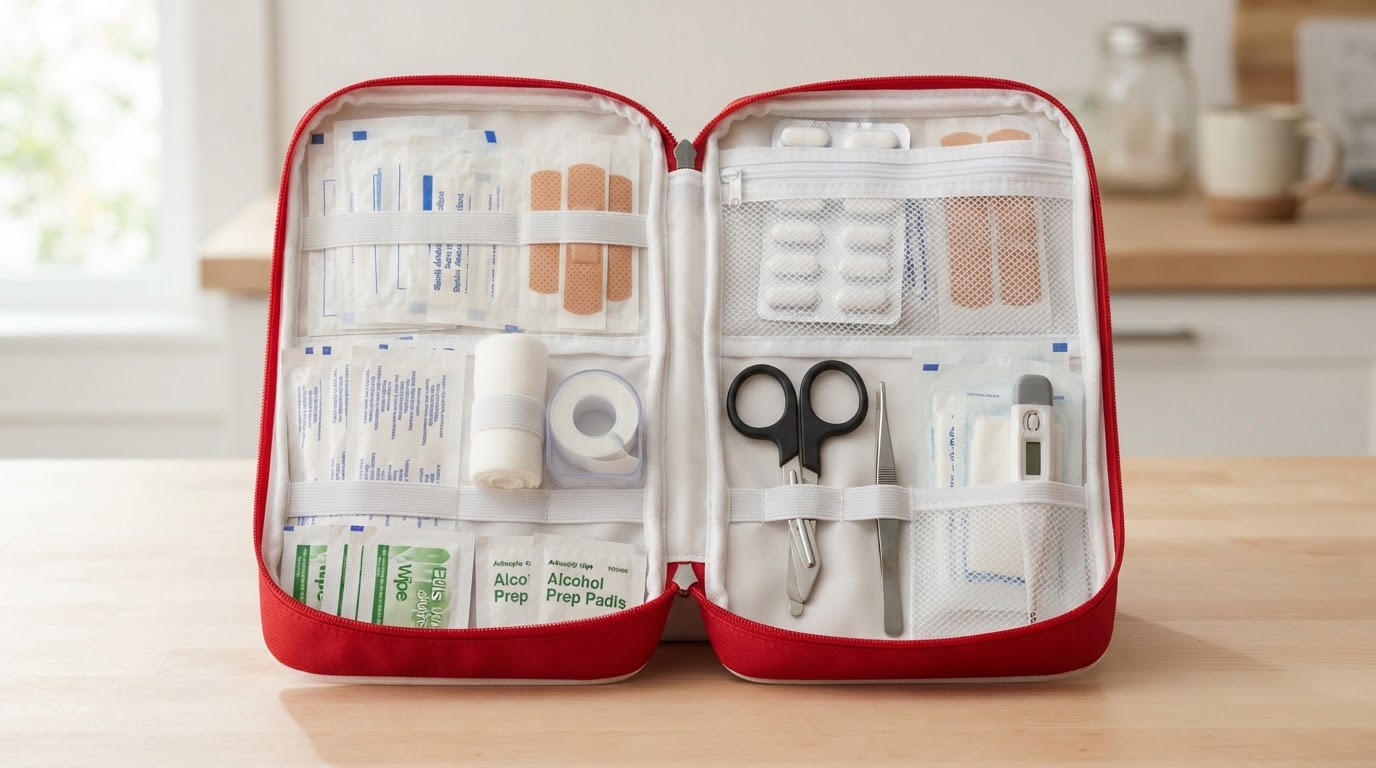
Quality and contents matter more than inflated piece counts. Look for useful quantities of gauze, tape, gloves, and antiseptic, plus clear organization that lets you find what you need under stress. A kit you cannot search quickly is a problem during an actual injury. Clear compartments and labeled sections make a cheap, well-organized kit better than a jumbled premium one.
Add household-specific items to any kit. Personal medications, allergy supplies, and items for children or pets will not be in a generic box. Plan for refills and check expiration dates on arrival so you do not discover expired antiseptic when you need it. A kit is a starting point that you tailor, not a finished solution.
Start with Your Situation
Home starting point
A compact household kit you audit and supplement.
Vehicles
A portable kit with a reference card, not just supplies.
Go-bags
A refillable compact kit sized to your plan.
Specific needs
Build your own from a checklist tailored to your household.
Useful for this guide
Household First Aid Kit
Convenient but often light on gauze and tape. Audit the contents and add household-specific items and medications.
Best for: Starting point for a home
Compare Your Options
These are product categories, not specific tested models. We do not invent prices, ratings, or stock.
| Type | Best for | Evidence | Key notes |
|---|---|---|---|
| Compact household kit | A convenient starting point for a home. | Research-based | Often light on gauze and tape. Audit and supplement contents. Not tailored to your household |
| Refillable portable kit | Vehicles and go-bags where space is limited. | Research-based | Fewer supplies. Check for a reference card. Supplement for your needs |
| Build-your-own from a checklist | Households with specific needs or training. | Research-based | Takes time to assemble. Requires planning. Needs a checklist to stay complete |
Scroll the table horizontally on narrow screens to read every column.
What to Look For
Useful quantities and contents
Look for useful amounts of adhesive bandages, gauze, tape, gloves, and antiseptic. A huge piece count of tiny bandages is not the same as a practical kit. Check the actual contents list, not the number on the box.
Organization and accessibility
A kit you cannot search quickly is a problem. Clear compartments and labeled sections help you find what you need under stress. A cheap, well-organized kit beats a jumbled premium one.
Expiration dates
Medications and antiseptics expire. Check dates on arrival and set a reminder to rotate them. An expired antiseptic is not what you want when you actually need it.
Refill costs
A cheap kit with expensive or hard-to-find refills is a poor value. Check refill availability before buying so you can restock what you use rather than replacing the whole kit.
Household-specific additions
Add personal medications, allergy supplies, and items for children or pets. A generic kit will not cover your household, so plan additions rather than relying on the box alone.
Training requirements
A kit does not teach you how to use it. Take a first-aid and CPR course and refresh it every couple of years. Know when to call 911 and when a small injury is manageable at home.
Useful for this guide
Household First Aid Kit
Convenient but often light on gauze and tape. Audit the contents and add household-specific items and medications.
Best for: Starting point for a home
Products Worth Comparing
Compact household kit
A convenient starting point for a home.
Advantages
- Ready to use quickly
- Organized compartments
- Covers common minor injuries
Limitations
- Often light on gauze and tape
- Audit and supplement contents
- Not tailored to your household
Accessories: Refill supplies and a first-aid reference card.
Refillable portable kit
Vehicles and go-bags where space is limited.
Advantages
- Compact
- Refillable
- Portable
Limitations
- Fewer supplies
- Check for a reference card
- Supplement for your needs
Accessories: A small first-aid manual and household-specific medications.
Build-your-own from a checklist
Households with specific needs or training.
Advantages
- Tailored to your household
- No wasted items
- You know every piece
Limitations
- Takes time to assemble
- Requires planning
- Needs a checklist to stay complete
Accessories: A waterproof container and a printed first-aid reference.
Common Buying Mistakes
- !Judging quality by piece count alone.
- !Buying a kit and never learning first aid.
- !Forgetting to check and rotate expiration dates.
- !Treating a household kit as a substitute for emergency medical care.
Care and Readiness
- Check expiration dates a couple of times a year and replace what expires.
- Restock what you use immediately so the kit stays complete.
- Keep the kit where everyone in the household can find it.
- Refresh your first-aid and CPR training every couple of years.
Common Questions
Is a bigger kit always better?
No. A huge piece count of tiny bandages is not a practical kit. Useful quantities of gauze, tape, and gloves matter more than total count, and organization helps you use them.
Do I need training to use a kit?
Yes. A kit does not teach you how to use it. Take a first-aid and CPR course and know when to call 911 rather than treating a serious injury at home.
Should I add my own medications?
Yes. Add personal medications, allergy supplies, and items for children or pets. A generic kit will not cover your household, so plan additions for your specific needs.
Build Your Household Plan
Add this category to your plan, then work through the essentials at a pace that fits your household.
Explore the 10 EssentialsMore gear guides
Water Filters and Purifiers: What to Buy for Your Situation
Research-based comparison of filter and purifier types, what each removes, and where it falls short.
Portable Power Stations: A Buyer's Guide to Capacity and Output
Match watt-hours to what you actually need to run, and understand the gap between rated and usable energy.
Choosing an Emergency Weather Radio
NOAA reception, SAME county alerting, and power sources compared so you know what you are actually buying.
Emergency Lighting: Lanterns, Headlamps, and Flashlights Compared
Match the light to the job, and prioritize usable runtime over peak brightness.
Sources and Method
This guide compares manufacturer specifications, published documentation, and relevant official guidance. Products are not described as hands-on tested unless testing is documented. This is research-based comparison, not a substitute for manufacturer instructions or professional advice.
Some links on this page are affiliate links. We may earn a commission if you buy through them, at no extra cost to you.