
Scenario guide
Prepare for a Chemical Spill
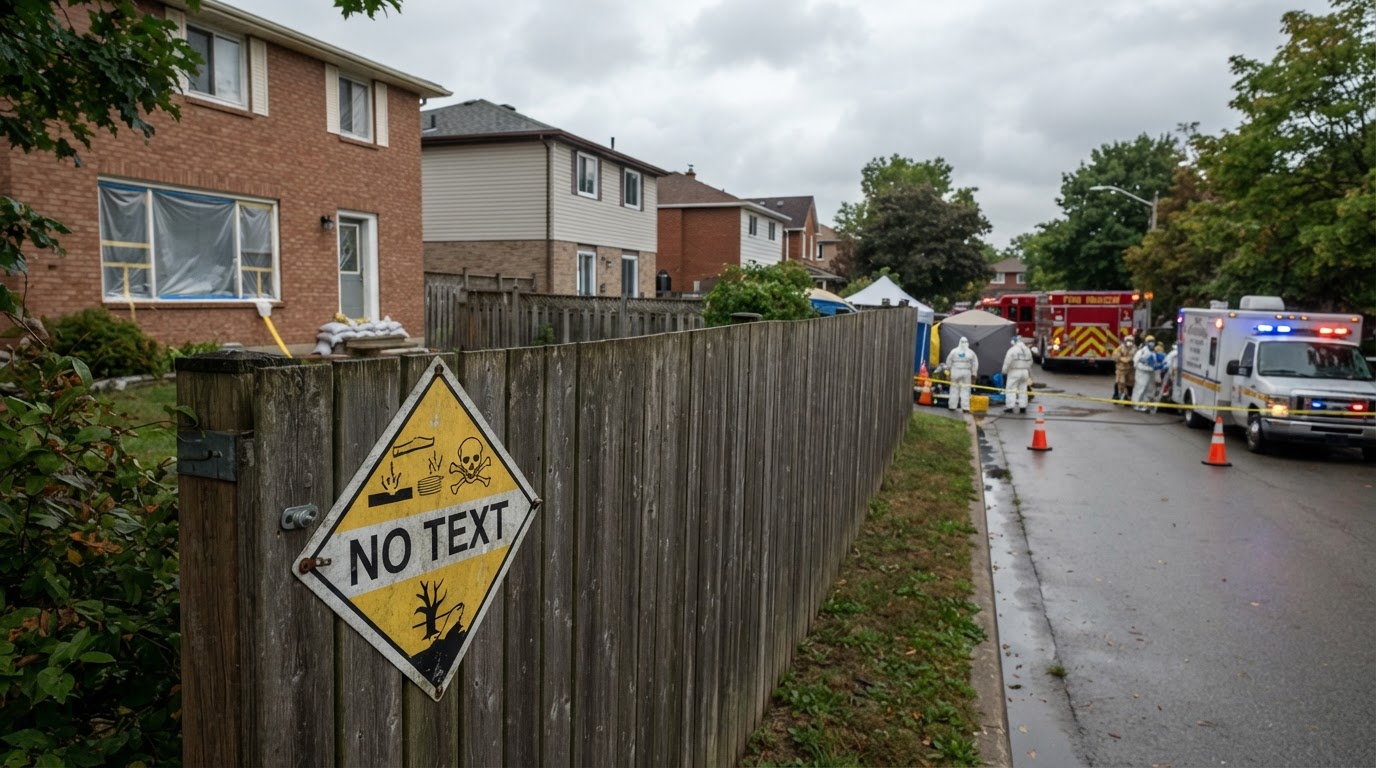
A chemical spill or hazardous-materials release can come from an industrial accident, a train derailment, or a fixed facility. Ready.gov treats it as a shelter-in-place event with a specific twist: if the material is in the air, the goal is to keep it out of your home. The two responses are shelter-in-place and evacuation.
What Matters First
Know your local warning signal and shelter plan
If you live near a facility that uses hazardous materials, find out now whether your area has a plan and what the warning signal is.
Shelter in place if the air outside is dangerous
Close and lock doors and windows, turn off outside air, and move to an interior room above ground level, because some chemicals pool in basements.
Seal a room and stay until the all-clear
Use duct tape and heavy plastic around doors, windows, and vents. Do not open the door to check; the seal only works if you stay put.
Your Chemical Spill Checklist
Before It Happens
- Local hazmat warning signal known
- Shelter room identified, above ground level
- Duct tape and 4-mil plastic sheeting on hand
- Shelter-in-place kit with radio, flashlight, water, and food
Useful for this scenario
NOAA Weather Radio
Receive local weather alerts when internet or cell service is unreliable.
During the Disruption
- Shelter in place; close windows, vents, and outside air
- Seal the room and bring everything you need before sealing the door
- Stay tuned and do not break the seal until the all-clear
Afterward
- Ventilate the home when officials give the all-clear
- Discard food left out or in open containers during the event
- If exposed, remove outer clothing and shower; do not use conditioner
Useful Gear for This Scenario
Emergency alert radio
A battery or hand-crank radio receives official instructions when the network is down. Keep it in your shelter room.
Evacuation bag
If officials order evacuation, a packed go-bag with documents and medication lets you leave in minutes.
Document organizer
A waterproof folder for insurance and identification lets you prove who you are if you are displaced.
Useful for this scenario
Evacuation Bag
A packed go-bag with documents, medication, and essentials.
Make the Plan Fit Your Household
Choose a shelter room with a phone, a radio, and ideally a water supply; a bathroom is often a good choice. If anyone has respiratory conditions, plan to shelter earlier. Do not shelter in a basement if the chemical may be heavier than air. The honest limit is that household planning reduces exposure but cannot eliminate the risk of a large event.
Useful for this scenario
Waterproof Document Storage
Keep insurance, deeds, and identification protected and portable.