
Civil Unrest Preparedness
Civil unrest is a shelter-in-place and information plan.
Civil unrest is a low-likelihood but real scenario, and the planning is sober and nonviolent. Ready.gov treats it as a shelter-in-place and information plan: stay home if you can, stay informed through official sources, and avoid the area of unrest. This guide covers the shelter-in-place plan, the supplies that make staying home easier, the information sources to trust, and the lawful, nonviolent steps to harden your home. It addresses the event with evidence and the honest limits of household planning, and it does not include weapons, traps, or any violent response.
Shelter in place if you can
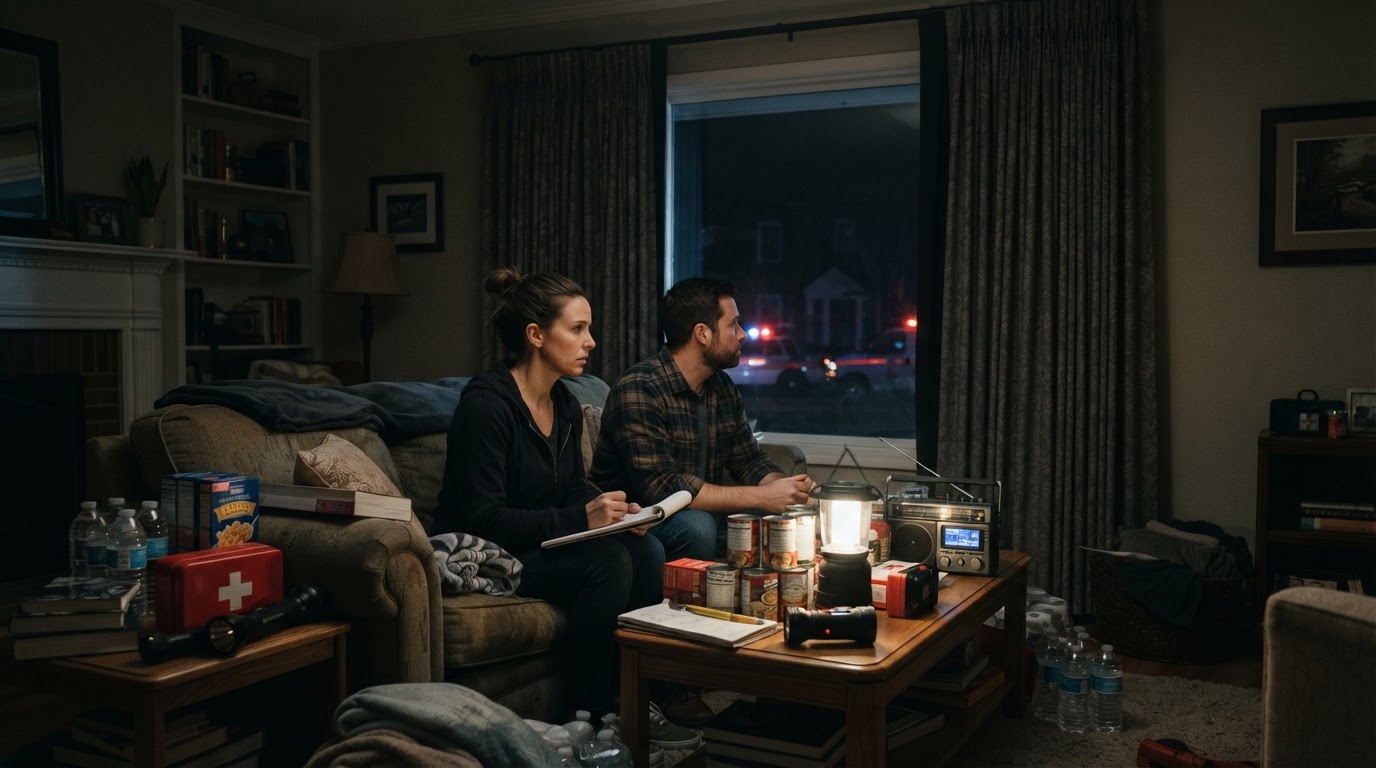
If unrest is occurring in your area, the safest plan is usually to stay home. Lock doors and windows, close curtains and blinds, and stay away from windows. The Red Cross recommends staying inside until officials say it is safe to go out. Do not go out to observe or to document; the risk of being caught in the unrest is higher than the value of being there. The plan is to be inside, be locked, and be informed, and the home is the shelter that makes the waiting safe.
If you are at work or out when unrest starts, leave the area calmly and by the safest route, avoiding the location of the unrest. Do not engage with participants. If you cannot get home, go to a safe, public place — a store, a hotel, a police station — and wait. The plan is to be away from the unrest, and the calmest route out is the one that does not pass through it.
Stay informed through official sources
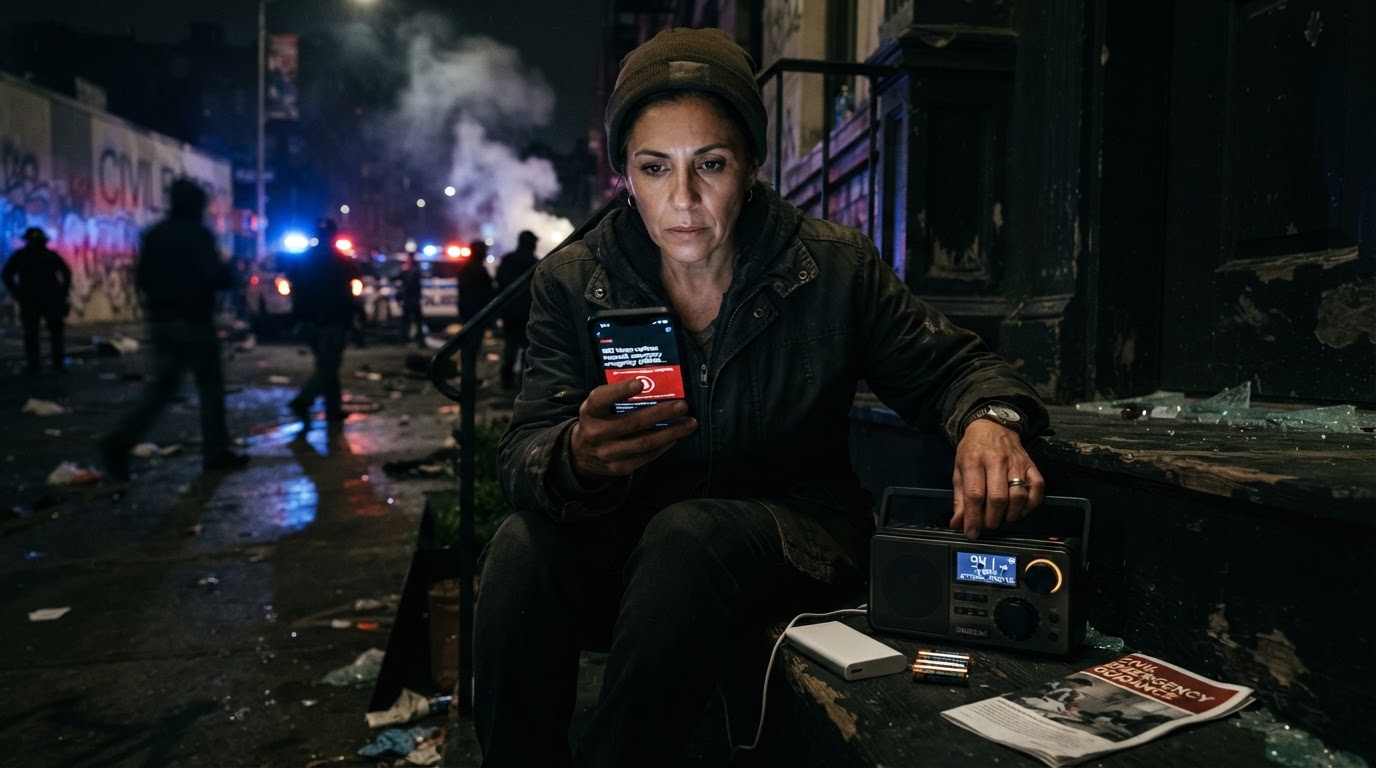
During unrest, information changes fast and misinformation spreads faster. Use official sources: your local emergency management agency, local law enforcement, and reputable local news. Sign up for local emergency alerts if your area offers them. Keep a battery or hand-crank radio as a backup, because the cell network can be congested or down. The plan is to act on verified information, not on rumor or social media, because acting on bad information can put you in more danger than the event itself.
Do not spread unverified information, because it can cause panic or misdirect people. Verify before you share, and if you cannot verify, do not share. The CDC and Red Cross both stress that during a disruption, the information you act on should be the information you can trust, and the source matters as much as the message.
Harden the home lawfully and nonviolently
There are lawful, nonviolent steps to make the home less vulnerable. Ensure doors and windows lock securely. Install motion-activated exterior lighting, because light deters opportunistic crime. Trim shrubs near windows so there is no concealed approach. Keep valuables out of sight. The Red Cross recommends these as ordinary home-safety steps that also apply during unrest. The plan is to make the home a less attractive and less accessible target, not to confront anyone.
This guide does not include weapons, traps, or any violent response. The plan is nonviolent: shelter, lock, light, and inform. If you are concerned about home security, consult a qualified security professional and your local law enforcement for lawful options specific to your area. The honest limit is that household planning can reduce risk but cannot guarantee safety in a large event, and the nonviolent plan is the one that does not create new dangers.
Keep the supplies that make staying home easier
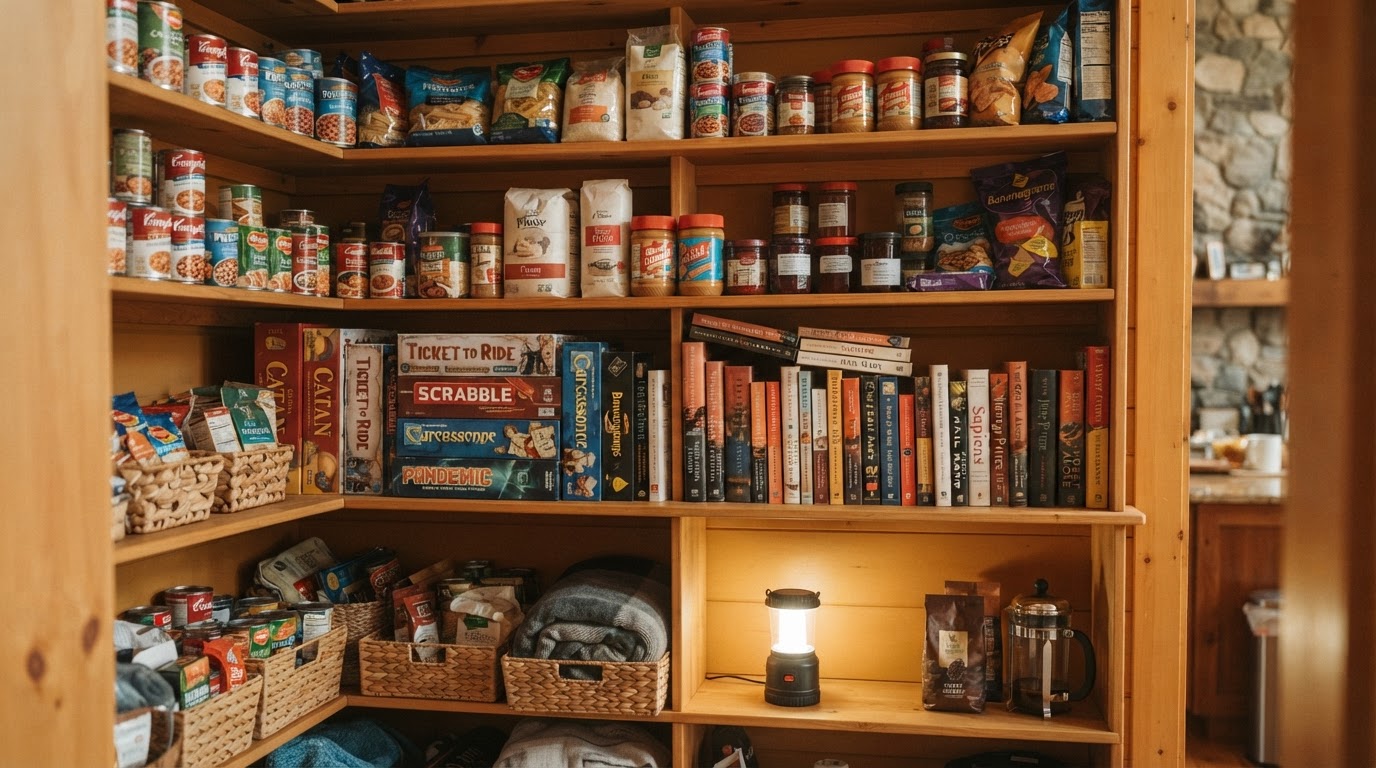
If you are sheltering at home, the supplies are the same as for any shelter-in-place plan. Keep a two-week buffer of food, water, and medications, so you do not need to go out. Keep cash in small bills, because ATMs and card readers may be down. Keep the vehicle fueled. Keep the phone charged and a power bank ready. The plan is to be able to stay home comfortably for the duration, because every trip out is a risk, and the supplies that keep you home are the supplies that keep you safe.
Keep a go-bag ready in case you do need to leave — if officials order an evacuation or if your home becomes unsafe. The go-bag is the same as for any evacuation: documents, medication, cash, a change of clothes, and essentials. The plan is to be ready to stay and ready to leave, and the supplies support both.
If you must leave
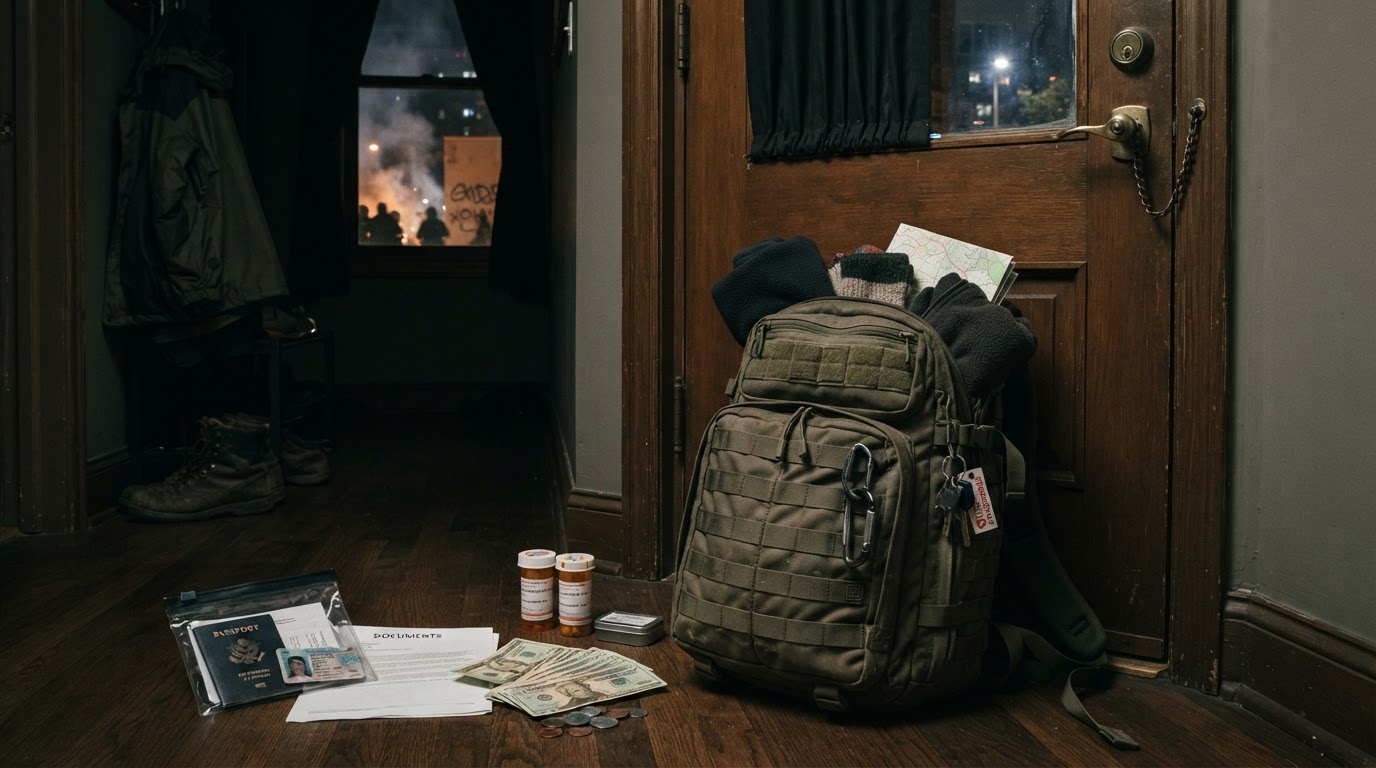
If officials order an evacuation or your home becomes unsafe, leave calmly by the safest route, avoiding the area of unrest. Take your go-bag, documents, and medications. Lock the home. Do not take valuables that are not already in the bag; the bag is the plan. Drive with headlights on and follow official routes. If you are walking, stay on main, well-lit streets and move with purpose. The plan is the same as for any evacuation: leave early, take the bag, follow the routes, and reunite at a safe destination.
After the unrest, do not return until officials say it is safe. When you return, photograph any damage for insurance. The recovery is built on the plan that kept you sheltered, informed, and ready to leave, and the nonviolent, sober plan is the one that protects the household without creating new dangers.
Practical priorities
- Shelter in place: lock doors, close curtains, stay inside
- Stay informed through official sources, not social media
- Harden the home lawfully and nonviolently
- Keep a two-week buffer so you do not need to go out
- Keep a go-bag ready if you must leave
Common mistakes
- Going out to observe or document the unrest
- Acting on unverified social media reports
- Engaging with participants in the unrest
- Stockpiling weapons or building traps
- Returning home before officials confirm it is safe
Civil unrest readiness checklist
- Doors and windows lock securely
- Motion-activated exterior lighting installed
- 2-week food, water, and medication buffer
- Cash in small bills
- Vehicle fueled
- Go-bag ready
- Local emergency alerts subscribed
- Battery or hand-crank radio
- Phone charged + power bank ready
- Official information sources saved
Sources & further reading
This is planning guidance, not emergency advice. In an emergency, call 911. See a mistake? Report it.