
Scenario guide
Prepare for a Fuel Shortage
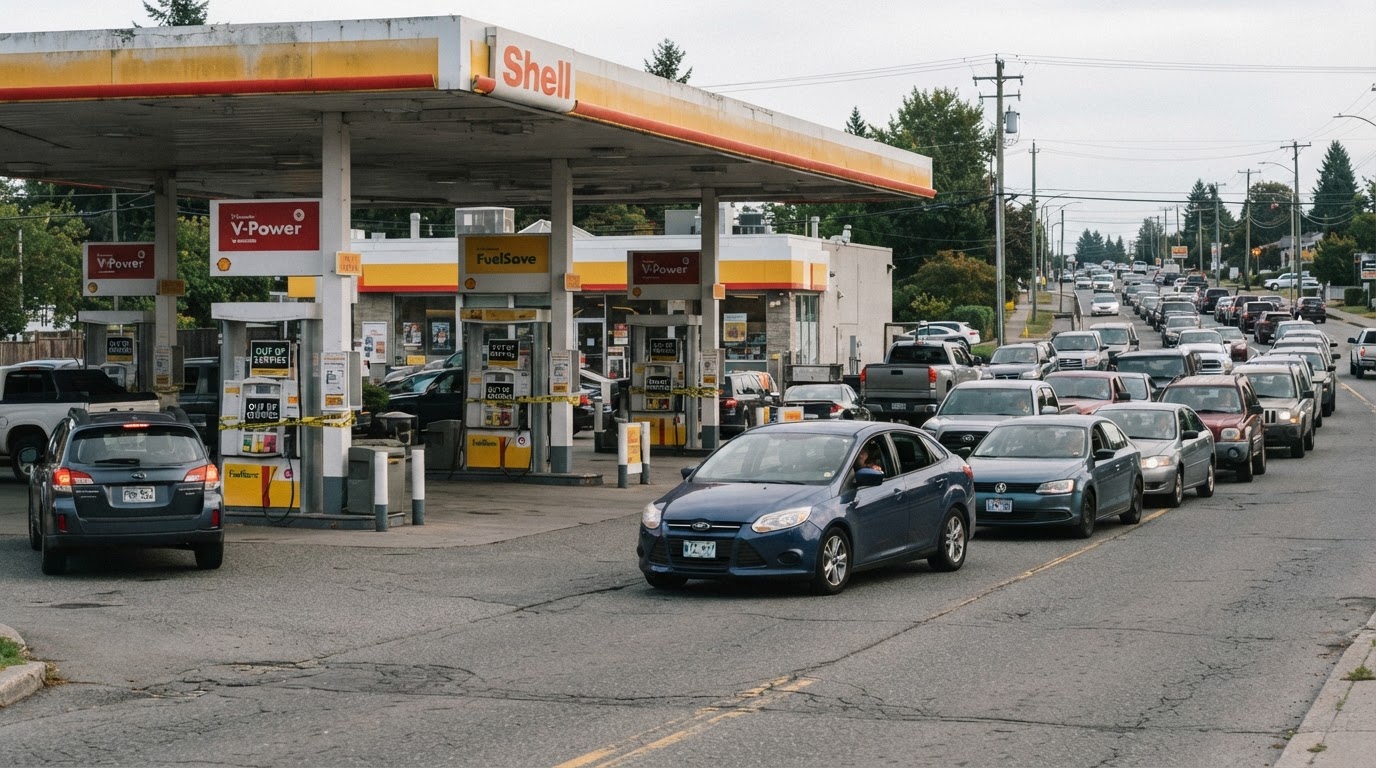
A fuel shortage can come from a refinery fire, a pipeline disruption, a cyberattack, or the panic that follows any of them. The lesson of past shortages is that panic buying makes them worse. The plan is to keep the tank above half, keep a pantry buffer, and reduce the driving you can.
What Matters First
Keep the vehicle's tank above half during high-risk seasons
Half a tank gives you range to detour or evacuate without joining the lines. Fill up early and often, not when the lines are long.
Keep a two-week pantry buffer
The trucks that stock the stores run on fuel. A pantry buffer means you do not need to drive to the store every day, which also saves fuel.
Reduce the driving you can
Combine errands, work from home if you can, and postpone non-essential trips. The driving you avoid is the fuel you save.
Your Fuel Shortage Checklist
Prepare
- Vehicle tank kept above half; maintenance up to date
- Two-week pantry of shelf-stable food and cash in small bills
- Car emergency kit stocked with water, snacks, and a phone charger
- Public transit or carpool plan identified as an alternative
Useful for this scenario
Portable Power Station
Compare backup power options for the devices you need most.
Respond
- Fill what you need, keep a buffer, and leave supply for others
- Combine errands and avoid idling in lines
- Store any extra fuel only in approved containers, safely and legally
Recover
- Keep the buffer until pumps are reliably full, not just the first day
- Rotate stored fuel with a stabilizer if you keep any
- Review which trips you can keep combining
Useful Gear for This Scenario
Portable power station
Reduces reliance on fuel by keeping devices charged without a generator. Useful if a shortage also takes power.
Power bank
A charged power bank keeps your phone alive for navigation and calls when you are conserving fuel and driving less.
Useful for this scenario
Power Bank
Keep your phone alive when the network is up but the outlet is not.
Make the Plan Fit Your Household
Do not store fuel in unapproved containers or in the home; the fire risk is higher than the benefit of a large stockpile. If you must drive, plan routes to avoid congestion, because idling wastes fuel. If you are stranded, stay with the vehicle, because it is your shelter. Keep a fuel stabilizer for any stored fuel, because gasoline degrades.