
Scenario guide
Prepare for a Nuclear Emergency
A nuclear or radiological emergency is a low-likelihood, high-impact event, and the honest framing is that it is rare. But the planning is not exotic. Ready.gov treats it as a shelter-in-place plan: get inside, stay inside, and stay tuned. The three principles are distance, shielding, and time.
What Matters First
Get inside the nearest sturdy building immediately
Put walls between you and the outside air. Close and lock doors and windows, and turn off ventilation that brings in outside air.
Move to the most shielded interior room
A basement is best; otherwise an interior room on the lowest floor away from windows. The denser the walls, the better the shielding.
Stay tuned to official sources and follow instructions
Do not leave to pick up children; schools have their own plans. Shelter until officials say it is safe, which could be hours or days.
Your Nuclear Emergency Checklist
Before It Happens
- Sturdy building identified for shelter
- Interior or basement shelter room chosen
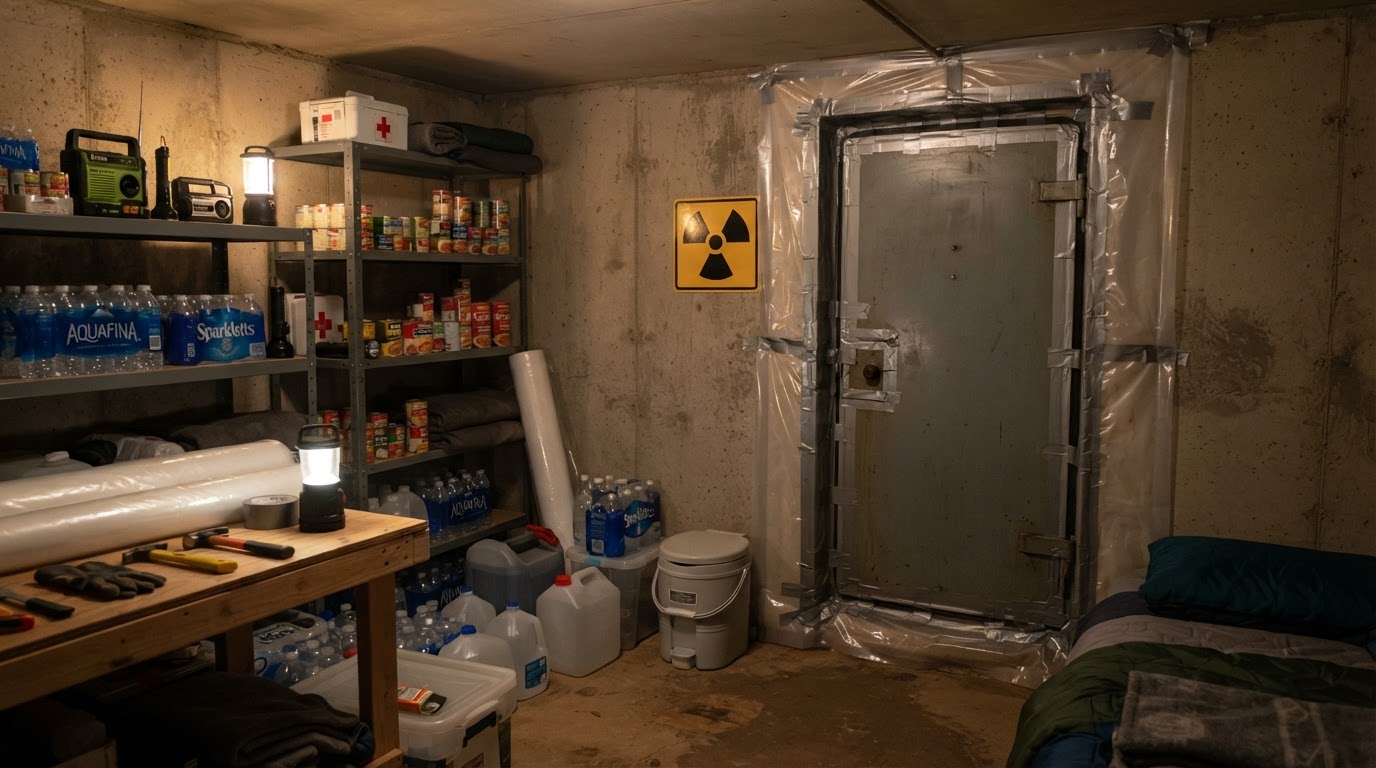
- Shelter-in-place kit with 24 hours of water, food, and medications
- Battery or hand-crank radio and a flashlight
Useful for this scenario
NOAA Weather Radio
Receive local weather alerts when internet or cell service is unreliable.
During the Disruption
- Get inside, stay inside, and stay tuned
- Seal a room with duct tape and plastic only if officials instruct it
- Do not self-medicate with potassium iodide; take it only on official instruction
Afterward
- Evacuate only when and where officials direct
- Remove the outer layer of clothing, which can remove most contamination
- Shower with soap and water; do not use conditioner, which can bind material to hair
Useful Gear for This Scenario
Emergency radio
A battery or hand-crank radio keeps you connected to official instructions when the network is down. Keep spare batteries.
Stored food and water
A shelter-in-place kit with at least 24 hours of supplies lets you stay put as long as officials direct.
Backup lighting
A flashlight and batteries let you move and work in a sealed room without opening it to outside air.
Useful for this scenario
Emergency Food Supply
Stock familiar shelf-stable foods your household will actually eat.
Make the Plan Fit Your Household
If anyone takes medication or uses medical equipment, plan for it in the shelter room. Potassium iodide protects the thyroid only, only against radioactive iodine, and only if taken at the right time; take it only on the instruction of public health officials. The honest limit is that household planning reduces harm but cannot guarantee safety in a large event.
Useful for this scenario
LED Lantern & Headlamp
Keep reliable light where you can find it in the dark.