
Scenario guide
Prepare for a Pandemic
A pandemic is not a single event; it is a disruption that can last months and change daily life. The plan is a household health plan: keep a supply of essentials, plan for isolation, maintain medication continuity, and protect the people most at risk. It is not a panic plan.
What Matters First
Keep a two-week supply of essentials
Shelf-stable food, water, health supplies, and a buffer of the specific products your household uses, because a shortage is hardest on those who cannot substitute.
Plan an isolation room and a caregiving plan
If a household member gets sick, keep them in a separate room with a separate bathroom if possible. Know the symptoms that mean call a doctor or 911.
Maintain a medication buffer with your clinician
Keep at least a 30-day supply of prescriptions if your plan allows. Keep a written list of medications, doses, and prescribers.
Your Pandemic Checklist
Prepare
- Two-week supply of shelf-stable food and health supplies
- 30-day medication buffer and a written medication list
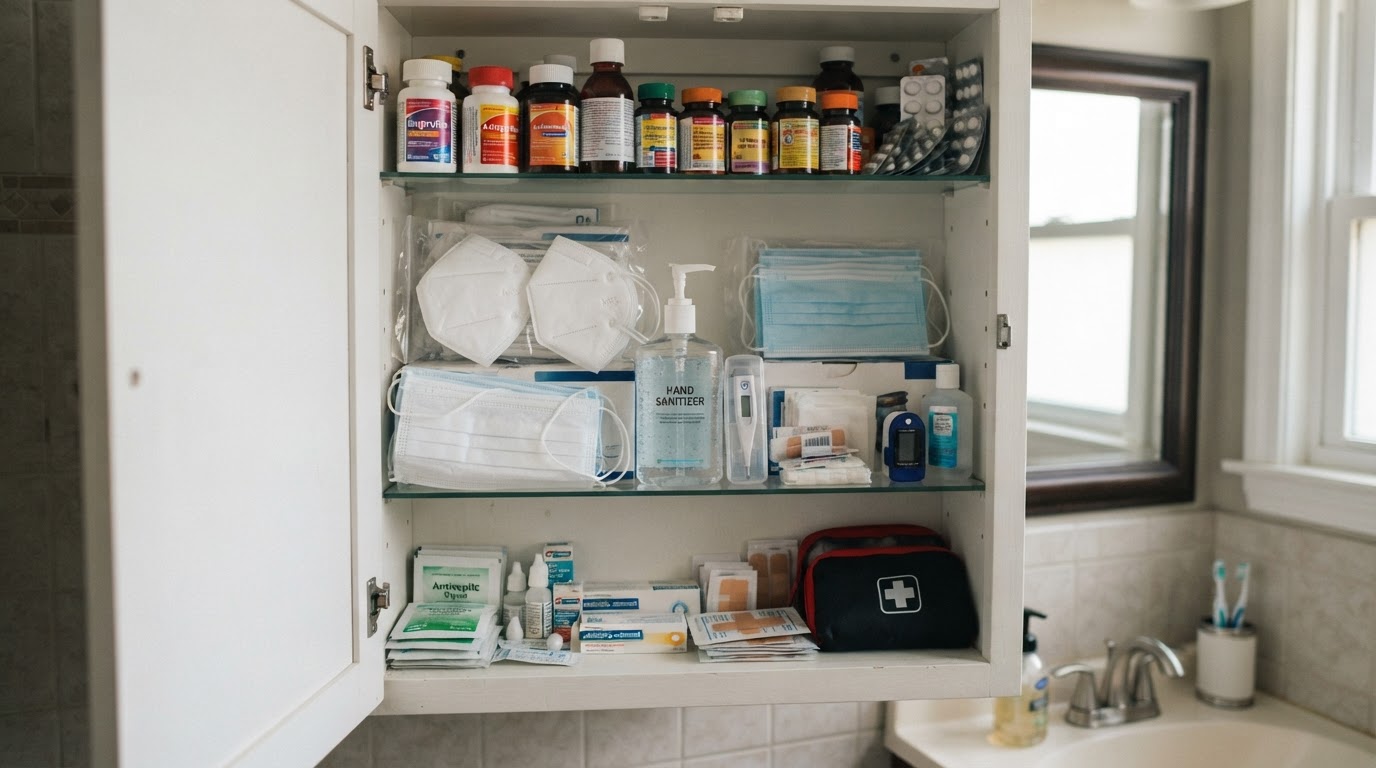
- Isolation room identified; thermometer and cleaning supplies stocked
- Telehealth options confirmed with your providers
Useful for this scenario
Particulate Respirators
N95 respirators filter fine smoke particles; cloth masks do not.
Respond
- Isolate a sick household member; have them wear a mask around others
- Keep routines for meals, sleep, and exercise to support mental health
- Use official health sources, not social media, for guidance
Recover
- Restock the buffer gradually as the supply chain stabilizes
- Update your medication list and provider contacts
- Check on neighbors who live alone and were isolated
Useful Gear for This Scenario
Respirators or masks
Proper respirators reduce the spread of airborne illness when worn correctly. Know their limits and follow current health guidance on use.
Hygiene supplies
Soap, hand sanitizer, tissues, and the cleaning products you use are the everyday tools of infection control.
Portable air cleaner
A HEPA air cleaner can reduce airborne particles indoors, which helps in a shared space during isolation.
Useful for this scenario
Hygiene Supplies
Soap, sanitizer, and cleaning products for infection control.
Make the Plan Fit Your Household
If you live alone, identify a friend or neighbor who can drop supplies at the door, and offer the same to them. Older adults and people with chronic conditions are most at risk; check on them often. Keep comfort items on hand, because a long disruption is as much a mental health event as a physical one.
Useful for this scenario
Portable Air Cleaner
A HEPA air cleaner reduces smoke or airborne particles indoors.