
Roadside Emergency Preparedness
A roadside emergency is a kit and a plan for staying put.
A roadside emergency is the most common kind most people will face, and it is the one that is easiest to prepare for. A flat tire, a dead battery, an empty tank, a breakdown on a quiet road — the planning is a kit and a set of habits. Ready.gov and the Red Cross treat vehicle preparedness as a year-round habit: keep a kit, keep the tank above half, keep the phone charged, and know when to stay with the vehicle. This guide covers the kit, the maintenance that prevents most breakdowns, and what to do when you are stranded.
Build a vehicle emergency kit
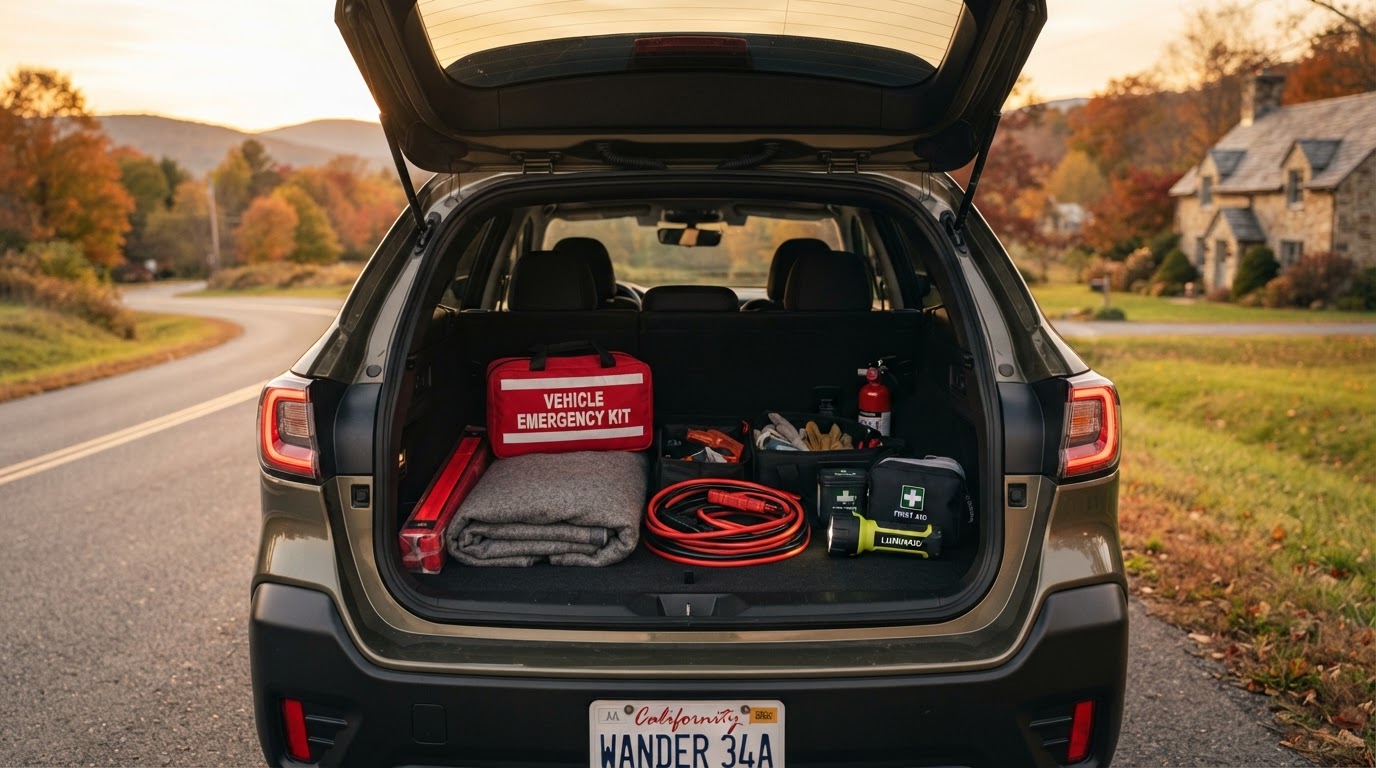
Keep a kit in the vehicle year-round. The Red Cross recommends it include jumper cables, a flashlight with extra batteries, a first-aid kit, water, non-perishable snacks, a phone charger, a reflective vest or triangles, a blanket, a basic tool kit, and a tire gauge. Add seasonal items: in winter, add a warm blanket, ice scraper, sand or cat litter for traction, and a shovel; in summer, add extra water and sun protection. Keep the kit where you can reach it without unloading the trunk, because a roadside emergency is not the time to dig.
Add a printed map of your area, because the phone may not have signal. Keep a list of emergency numbers — roadside assistance, your insurance, a trusted contact — because you may not be able to look them up. The kit is the plan, and the plan is to have what you need in the vehicle before you need it.
Maintenance that prevents most breakdowns
Most roadside emergencies are preventable with maintenance. Keep the tires inflated to the recommended pressure and check them monthly; the NHTSA notes that under-inflated tires are a leading cause of blowouts and reduced fuel economy. Replace tires when the tread is worn — the penny test is a quick check. Keep the battery tested, especially before winter, because cold reduces battery capacity. Keep the oil and other fluids at the right levels. Keep the tank above a quarter, and above half during high-risk seasons.
Keep a spare tire, a jack, and a lug wrench, and know how to use them. If you do not know how to change a tire, learn before you need to; a roadside emergency is not the time to read the manual. Keep the vehicle's registration and insurance in the glove box. The maintenance is the prevention, and the prevention is the plan that keeps you off the side of the road.
If you break down: stay safe, stay visible
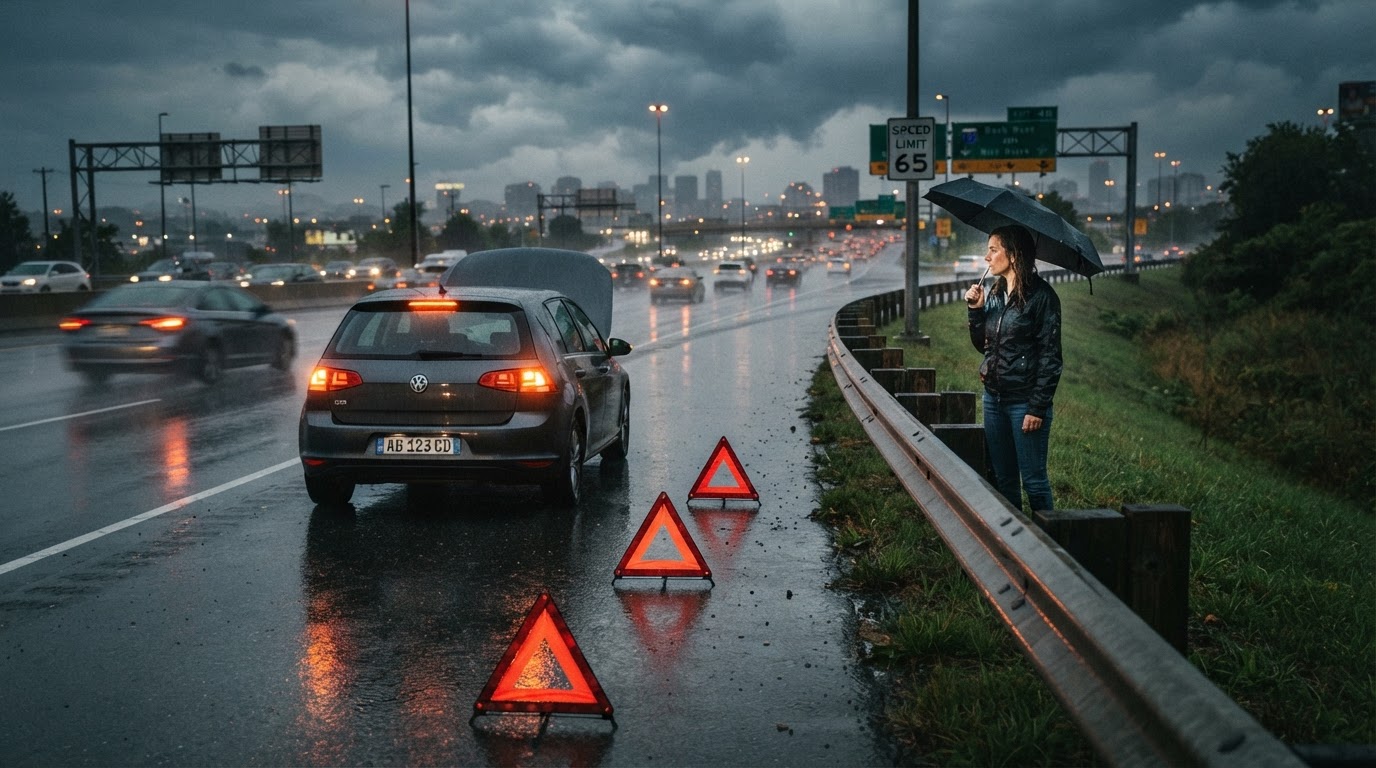
If the vehicle breaks down, the first priority is to get out of traffic. Turn on the hazard lights, pull as far onto the shoulder as possible, and if you can, move to the right. If you are on a busy highway and the vehicle is drivable, get to the next exit rather than stopping on the shoulder. Once stopped, the Red Cross recommends staying in the vehicle with your seatbelt on if you are on a highway, because being outside near traffic is more dangerous than being inside. Turn on the dome light at night so you are visible.
If it is safe to exit, set out reflective triangles or flares behind the vehicle to warn other drivers. Raise the hood to signal that you need help. Keep the doors locked. Call for roadside assistance or 911 if you are in danger. The plan is to be visible, be safe, and be where help can find you, and the vehicle is usually the safest place to wait.
If you are stranded
If you are stranded and help is far, the plan is to stay with the vehicle. A vehicle is easier to find than a person, and it is shelter from the weather. The Red Cross recommends staying with the car unless you can see a building or help nearby and can reach it safely. In cold weather, run the engine for about 10 minutes per hour for heat, but first confirm the exhaust pipe is clear of snow, because a blocked pipe sends carbon monoxide into the cabin. Keep a window cracked for ventilation. In hot weather, stay in the shade of the vehicle and drink water; do not exert yourself.
Make yourself visible: a bright cloth on the antenna or a window, the hazard lights, and a flashlight at night. Keep the phone on and conserve its battery — turn on low-power mode and close background apps. Call for help and stay on the line. The plan is the same as for any emergency: have the kit, stay safe, and wait for help, and the vehicle is the shelter that makes the waiting survivable.
When to leave the vehicle
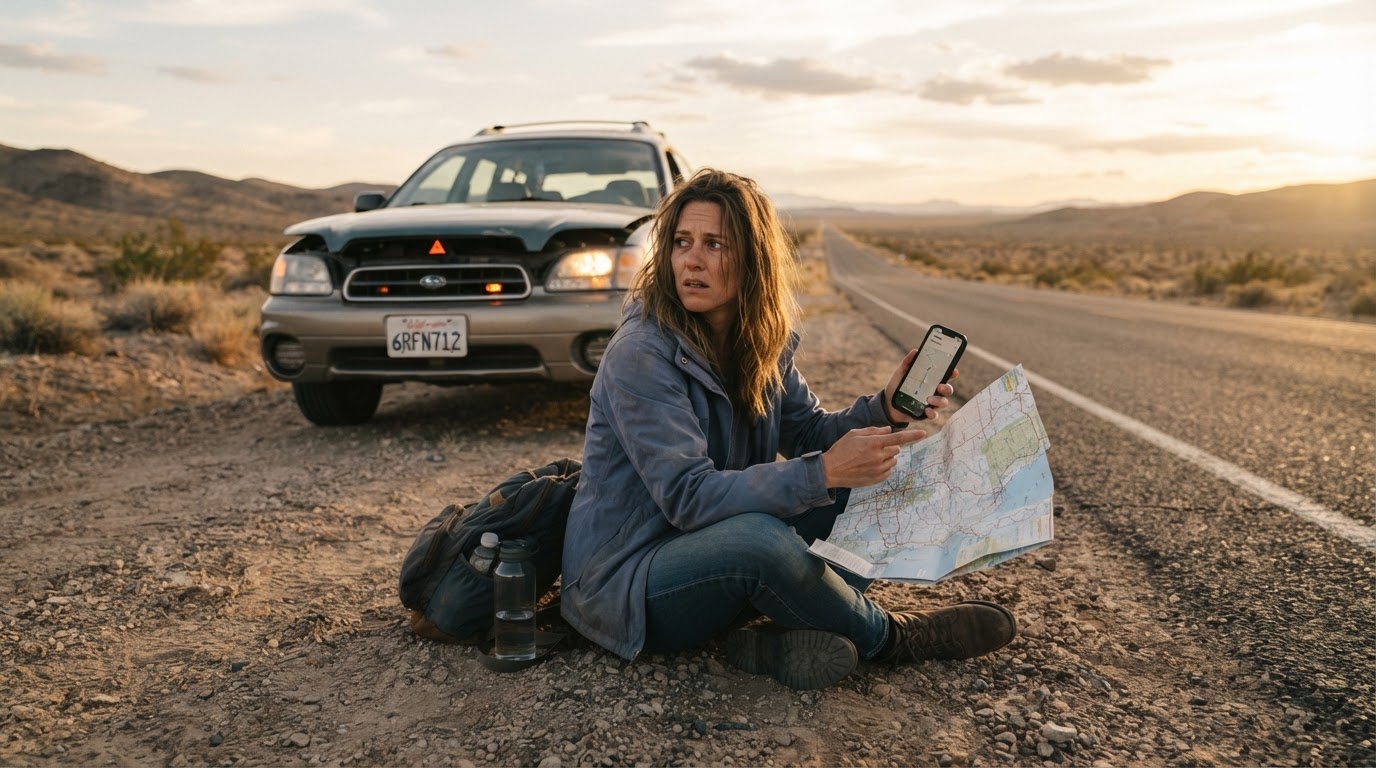
Leave the vehicle only if you can see a safe destination and can reach it safely, or if staying is more dangerous than leaving — for example, if the vehicle is in a dangerous location like a blind curve or a flood-prone area. If you leave, take the kit, the phone, and a way to be visible. Walk facing traffic on the far edge of the road, and stay as far from traffic as possible. Do not cross a highway on foot. The decision to leave is the riskiest one, and it should be made only when staying is clearly more dangerous.
If you are stranded in extreme weather — a blizzard, extreme heat — the decision is harder, and the plan is to weigh the shelter of the vehicle against the exposure of walking. In a blizzard, staying with the vehicle is almost always right, because walking in whiteout conditions leads to hypothermia and disorientation. In extreme heat, if the vehicle has no shade and no water, reaching shade may be worth the risk. The plan is to make the decision deliberately, not in panic, and to have the kit that makes either choice survivable.
Practical priorities
- Keep a vehicle emergency kit year-round
- Keep the tank above a quarter, above half in winter
- Maintain tires, battery, and fluids
- If you break down, stay with the vehicle if safe
- Make yourself visible and call for help
Common mistakes
- Standing outside the vehicle on a busy highway
- Running the engine with a blocked exhaust pipe
- Walking away from the vehicle in a blizzard
- Letting the phone die instead of conserving it
- Not knowing how to change a tire before you need to
Roadside emergency readiness checklist
- Vehicle kit with jumper cables, flashlight, first aid
- Water and non-perishable snacks
- Phone charger and printed map
- Reflective triangles or flares
- Spare tire, jack, and lug wrench
- Tire pressure checked monthly
- Battery tested before winter
- Tank kept above a quarter
- Roadside assistance number saved
- Seasonal items: blanket, ice scraper, sand
Sources & further reading
This is planning guidance, not emergency advice. In an emergency, call 911. See a mistake? Report it.