
Solar Storm Preparedness
A solar storm is a power and communication outage plan.
A solar storm, or geomagnetic disturbance, is a low-likelihood event that could disrupt power grids, satellites, and communications. The honest framing is that severe events are rare, but the planning overlaps with any power and communication outage plan. Ready.gov and the NOAA Space Weather Prediction Center treat the core as the same: have a power-outage plan, keep a radio, and stay informed through official sources. This guide covers the outage plan, the communication backup, and the honest limits of household planning for a low-likelihood, high-impact event.
Understand what a solar storm can affect
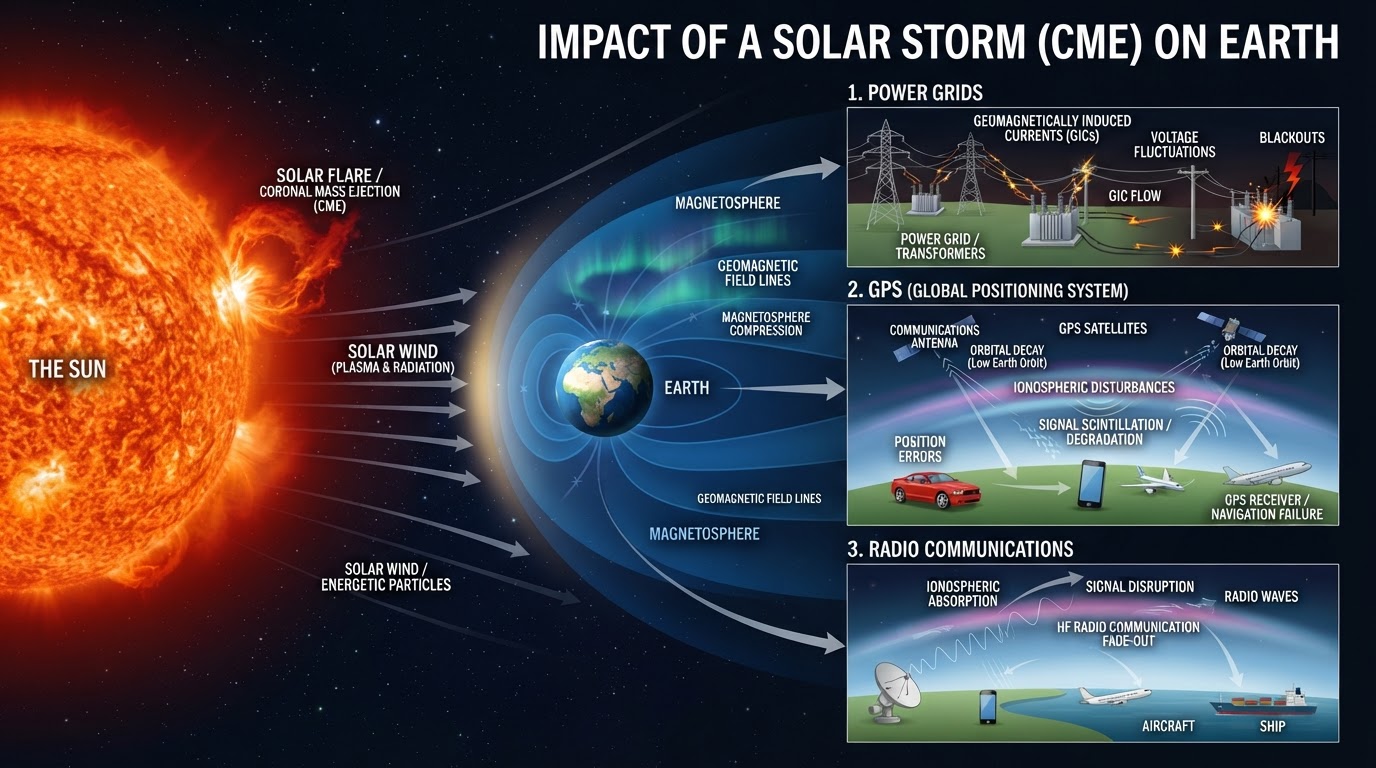
A solar storm is a disturbance of the Earth's magnetic field caused by activity on the Sun. The NOAA Space Weather Prediction Center monitors and forecasts these events. A severe storm could disrupt power grids, satellite communications, GPS, and high-frequency radio. The honest limit is that the severity varies widely, and most storms have little to no effect on daily life. The planning is for the severe case, but the likelihood of a severe case is low, and the plan is the same as for any power and communication outage.
The grid operators and satellite operators monitor these events and take protective actions, so the household plan is not to predict the storm but to be ready for the outage it could cause. The plan is the outage plan, and the solar storm is one of the things that can trigger it.
The power-outage plan
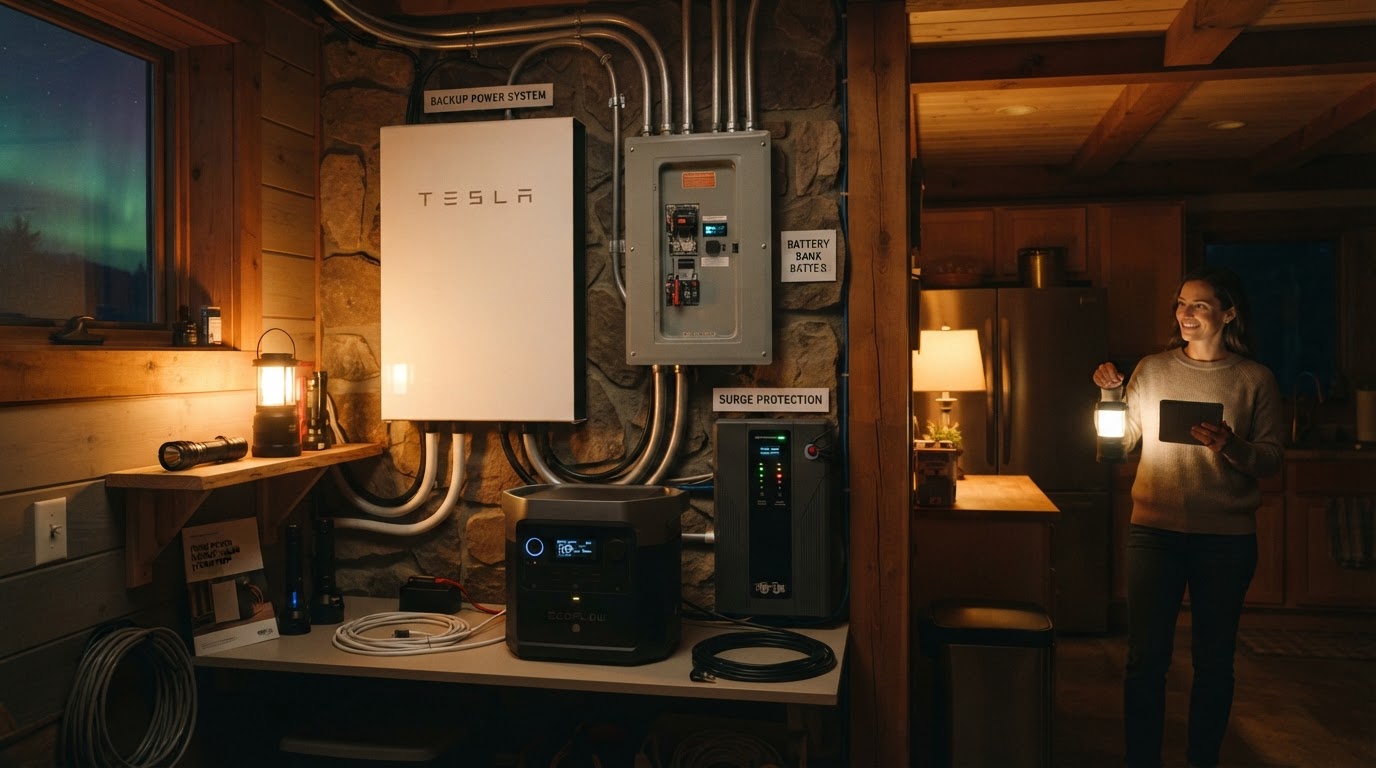
The power-outage plan is the same as for any blackout. Keep flashlights and a power bank where you can find them in the dark. Keep the refrigerator and freezer closed to protect food. Keep a printed contact card and your utility's outage hotline. Never use fuel-burning equipment indoors, and test carbon-monoxide alarms. If anyone uses medical equipment that requires power, register with your utility's medical baseline program and have a backup plan. The plan is to remove the panic from the first hour, and the first hour is the same regardless of the cause.
Keep a portable power station or generator if you rely on power, and know its limits — its watt-hours and which devices it can run. Keep fuel stored safely if you use a generator. The plan is to keep the household functional for at least 72 hours without outside support, because that is roughly how long it can take for help to reach every affected block after a widespread event.
The communication backup
A solar storm could disrupt satellite communications and GPS, so keep a communication backup. A battery or hand-crank NOAA weather radio can receive alerts without the cell network or satellites. Keep a printed map and a printed list of contacts, because the phone may not have signal or GPS. Keep the phone charged and a power bank ready. Text rather than call when the network is congested. The plan is to stay informed and connected when the usual channels are down, and the radio and the printed map are the backups.
Keep a printed evacuation route if you may need to leave, because GPS may not be reliable. Know the roads to your destination without navigation. The plan is the same as for any digital outage: have the offline backup, because the network is not guaranteed.
Stay informed through official sources
The NOAA Space Weather Prediction Center and your local emergency management agency are the sources to trust for information about a solar storm. Sign up for local emergency alerts. Keep a battery or hand-crank radio as a backup. Do not rely on social media for emergency information, because misinformation spreads fastest when the usual channels are down, and a solar storm is exactly the kind of event that generates speculation. The plan is to act on verified information, not on rumor.
If a severe storm is forecast, grid operators may take protective action, and you may receive guidance to conserve power or to prepare for an outage. Follow official instructions. The plan is to be ready for the outage, not to predict the storm, and the official sources are how you know what to do.
The honest limits
The honest framing is that a severe solar storm is a low-likelihood event, and that household planning can reduce the impact of an outage but cannot prevent it. The plan is the same outage and communication plan that protects the household in many scenarios, and the cost of preparing is low because the plan is reusable. The plan that is in place before the event is the plan that works during it, and the plan that is rehearsed is the one that holds.
Do not act on unsupported predictions that a specific storm is imminent or that a specific catastrophe is coming. The NOAA Space Weather Prediction Center is the authority, and the plan is to follow official guidance, not speculation. The sober, evidence-based plan is the one that protects the household without pretending to do more, and the honest limit is that the plan reduces harm; it does not eliminate risk.
Practical priorities
- Keep a power-outage plan: flashlights, power bank, closed fridge
- Keep a battery or hand-crank NOAA radio
- Keep a printed map and contact list
- Stay informed through NOAA and official sources
- Register medical equipment with your utility
Common mistakes
- Acting on unsupported predictions of an imminent catastrophe
- Relying on GPS during a satellite disruption
- Using fuel-burning equipment indoors during an outage
- Forgetting a printed contact card
- Trusting social media over NOAA for space weather
Solar storm readiness checklist
- Flashlights and power bank ready
- Battery or hand-crank NOAA radio
- Printed map and contact list
- Utility outage hotline saved
- Carbon-monoxide alarms tested
- Portable power station or generator (if needed)
- 3-day water and non-perishable food
- Medical equipment registered with utility
- NOAA Space Weather alerts subscribed
- Offline evacuation route printed
Sources & further reading
This is planning guidance, not emergency advice. In an emergency, call 911. See a mistake? Report it.