War & Conflict Preparedness
A conflict plan is an evacuation and documents plan.
War and large-scale conflict are low-likelihood for most readers, and the honest framing is that they are rare. But the planning is not exotic, and it overlaps heavily with evacuation and supply-disruption planning. Ready.gov treats the core of any displacement as documents, a go-bag, and a destination. This guide covers the documents that prove who you are, the go-bag that lets you leave in minutes, the destination plan, and the supply buffer that keeps the household steady if the supply chain collapses. It addresses the scenario with evidence and uncertainty, not with claims that it is imminent.
Keep the documents that prove who you are
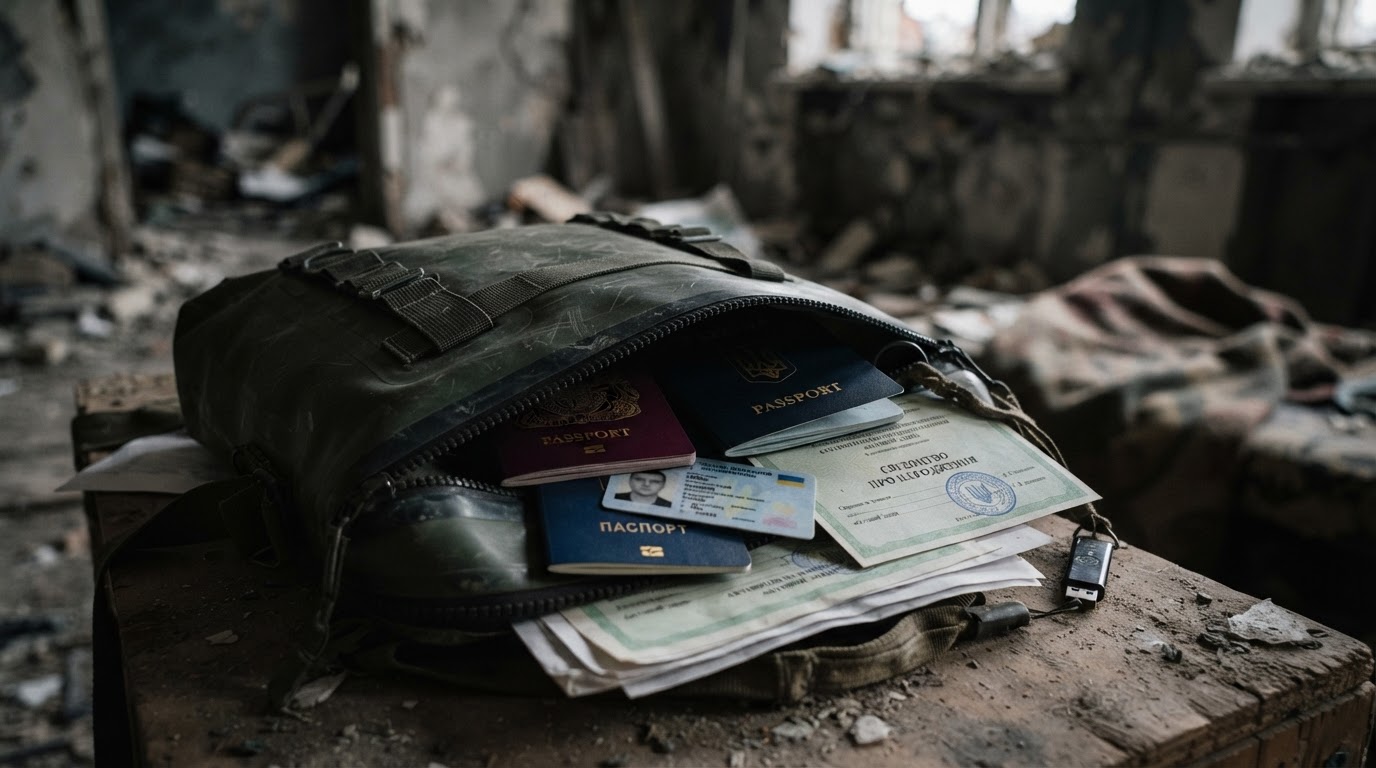
In a displacement, the documents are how you cross borders, prove your identity, and access services. Ready.gov recommends keeping copies of identification, passports, birth certificates, insurance, deeds, and medical records in a waterproof container, with digital copies in secure cloud storage and on an encrypted USB drive. Keep the originals in a place you can grab in minutes. If you have children, keep their documents with yours. If you have pets, keep their vaccination records. The plan is the documents, and the documents are the plan.
Keep a written list of your accounts, your embassy or consulate if you are abroad, and the phone numbers of family and a trusted contact. Keep some cash in small bills and, if you may cross borders, in a currency that is accepted where you are going. The plan is to be able to prove who you are and to access what you need when the usual systems are not available.
Keep a go-bag ready to leave in minutes
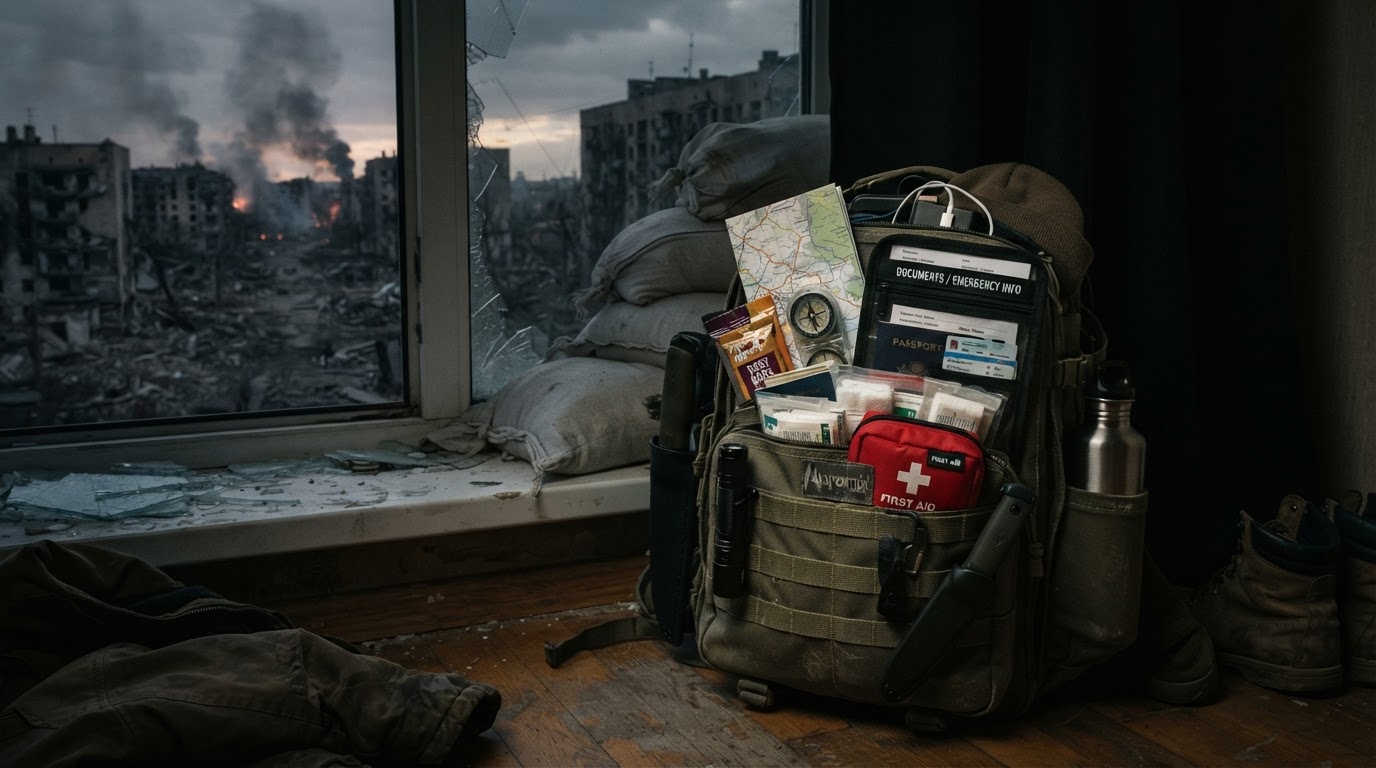
The go-bag is the foundation of any displacement plan. The Red Cross recommends it contain a 3-day supply of water and non-perishable food, a first-aid kit, a flashlight, a phone charger and power bank, a change of clothes, and copies of important documents. Add prescription medications and a written list of them. Add cash. Keep the bag by the door so it is the first thing you grab. The point is that the bag is packed before the order to leave, not assembled during it.
Tailor the bag to the household. Infants need formula and diapers; people with medical needs need their supplies; pets need food, water, and carriers. If you may be displaced for longer, add a few days of essentials. The plan is to be able to leave in minutes, and the packed bag is what makes that possible.
Plan a destination and a route
Identify a destination — a family member or friend in a safer area, a hotel, or a designated shelter — and confirm the plan in advance. Know at least two routes to get there, because the primary may be blocked. Print the routes, because the phone may not have signal. If you may cross borders, know the border requirements and have the documents ready. Keep the vehicle fueled if you have one. If you do not, plan how you will leave: a neighbor, public transit, or a community service.
If you are abroad, know your embassy or consulate and how to reach them. Register with your country's traveler program if one exists. The plan is the destination, the route, and the way to get there, and the plan is made before the displacement, not during it.
Keep a supply buffer for a supply collapse
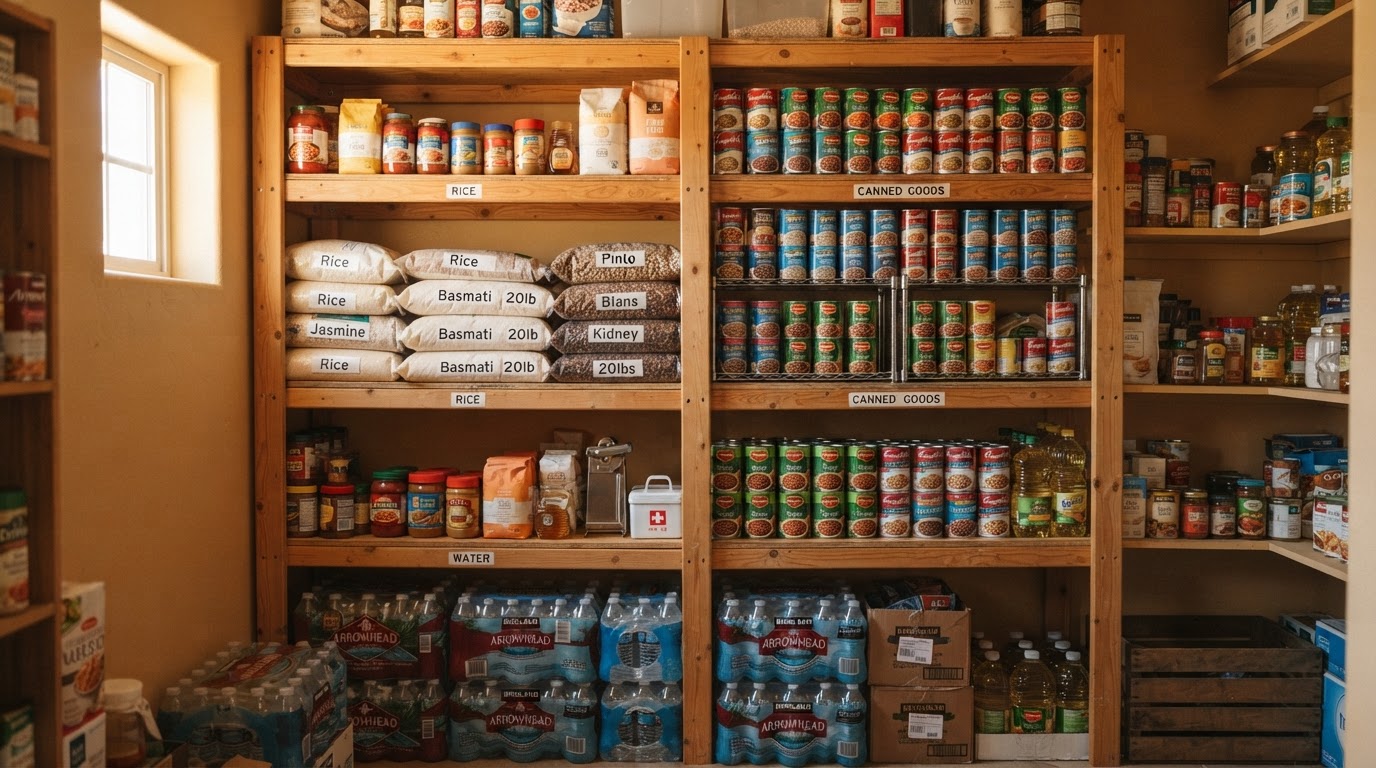
A conflict can collapse the supply chain, so keep a buffer of the things your household uses: a two-week supply of food, water, and medications. The plan is the same as for any supply disruption: have the buffer before the shelves thin, so you are not part of the rush that empties them. Keep cash in small bills, because the banking system may be disrupted. Keep fuel in the vehicle. Keep the phone charged and a power bank ready. The plan is to keep the household steady through a disruption that may last weeks.
Keep a way to stay informed: a battery or hand-crank radio, official sources, and a way to receive alerts. During a conflict, information changes fast and misinformation spreads faster, so use official sources and verify before you act. The plan is to act on verified information, not on rumor, because acting on bad information can put you in more danger than the event itself.
The honest limits of household planning
The honest framing is that war and large-scale conflict are rare for most readers, and that household planning can reduce risk but cannot guarantee safety in a large event. The plan is the documents, the go-bag, the destination, and the supply buffer — the same plan as for any evacuation and supply disruption, with a few additions for crossing borders. The plan is worth doing because it is the same plan that protects the household in many scenarios, and the cost of preparing is low.
Review the plan each year. Update the document copies, refresh the go-bag, confirm the destination, and rotate the supply buffer. The plan that is in place before the disruption is the plan that works during it, and the plan that is rehearsed is the one that holds. The honest limit is that the plan reduces harm; it does not eliminate risk, and the sober, evidence-based plan is the one that protects the household without pretending to do more.
Practical priorities
- Keep identification, passports, and documents ready to grab
- Keep a go-bag packed by the door
- Plan a destination and two routes to reach it
- Keep a two-week supply buffer
- Keep cash and a way to stay informed
Common mistakes
- Assembling the go-bag during the displacement
- Not having documents ready to cross borders
- Relying on a single route that may be blocked
- Trusting unverified information during the event
- Pretending household planning can guarantee safety
War & conflict readiness checklist
- Passports and identification ready to grab
- Document copies in cloud + encrypted USB
- Go-bag packed by the door
- 3-day water + food in the bag
- Cash in small bills
- Destination confirmed in advance
- Two routes identified
- 2-week supply buffer at home
- Battery or hand-crank radio
- Embassy/consulate contact if abroad
Sources & further reading
This is planning guidance, not emergency advice. In an emergency, call 911. See a mistake? Report it.