
🃏 Plan the basics
Plan for the boring, stressful hours in between
A deck of cards, a book, a game, a comfort item — the small things that keep a long outage from becoming a long ordeal.
The unglamorous prep nobody talks about: what do you do during the hours or days of waiting? A power outage isn't action; it's mostly sitting in the dark, and for kids it's scary and boring. The plan is a small kit of comfort and activity items — a deck of cards, a book, a board game, a comfort item for each kid — that turn a stressful wait into a manageable one. It's not frivolous; it's part of morale, and morale is part of resilience. This page covers the activity kit, the comfort items, and the case for treating morale as a real part of preparedness.
The activity kit
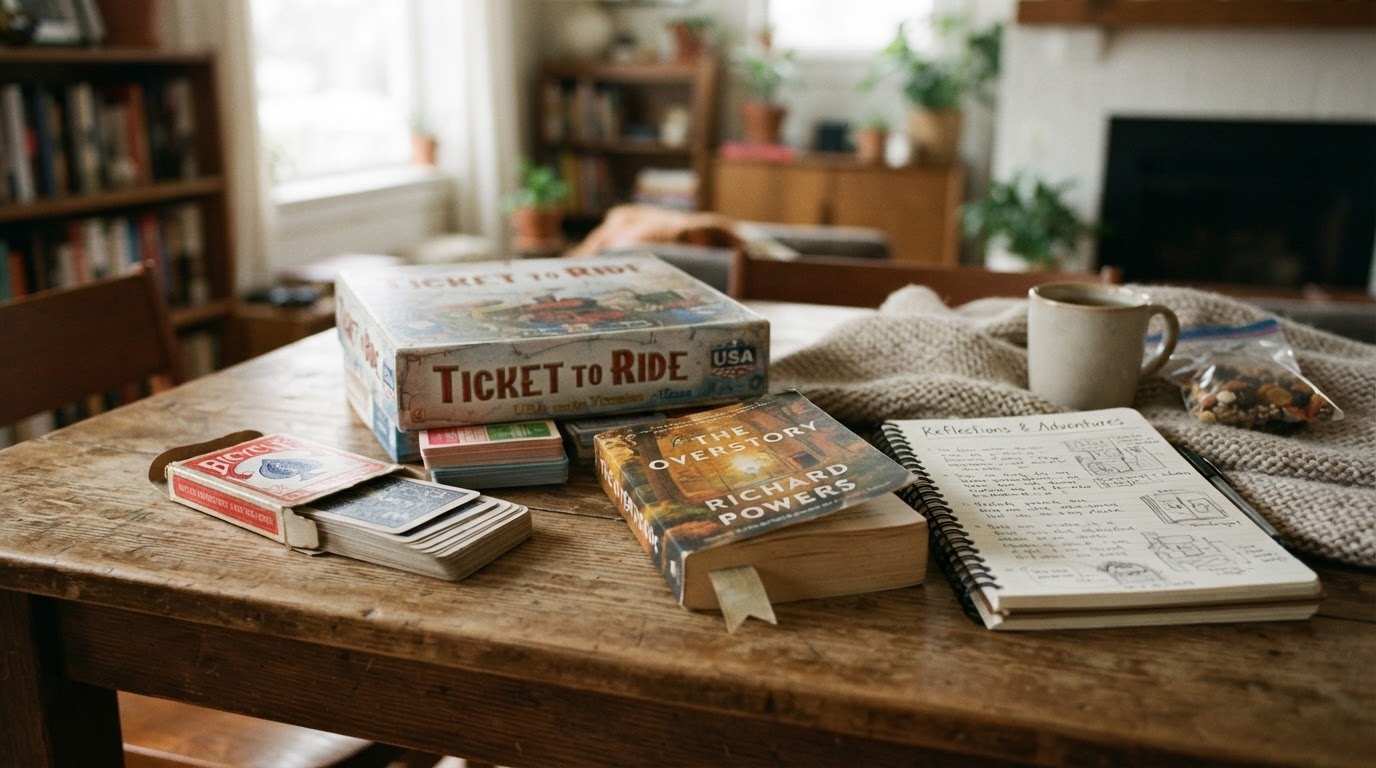
Keep a small, no-power activity kit: a deck of cards, a book or two, a board game, a notebook and pens, a puzzle book. The things that work when the screens are dead. For a household with kids, add age-appropriate games, coloring books, and a new small toy or book reserved for the outage — novelty matters when the routine is gone. Ready.gov's coping page touches on this.
Keep it with the emergency supplies so it's there when you need it, not in a different closet. A deck of cards in the kit is the prep; a deck of cards somewhere in the house is a maybe. The kit is what makes the plan reliable. The 'I think we have cards somewhere' plan is not a plan.
For adults, the same principle: a book you've been meaning to read, a craft, a project. A multi-day outage with nothing to do is harder than the same outage with a book. It's not about distraction; it's about not making a hard situation harder with boredom. The activity kit is the difference between an outage you manage and one that wears you down.
Consider the power-free activities specifically. A board game that needs no power, a puzzle book, a notebook for journaling or drawing — these are the things that work when the screens are dark. A board game that needs an app or a console is not an outage activity. The kit is curated for no-power use.
Rotate the kit occasionally so it doesn't get stale. A deck of cards that's been in the kit for five years is fine; a puzzle book that's been done is not. Swap in a new book or a new game once a year so the kit is fresh when you need it. The rotation is what keeps the morale plan real.
Comfort items for kids
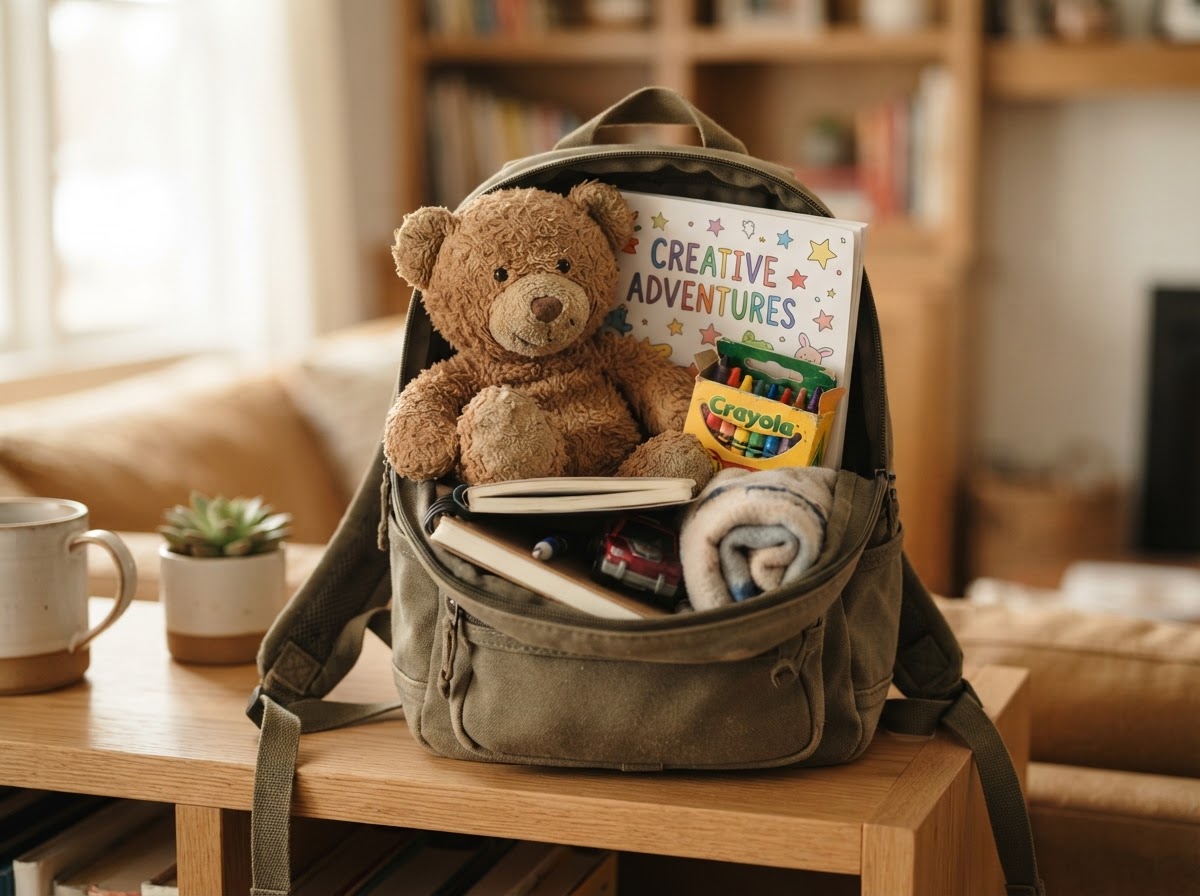
For each child, a comfort item in the go-bag — a small stuffed animal, a familiar blanket, a favorite small toy. In an evacuation, the familiar item is what helps them sleep in an unfamiliar place. It's not optional for a kid; it's part of how they cope. Let them help choose what goes in the bag so it's the right item, not the one you picked.
Add a small treat — a favorite snack that's not part of the regular emergency food. It's a morale item, not a nutrition item, and that's fine. The point of the comfort kit is to keep the disruption from being purely stressful, especially for a kid who doesn't understand why the lights are off or why you left home. The treat is the morale; the food is the nutrition.
Talk to kids about the plan in an age-appropriate way, not to scare them but so they know what happens. A kid who's rehearsed the outage — 'the lights might go off, we use flashlights, we play cards, it's fine' — handles it better than a kid for whom it's a total unknown. The activity kit is part of that conversation. The familiar story of 'we played cards by flashlight' is the script for the real thing.
For a baby, the comfort item is the familiar blanket or pacifier — the thing that helps them settle in an unfamiliar place. A go-bag without the pacifier is a go-bag that fails the baby. The small comfort item is the plan for the youngest household member; the games are for the older ones.
Plan for the disruption to routine. A kid's day has structure — meals, school, bedtime. A disruption breaks the structure, and the comfort kit is part of rebuilding it: the same snack, the same book at bedtime, the same game after dinner. The routine is the morale; the kit is what makes it possible.
Morale is part of resilience

Don't underestimate morale. A household that can laugh over a board game during a three-day outage handles the outage better than one that's just enduring it. The comfort and activity kit isn't the most important prep, but it's the one that makes the others bearable. It's the difference between a disruption you manage and a disruption that wears you down. The CDC's mental-health-after-disasters guidance backs this up.
For adults, the same applies: a way to decompress, a familiar routine if possible (coffee, even if it's instant on a camp stove), a small ritual. The psychological side of preparedness is real, and the small comforts are how you protect it. A disrupted household that holds its morale is one that recovers; one that loses it is one that struggles.
The plan is small and cheap: a deck of cards, a book, a comfort item per kid, a treat. It's the prep that costs the least and that you'll be most grateful for if you ever need it. Don't skip it because it's not 'survival' gear — it's resilience gear. The survival gear keeps you alive; the morale gear keeps you functional.
Plan for the specific stressors of a long outage: no power, no screens, no normal routine, possibly no heat or AC, possibly evacuated to an unfamiliar place. Each stressor is one the comfort kit addresses: cards for the dark, a book for the boredom, a comfort item for the unfamiliarity, a treat for the stress. The kit is the targeted response to the specific stressors.
The honest summary: the comfort plan is a deck of cards, a book, a comfort item per kid, and a treat. It's the cheapest prep, the most-overlooked prep, and the one you'll be most grateful for. Don't let it be the gap — a household that's fed and watered and bored is still a household that's suffering. The morale is the prep that makes the other preps bearable.
Practical priorities
- A no-power activity kit in the supplies
- A comfort item per child in the go-bag
- A small treat reserved for the disruption
- Age-appropriate conversations about the plan
- The kit rotated to stay fresh
Common mistakes
- No activities, and a long outage becomes a long ordeal
- Comfort items not in the go-bag for an evacuation
- Treating morale as frivolous
- Not talking to kids about the plan
- A stale kit with a done puzzle or a read book
Your comfort & activities checklist
- Deck of cards and a book in the kit
- A board game or puzzle for the household
- A comfort item per child in the go-bag
- A small treat reserved for outages
- Notebook and pens for kids and adults
- Age-appropriate plan conversation done
- Kit rotated once a year
Sources & further reading
This is planning guidance, not emergency advice. In an emergency, call 911. See a mistake? Report it.