
🐾 Plan the basics
Plan for the animals who depend on you
Food, water, records, a carrier, and a plan for where they go if you evacuate — pets need a kit too.
Pets depend entirely on you, and they're often the last thing people plan for. The kit is straightforward: food, water, medications, records, a carrier, and a plan for transport and lodging that accepts them. The hard part is the evacuation plan — many shelters don't take pets, so you need to know where you'd go with them before you need to go. This page covers the pet kit, the evacuation plan, and the 'who cares for them if you can't' plan that keep an animal safe in a disruption.
Build the pet kit
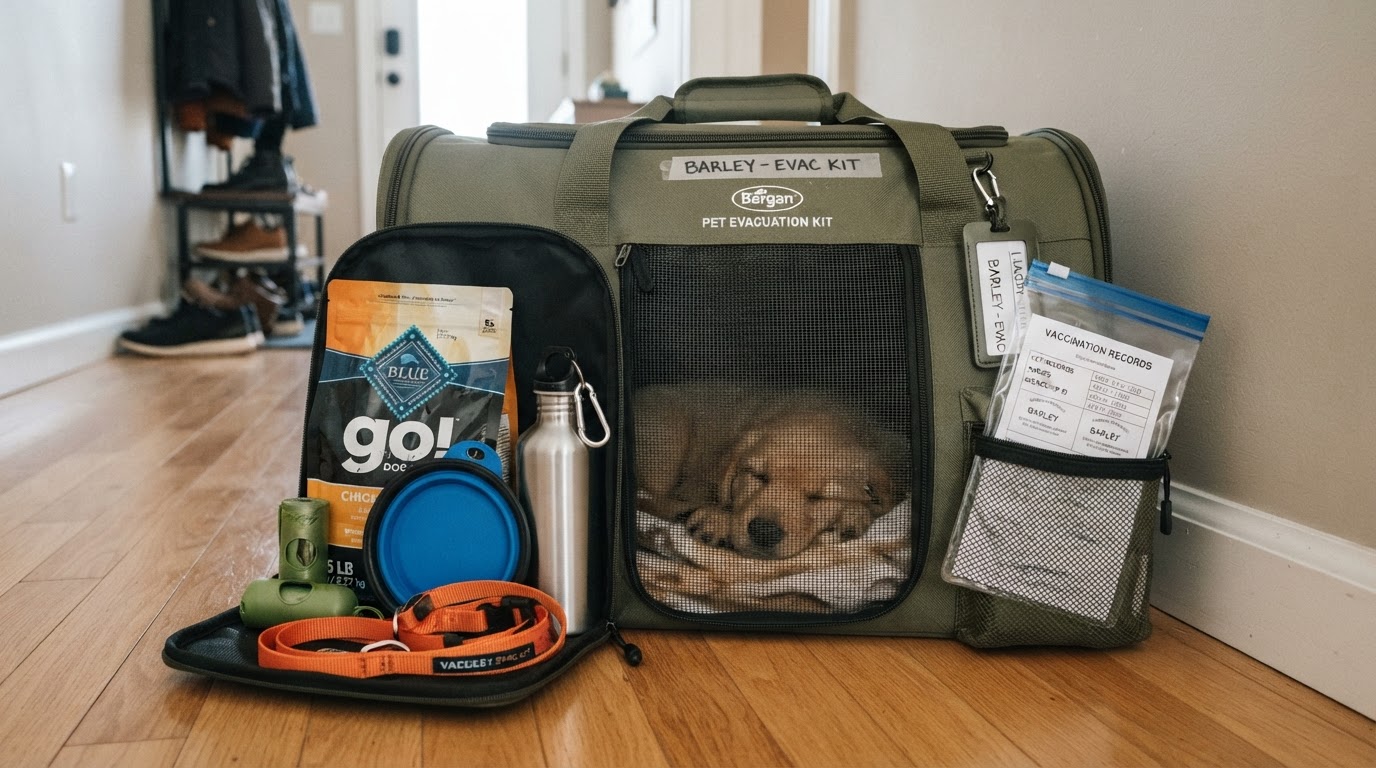
Stock at least a week of your pet's food — the food they eat, not a new brand, because a diet change during stress causes its own problems. Add water (a half-gallon a day for a dog, adjusted for size), any medications with a buffer, a leash and a carrier, bowls, waste bags, and a photo of you with your pet in case you're separated and need to prove ownership. Ready.gov's animal care page is the reference.
Keep vaccination and medical records with the kit, both for boarding and for shelters that require them. If your pet is microchipped, make sure the registration is current. A microchip with an old address doesn't help. The records are what get a pet into a boarding facility or a shelter; without them, you may be turned away.
Add the pet-specific comfort items: a familiar blanket or toy, a calming item for a nervous animal, and for dogs, booties if you'll be walking over debris. Stress affects animals too, and a familiar item matters. A pet in a carrier with a familiar blanket is a calmer pet than one in a carrier with nothing.
Size the kit to the pet. A large dog needs more food, more water, and a bigger carrier than a cat. A cat needs a litter setup if the evacuation is more than a day. A small pet (bird, reptile, small mammal) has its own needs — heat, specific food, a secure carrier. The kit matches the animal, not a generic pet checklist.
Check the kit on the maintenance schedule. Pet food expires, medications expire, and a carrier that's been in the garage may have a broken latch. Check it once a year, same as the human kits. A pet kit from three years ago with expired food is not a kit you can trust. The check is what keeps it real.
Plan where they go if you evacuate
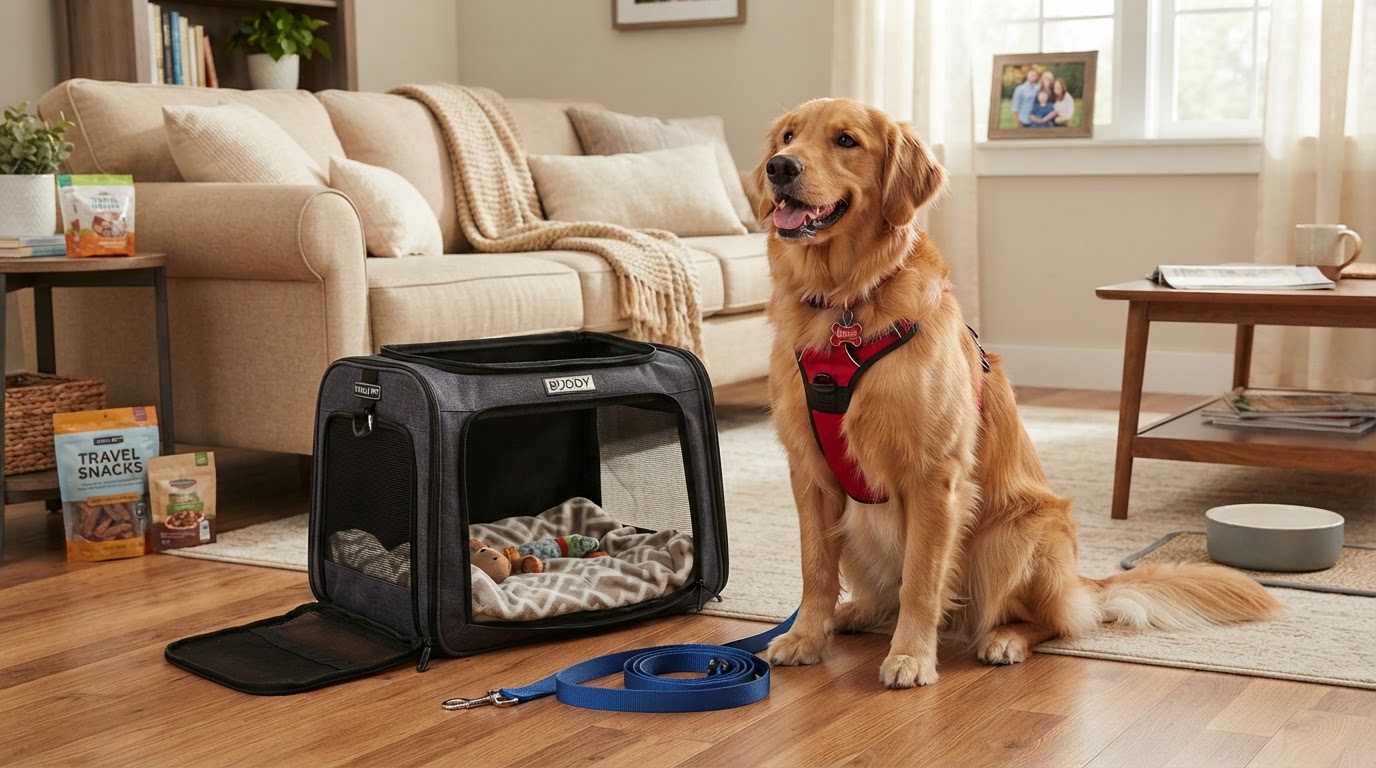
Many emergency shelters don't accept pets except service animals. Know this before you evacuate, not at the shelter door. Plan alternatives: a pet-friendly hotel, a boarding facility outside the affected area, a friend or relative who'll take the pet, or a veterinary clinic that boards. Have a couple of options, because the first may be full. ASPCA has guidance on pet-friendly evacuation.
If you have a service animal, their access rights are different and they generally come with you — but plan for their needs (food, water, relief) the same way. Emotional support animals have different rules than service animals; know which applies to yours and what the accommodations are. The distinction matters for shelters, hotels, and transport.
For livestock or large animals, the plan is different and more involved — trailer, destination, feed. Know your local agricultural extension's guidance. This page covers household pets; large animals are a separate plan. Don't assume a horse plan is the same as a dog plan; it's not.
Know which hotels in your evacuation radius accept pets, and have a couple identified before you need them. During a widespread evacuation, pet-friendly hotels fill fast. The list of options, checked before the season, is the plan. Scrambling for a pet-friendly hotel at midnight during a hurricane is the failure mode the list prevents.
Plan the transport. Can the pet fit in your vehicle with the household? Does the cat carrier fit with the go-bags? If you have multiple pets, who goes where? The transport plan is part of the evacuation plan, not a separate thought. A pet you can't transport is a pet you can't evacuate.
Plan for their care if you can't get home
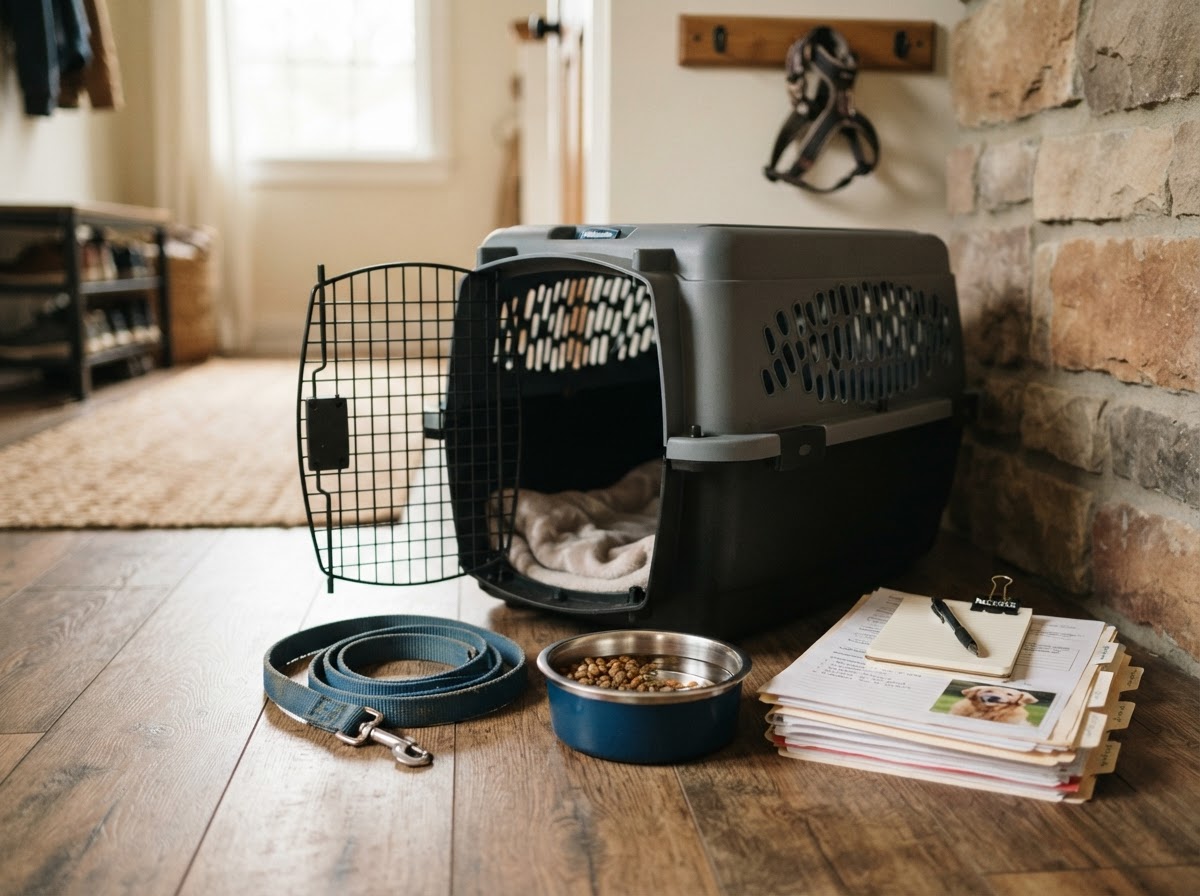
If you're away when an event hits, who feeds your pet? A neighbor, a friend, a pet-sitter — have someone with a key and instructions, and make sure they know the pet's location and needs. This is the unglamorous plan that keeps an animal alive if you're stuck at work or stranded. The 'can't get home' plan is the pet plan from the other direction.
Keep a pet-emergency decal on a window for first responders — 'pets inside' with the number and type. In a fire, it tells responders to look. It's a 30-second prep that matters. The decal is for the fire department; the pet-sitter is for the 'you're stranded' scenario. Both are part of the plan.
Rehearse loading the pet into the carrier, especially for a cat or a nervous dog. The first time shouldn't be during an evacuation when they're already stressed. A pet who's practiced the carrier is a pet you can move in five minutes; one who hasn't is a pet who hides under the bed and costs you 20 minutes you don't have.
Plan for the pet's stress. An evacuation is stressful for an animal — new place, new smells, no routine. A familiar blanket, a familiar toy, the same food — the comfort items are part of the medical plan for a stressed animal. Don't dismiss the stress as 'just a pet'; a stressed animal can stop eating, get sick, or bolt.
The honest summary: the pet plan is a kit, an evacuation destination, a 'can't get home' caregiver, and a rehearsed load. It's not exotic, and it's the difference between a pet who survives the disruption and one who doesn't. Don't let the pet be the last prep you make — they're the ones who can't make it themselves.
Practical priorities
- A week of pet food and water
- Records, meds, and a current microchip
- A carrier and leash you can use in 5 minutes
- An evacuation destination that accepts pets
- A care contact who can get in if you can't
Common mistakes
- No plan, and the shelter won't take the pet
- A new food brand introduced during a crisis
- A carrier the pet has never practiced
- An out-of-date microchip registration
- No 'can't get home' caregiver with a key
Your pet-supplies checklist
- A week of pet food and water
- Medications and vaccination records
- Carrier, leash, bowls, waste bags
- Photo of you with the pet
- Pet-friendly evacuation destination identified
- A care contact who can get in if you can't
- Pet-emergency decal on a window
Sources & further reading
This is planning guidance, not emergency advice. In an emergency, call 911. See a mistake? Report it.