
Household preparedness
Plan for the people who need extra planning
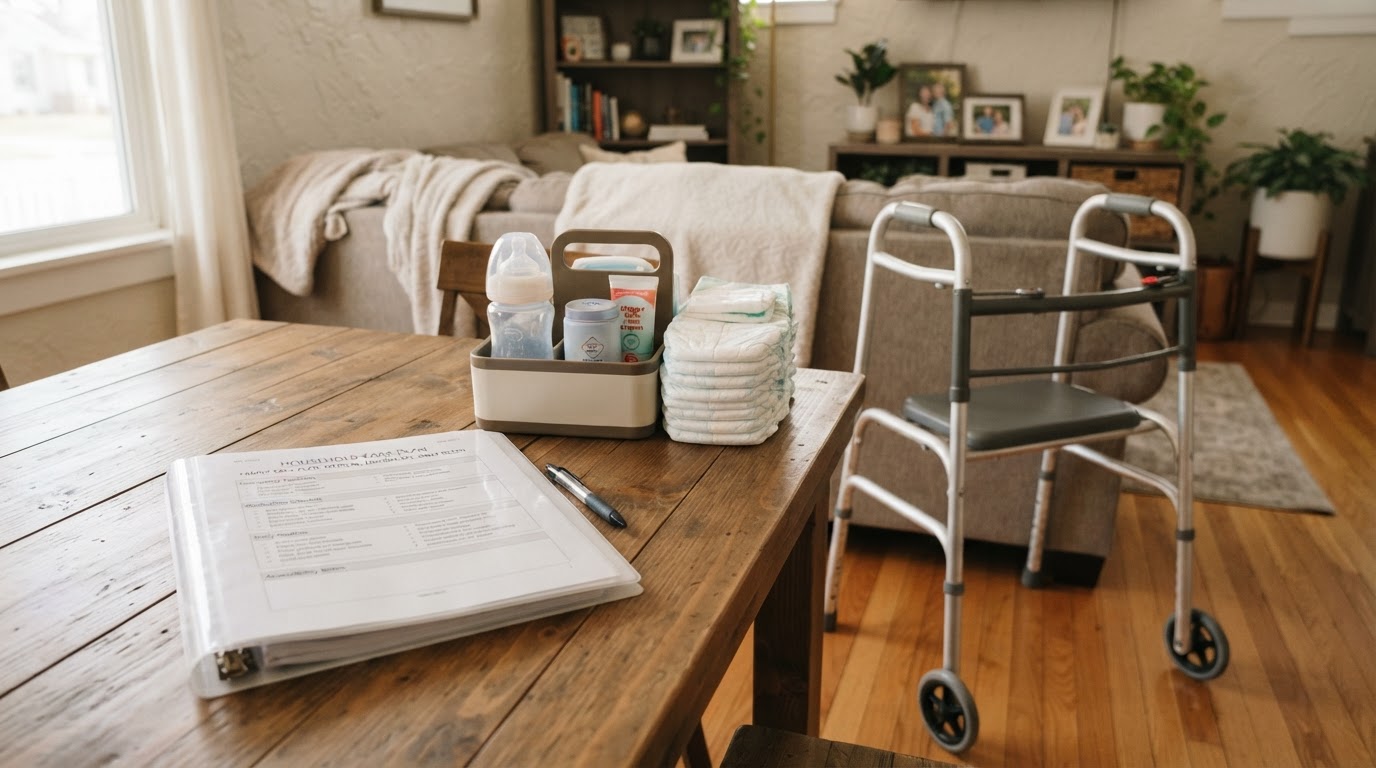
Infants, older adults, and anyone with mobility or medical needs deserve a plan built around them, not a generic checklist.
Start with These Three Steps
List the specific needs.
Write down what each person needs for a few days, from formula and diapers to mobility aids and powered equipment.
Match supplies to the need.
Choose supplies that fit the actual person and their routine rather than a one-size list.
Plan for power and access.
Note which needs depend on electricity or accessible storage and build a backup around them.
Your Special Household Needs Checklist
- A written list of each person's specific needs
- Infant and child supplies stocked
- Mobility and accessibility aids accounted for
- Powered medical equipment backup planned
- Extra time and assistance built into the evacuation plan
- A contact for each person's care provider
What to Look For
Real, specific planning.
The plan fits your household, not a template.
Power and access.
Account for equipment that needs electricity and spaces that need access.
Backup for the backup.
Plan who steps in if the usual caregiver is unavailable.
Keep It Ready
Review the plan whenever someone's needs change and at least once a year. Keep a current contact for each care provider and confirm that any backup power or access plan still fits the equipment you actually use.
Build Your Household Plan
Add this category to your plan, then work through the essentials at a pace that fits your household.
Explore the 10 EssentialsOther Plan the Basics guides
Food
Build a pantry from foods you already eat, rotate it so nothing expires, and know how to cook when the power is out.
Water
One gallon per person per day is the starting line. Storage, rotation, and a treatment method are what make it usable.
First Aid
A household first-aid kit plus basic training handles the cuts, burns, and sprains that show up in every disruption.
Hygiene & Sanitation
Handwashing, a toilet alternative, and a waste plan are the unglamorous prep that prevents the real secondary disaster: illness.
Shelter & Warmth
Insulate one room, layer up, and never heat with something meant for the outdoors. Hypothermia and carbon monoxide are the real threats.
Backup Power
A phone charger is one job; a fridge or a medical device is another. Match the power source to the real need and know its limits.