
🚗 Plan the basics
Plan for the day your car becomes your lifeline
A kit for breakdowns, a kit for being stranded, and the habits that keep the tank above half when it matters.
Your vehicle is either how you evacuate or where you get stranded. The plan is two kits — one for the everyday breakdown (flat tire, dead battery, stuck in traffic) and one for being stranded in it (winter storm, breakdown far from help) — plus the habits that keep it ready: a half tank or more during risk seasons, and basic maintenance that prevents the failure in the first place. This page covers the everyday kit, the stranded kit, and the maintenance habits that keep a vehicle ready when it matters most.
The everyday breakdown kit
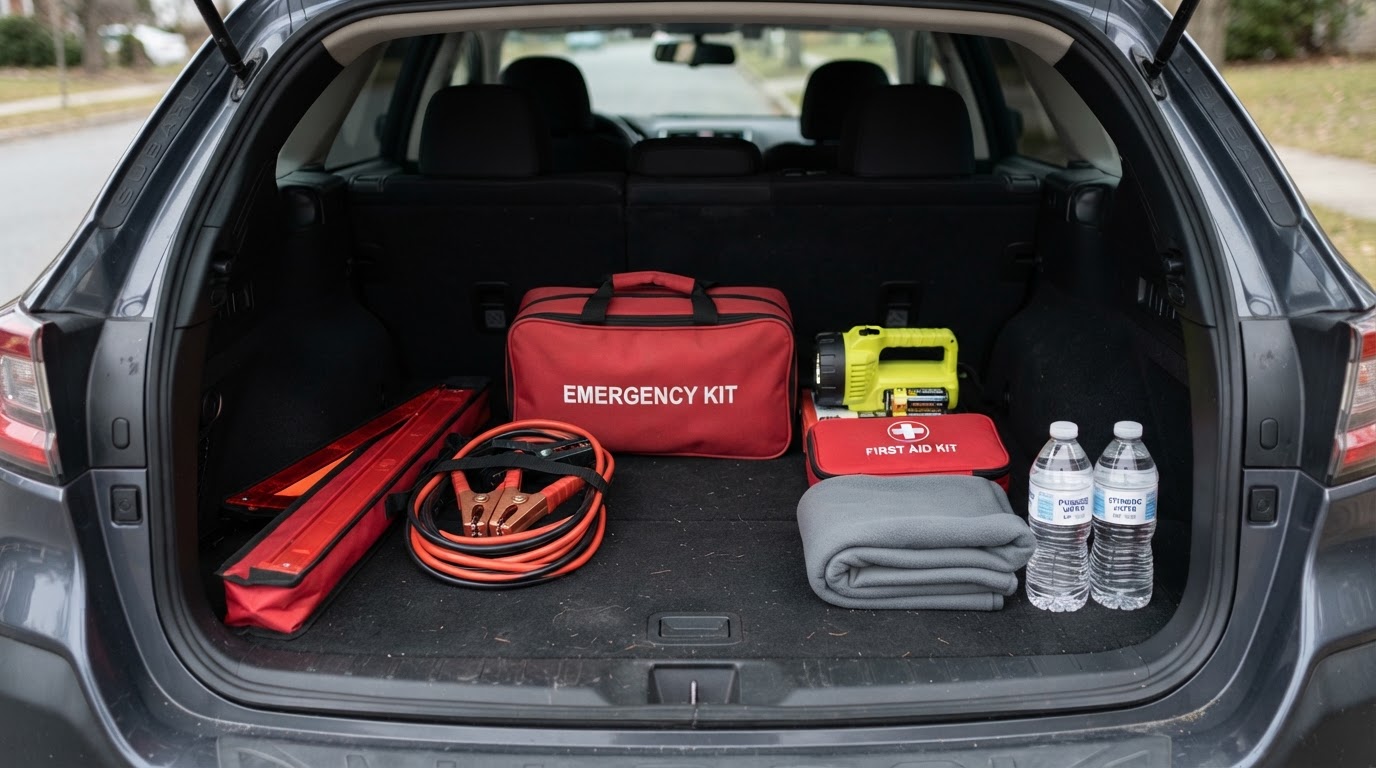
Keep the basics that handle the common, non-emergency breakdown: a spare tire, jack, and lug wrench (and know how to use them); jumper cables or a lithium jump-starter; a basic tool kit; a flashlight; a first-aid kit; and a phone charger. A lithium jump-starter is worth it — it doesn't need another car, and many double as a power bank. These handle the 90% of roadside problems. Ready.gov's vehicle prep page is the reference.
Add the seasonal specifics. In winter, an ice scraper, a blanket, and a bag of kitty litter or sand for traction. In summer, extra water. The kit lives in the car, not the garage — a kit at home doesn't help when you're on the highway. The seasonal swap is part of the maintenance schedule; a winter kit in July is a kit that's not useful.
Check it twice a year. Batteries in the flashlight and jump-starter die, the first-aid supplies expire, the spare loses air. The maintenance planner can remind you. A kit you checked in 2022 is a kit you can't trust in 2026. The check is what keeps the kit real, not a one-time prep you forget about.
Know where the spare and the jack are, and how to use them. Practice changing a tire in the driveway before you have to do it on the shoulder. The same goes for the jump-starter — read the manual before the battery's dead. The skill is the prep; the equipment is the starting point. A jack you've never used is not a jack you can trust.
Keep the kit where you can reach it, not buried under the cargo. The trunk is the usual spot; under the seat is accessible. A kit you have to unpack to reach is a kit that's not ready. The everyday kit is for the everyday breakdown — the one you'll have 20 times in the life of the car. The accessible kit is the usable kit.
The stranded-in-the-vehicle kit
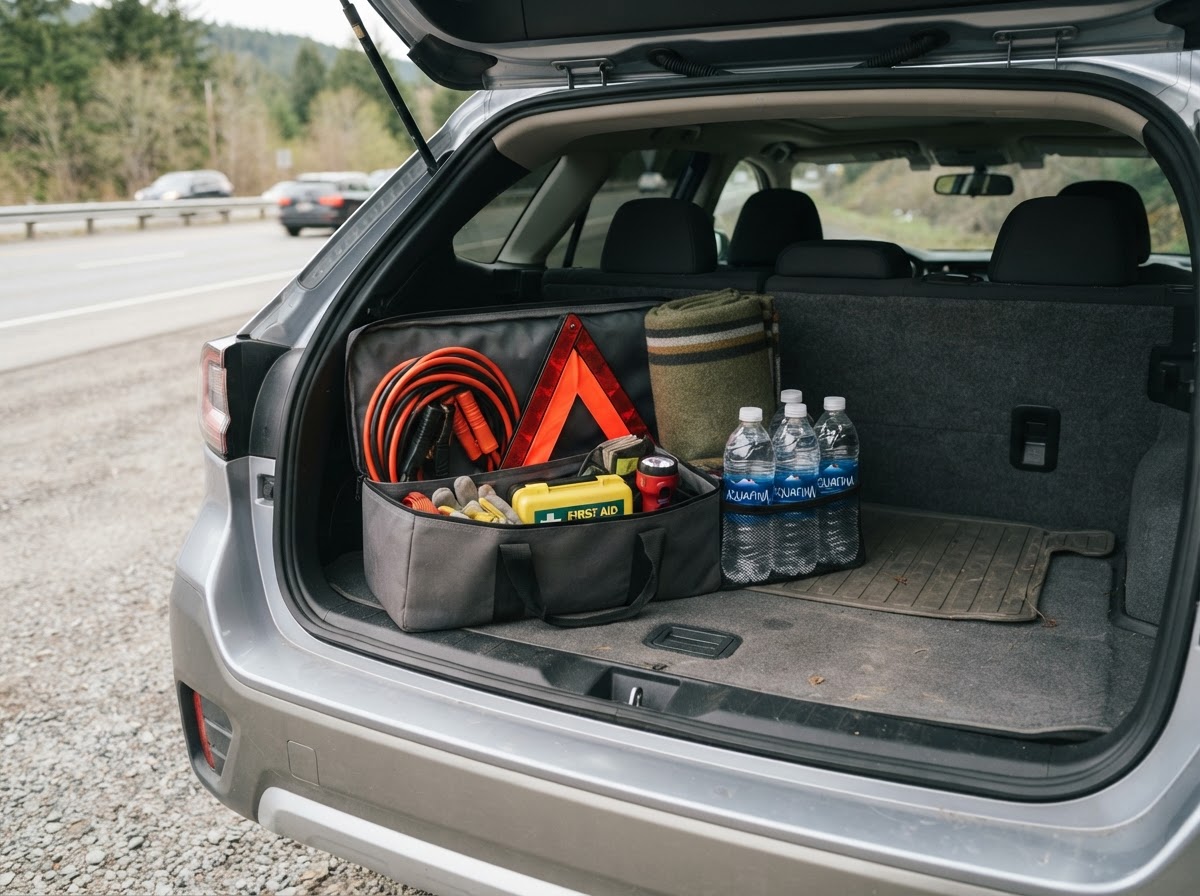
If you're stranded in the vehicle — a winter storm, a breakdown far from help, a highway shutdown — the needs are warmth, water, signaling, and the sense to stay with the vehicle. Add to the everyday kit: a warm blanket or sleeping bag, extra water and non-perishable food, a whistle and a reflective triangle or flares, and a phone charger (the car's battery is your lifeline if the phone is).
The rule from search-and-rescue is to stay with the vehicle if you're stranded in a remote or storm situation — it's shelter, it's visible to rescuers, and it's where they'll look. Walking for help in a blizzard is how people get lost. Keep the fuel up so you can run the heater in intervals, and keep a window cracked for ventilation and to avoid carbon monoxide buildup, especially if snow covers the exhaust.
For an evacuation, the vehicle kit overlaps with the go-bag — keep the documents, the cash, and the go-bag where you can grab them and load them in under ten minutes. The vehicle is the transport; the kit is what makes it survivable if the transport fails. The go-bag page covers the full evacuation kit; this is the vehicle-specific piece.
Plan for the 'stuck on the highway' scenario — a multi-hour traffic jam during an evacuation or a closure. Water, snacks, a phone charger, and a blanket are the difference between an annoyance and a problem. A six-hour evacuation jam with no water is a worse problem than one with a bottle of water in the car.
Know your vehicle's limits. How far on a quarter tank? How long can you idle the heater on a full tank? How many hours of phone charge from the car? These are the numbers that matter when you're stranded. Read the manual, know the range, and keep the tank above the level where the range becomes a problem. The knowledge is part of the kit.
The habits that keep it ready
Keep the tank above half during a risk season — hurricane season, winter storm season, wildfire season. After a regional event, gas stations may be closed or have lines, and a half tank is the difference between evacuating and not. It's a free prep; it's just a habit. The habit is the cheapest, highest-value vehicle prep there is.
Keep up the maintenance that prevents the failure: oil changes, tire pressure and tread, battery health, and the timing belt if your vehicle has one. A breakdown during an evacuation is the failure mode the kit can't fully cover. The vehicle kit is the backup; the maintenance is the primary. NHTSA has vehicle maintenance guidance.
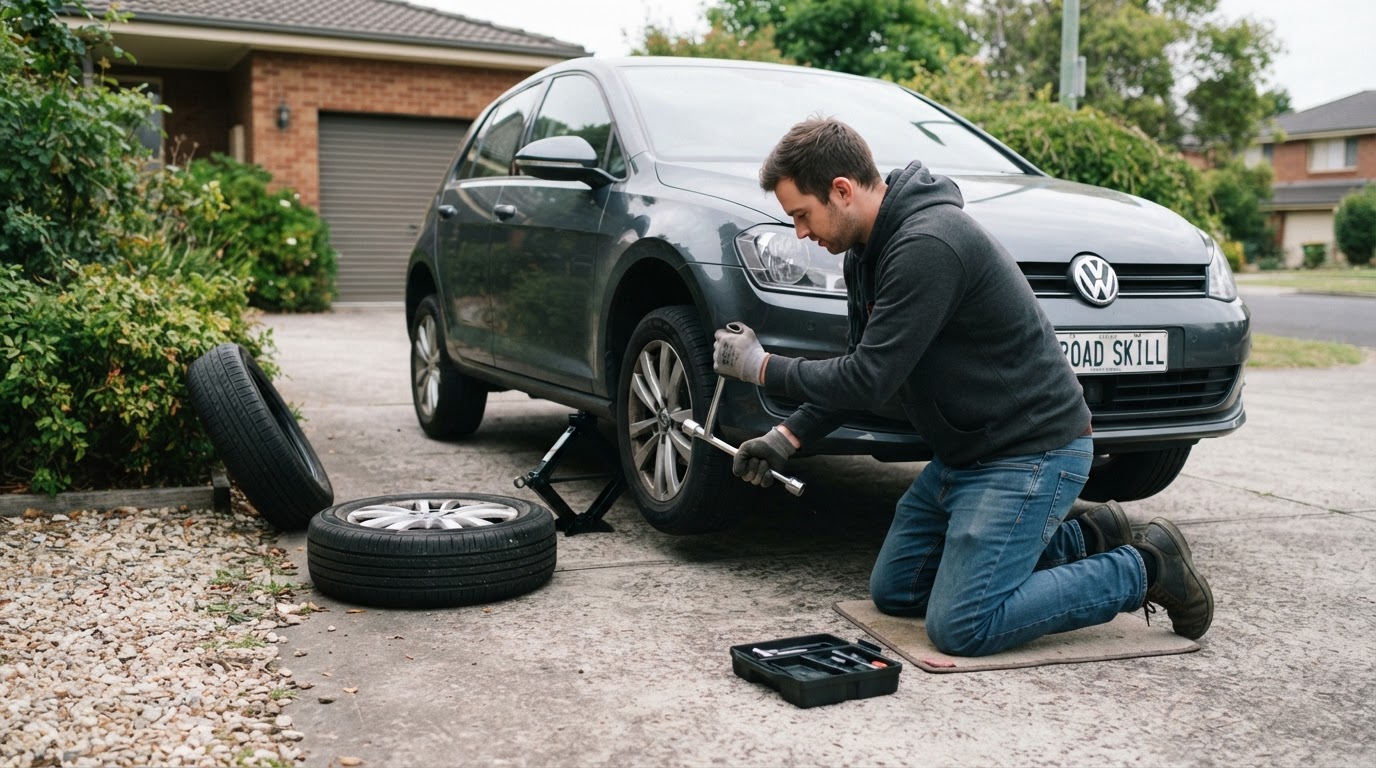
Know how to use what's in the kit. A spare tire and jack you've never practiced with is a weak prep. Once a year, practice changing a tire or using the jump-starter in your driveway, not on the shoulder of a highway at night. The skill is the prep; the kit is the equipment. A practiced skill in a parked kit is the ready vehicle.
Check the battery before the risk season. A battery that's five years old and slow to crank is a battery that may strand you. Replace it before the season, not during the evacuation. The battery is the most common 'vehicle won't start' failure, and it's preventable for $150 and ten minutes.
The honest summary: the vehicle plan is two kits, a half-tank habit, and maintenance. The kits handle the breakdown; the habit handles the evacuation; the maintenance prevents the breakdown. A vehicle that's maintained, fueled, and equipped is a vehicle that's ready. A vehicle that's none of those is a vehicle that fails you when it matters most.
Practical priorities
- Everyday breakdown kit in the vehicle
- Stranded kit for warmth, water, and signaling
- Tank above half during risk seasons
- Maintenance current and skills practiced
- Know the vehicle's range and limits
Common mistakes
- A kit in the garage, not the car
- A spare tire and jack you've never used
- Running on fumes during an evacuation
- Walking for help instead of staying with the vehicle
- An old battery heading into a risk season
Your vehicle-readiness checklist
- Spare, jack, and lug wrench (and the skill)
- Jumper cables or lithium jump-starter
- First-aid kit and flashlight in the car
- Seasonal: blanket/ice scraper (winter), extra water (summer)
- Tank-above-half habit during risk seasons
- Maintenance current; kit checked twice a year
Sources & further reading
This is planning guidance, not emergency advice. In an emergency, call 911. See a mistake? Report it.